
April 25, 2026 — 12:00am
Save
You have reached your maximum number of saved items.
Remove items from your saved list to add more.
Save this article for later
Add articles to your saved list and come back to them anytime.
Got it
AAA
Visit anything from a market stall to one of its hundreds of Michelin-starred restaurants, and you quickly realise why Japan is a gourmand’s delight.
As if the mix of cultural customs, sightseeing, gadgetry and speedy trains isn’t enough to lure travellers, the country is rightly regarded for its gastronomic joys.
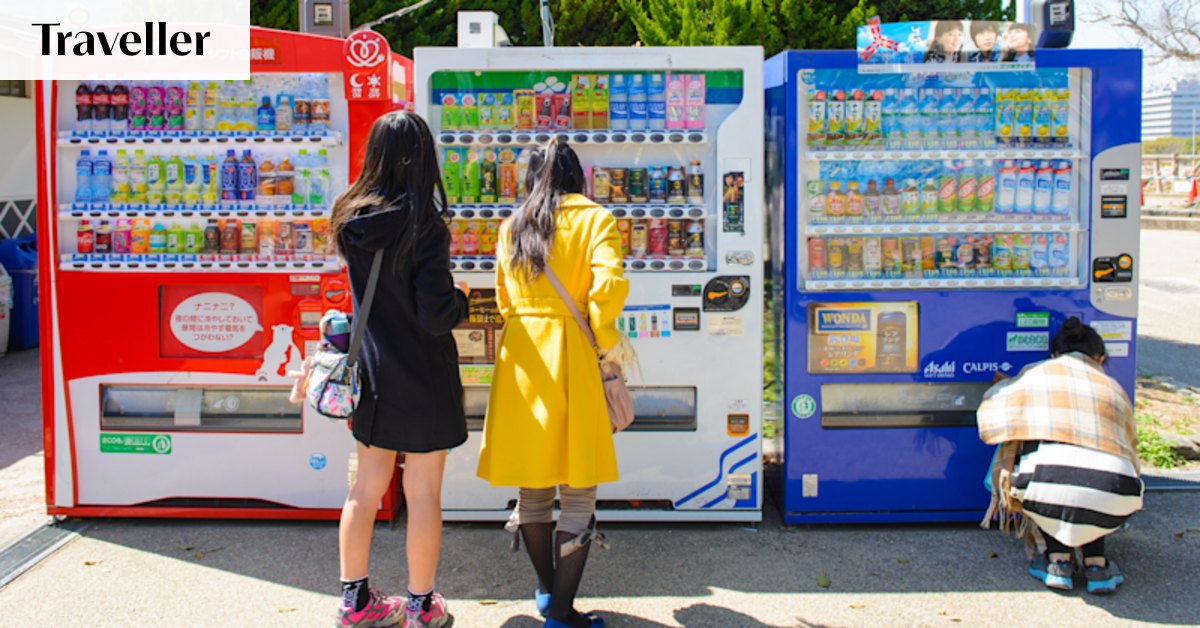
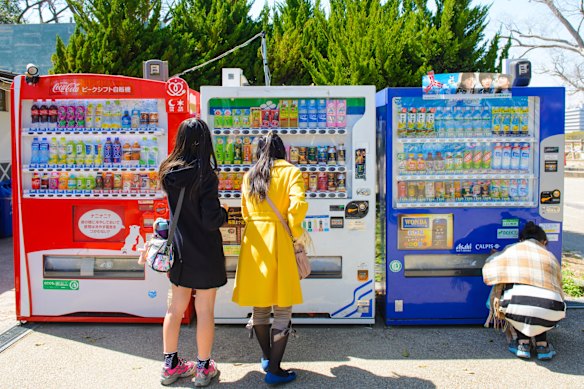 Vending machines outside Osaka Castle, Japan. There are millions of machines dotted across the country.iStock
Just as Guinness tastes best in Dublin, the sushi and sashimi is melt-in-your mouth given Japan’s focus on fresh produce and culinary excellence, but that’s just the start. There are pretty plated meals that could pass as art, tasty ramen, udon noodles and an abundance of soups, sizzling yakitori and karaage chicken, tuna steaks as thick as your wrist, the satisfying teishoku (set meals) in family restaurants, all the way to octopus on a stick at fish markets and fugu (pufferfish) for the more adventurous. All affordable and wonderfully memorable.
But Japan is also a world leader in the area of culinary convenience: the humble vending machine.
Where most of the metal boxes on Australian train platforms and offices will likely stock little besides overpriced chips, chocolates and soft drinks, Japanese vending machines carry an abundance of oddities and offerings.
Sign up for the Traveller Deals newsletter
Get exclusive travel deals delivered straight to your inbox. Sign up now.
Naturally, most vending machines stock drinks, ranging from coffee and alcohol to soft drinks, fruit juices, flavoured water and sugary pop. To judge Japan on its volume of drinks gives the impression this is a country perennially parched, but at least if you need the urge to press the button to try a guava and watermelon combo, it will only cost you ¥100 ($1.03).
Of far more appeal are those that dispense food, particularly those with decent fare. There are machines on train platforms to distribute Bento boxes, full of excellent snacks for the bullet trains (take care to leave no rubbish behind).
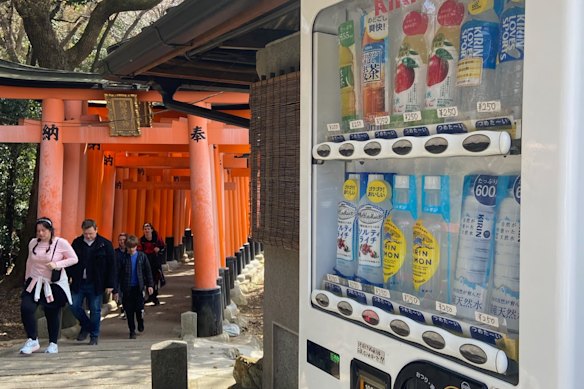 Culture meets convenience: A vending machine at Fushimi Inari Taisha, Kyoto.Adam Cooper
In the cities and suburbs, you can stand on the footpath and buy sandwiches, ice-creams and chilled fresh fruit. Tinned hot noodles and cake in a can fall into the novelty factor, but one machine I encountered while walking to a hotel distributed tasty dinners, such as chicken and noodles and even fried rice and beef curry – simple, satisfying meals after a long travel day. (My meal came out refrigerated, but all hotels have a room with microwaves and water taps. But some vending meals are already hot.)
There are vending machines on remote roadsides, below mountains and in sacred places, such as Kyoto’s Fushimi Inari Taisha, the Shinto shrine famous for its orange torii gates, where dispensers nestle in among huts and stalls along trails up the mountain. While many of us would blanch at a Coke machine spoiling your vista of, say, Cradle Mountain, vending machines are a celebrated quirk of Japanese culture.
There were 5 million dotted across the country a few years ago and while that figure has declined to under 4 million, it’s estimated there is one of these foodie boxes for every 48 inhabitants, the highest ratio in the world. That figure doesn’t include the stores dedicated to vending machines, where shoppers can peruse machines that spit out toys, trinkets, jewellery and collectibles for a handful of coins.
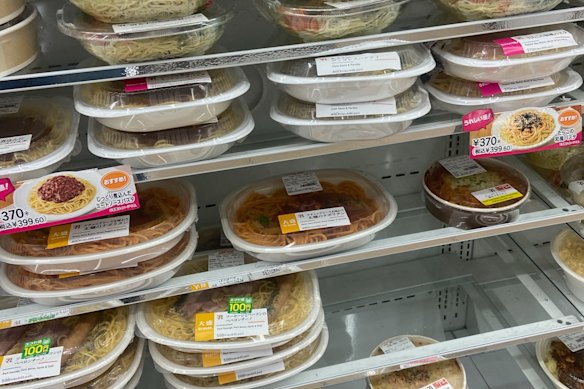 Eating made easy: Offerings and oddities in a Japanese 7-Eleven store.Adam Cooper
While it’s difficult to justify eating regularly from vending machines as there are so many real dining options, Japan is also a world leader in another area of eating ease: the convenience store. Again, where the Australian equivalent usually comprises packets of chips, bland muffins and dried-out sausage rolls, the FamilyMart, Lawson, 7-Eleven and other konbini on Japanese streets are a delight.
Don’t let snobbery against the convenience store deny you: there are as many suits, workers and families visiting these stores as there are students and tourists.
Related Article
There are pastries, fresh fruit and make-your-own smoothies as breakfast options, and just about anything you desire for the rest of the day. Tofu, noddles, packets of peeled boiled eggs, seafood snacks, toasted sandwiches, curries, rice dishes and takeaway dinners. Microwaves and benches in most convenience stores allow you a hot meal on the spot.
The FamilyMart crumbed chicken cutlet sandwich was like no other – tasty, fresh and worthy of a deli rather than behind peel-back cellophane. My wife still raves about the heavenly strawberry and cream sandwich she discovered in a 7-Eleven.
Yes, the packaging on all this food is excessive. And yes, there are more glorious eating adventures to be found than the quick and easy. But Japan’s knack of elevating the seemingly boring into something innovative underlines its popularity with visitors right now.
THE DETAILS
FLY
There are numerous options for daily flights from Melbourne and Sydney to Tokyo, with same-day connections to other cities. Try Japan Airlines (jal.co.jp), All Nippon Airways (ana.co.jp), Qantas (qantas.com) and Jetstar (jetstar.com).
MORE
japan.travel
The writer travelled at his own expense.
Save
You have reached your maximum number of saved items.
Remove items from your saved list to add more.
Default avatarAdam Cooper joined The Age in 2011 after a decade with AAP. Email or tweet Adam with your news tips.Connect via X or email.From our partners
AloJapan.com