
Your support helps us to tell the story
From reproductive rights to climate change to Big Tech, The Independent is on the ground when the story is developing. Whether it’s investigating the financials of Elon Musk’s pro-Trump PAC or producing our latest documentary, ‘The A Word’, which shines a light on the American women fighting for reproductive rights, we know how important it is to parse out the facts from the messaging.
At such a critical moment in US history, we need reporters on the ground. Your donation allows us to keep sending journalists to speak to both sides of the story.
The Independent is trusted by Americans across the entire political spectrum. And unlike many other quality news outlets, we choose not to lock Americans out of our reporting and analysis with paywalls. We believe quality journalism should be available to everyone, paid for by those who can afford it.
Your support makes all the difference.Read more
Japan’s prime minister Sanae Takaichi has reportedly complained that she is not getting enough sleep, and that she is also struggling to juggle “housework” with her official duties six months into her premiership.
It’s a candid admission from a politician who counts Margaret Thatcher among her greatest inspirations. Thatcher is famously said to have run Britain on four hours sleep a night and never complained of a lack of rest in public, once declaring that “sleep is for wimps”.
During a meeting with former trade minister Akira Amari on Thursday, Takaichi reportedly admitted that she wanted “a little more sleep”.
The Japanese prime minister, 65, previously told a parliamentary committee that her down time was “quite short as I’m tied up with housework” and “the rest of the time is spent doing work”.
Ms Takaichi told MPs she was sleeping just two to four hours a night, pointing to the bags beneath her eyes as she spoke.
“I sleep about two hours now, four hours at the longest,” she said at the time. “It’s probably bad for my skin.”
Food has also proved a challenge. “I’m not permitted to go shopping or order takeout from the official residence,” she said in February. “If I run out of frozen food, that’s the end.”
Mr Amari said the prime minister complained of similar difficulties managing meals during Thursday’s meeting.
Ms Takaichi caused a stir shortly after taking office when she summoned aides to her office for a 3am meeting to prepare for a budget committee hearing due to start six hours later. Her heavy workload drew expressions of concern from across the political spectrum, with Mr Amari saying that he was “honestly worried” about her health and an opposition MP urging her to sleep more.
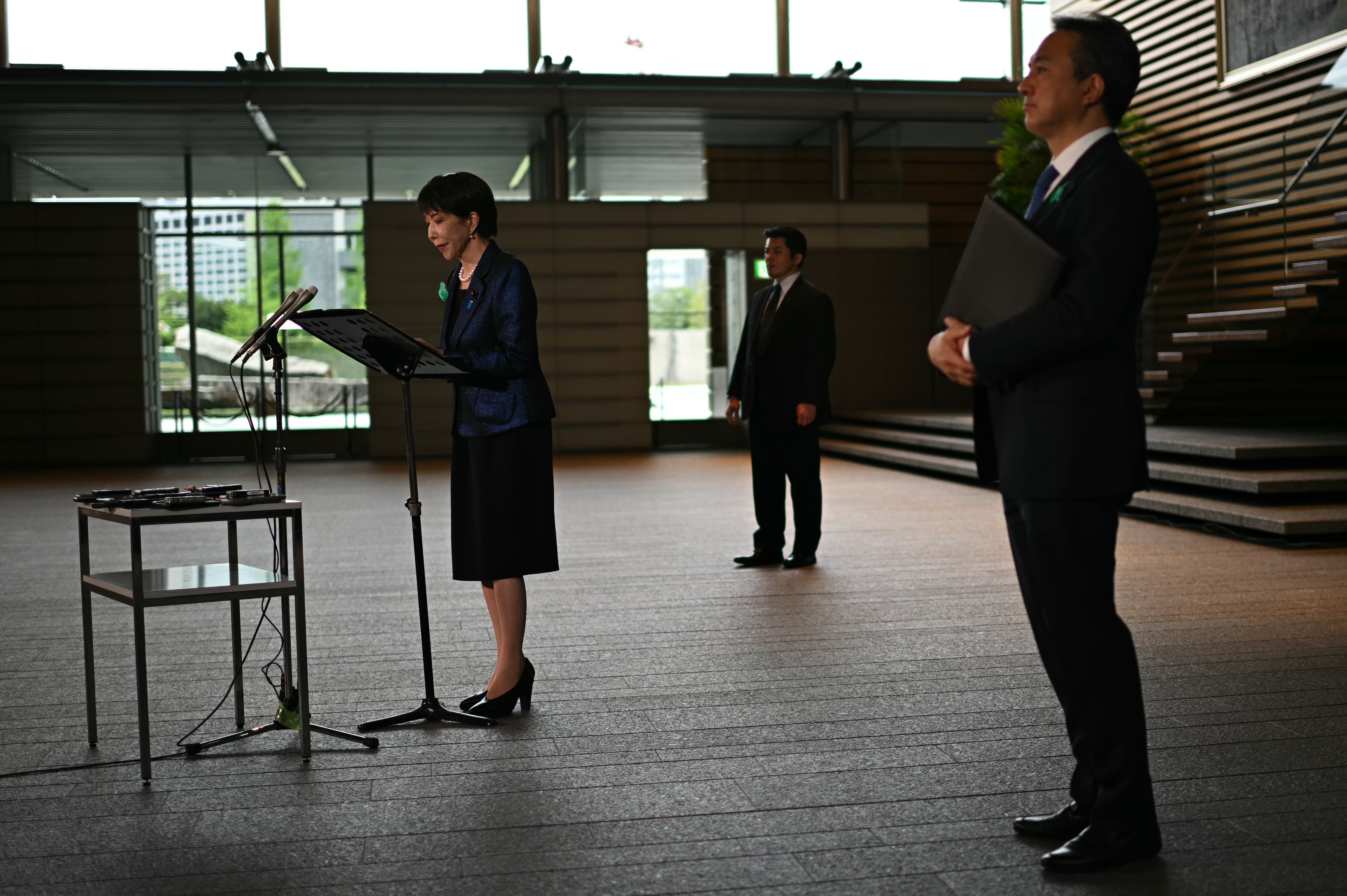 File. Sanae Takaichi vowed to ‘work, work, work, work and work’ after winning the ruling Liberal Democratic Party’s leadership election in October (AFP via Getty)
The sleep question carries particular weight in Japan, where punishing working hours are frequently blamed for karoshi – death from overwork – and where a struggle to change a corporate culture that expects employees to stay late and socialise with colleagues in the evening goes back decades.
A study released on World Sleep Day in March found that people in Japan averaged seven hours and one minute of sleep on weekdays, 38 minutes short of the international average and less than people across the US, Britain, France, Germany, Italy, and Canada.
Ms Takaichi vowed to “work, work, work, work, and work” after winning the ruling Liberal Democratic Party’s leadership contest in October last year. The slogan was named Japan’s catchphrase of the year for 2025.
A hardline conservative and acolyte of assassinated former prime minister Shinzo Abe, Ms Takaichi is a longstanding admirer of Thatcher and makes no secret of her desire to affect a decisive rightward shift in her country.
After moving into the prime minister’s residence late last year with her husband, she said he was trying to take work home rather than stay late in the office to avoid keeping aides and bodyguards on standby into the night.
AloJapan.com