
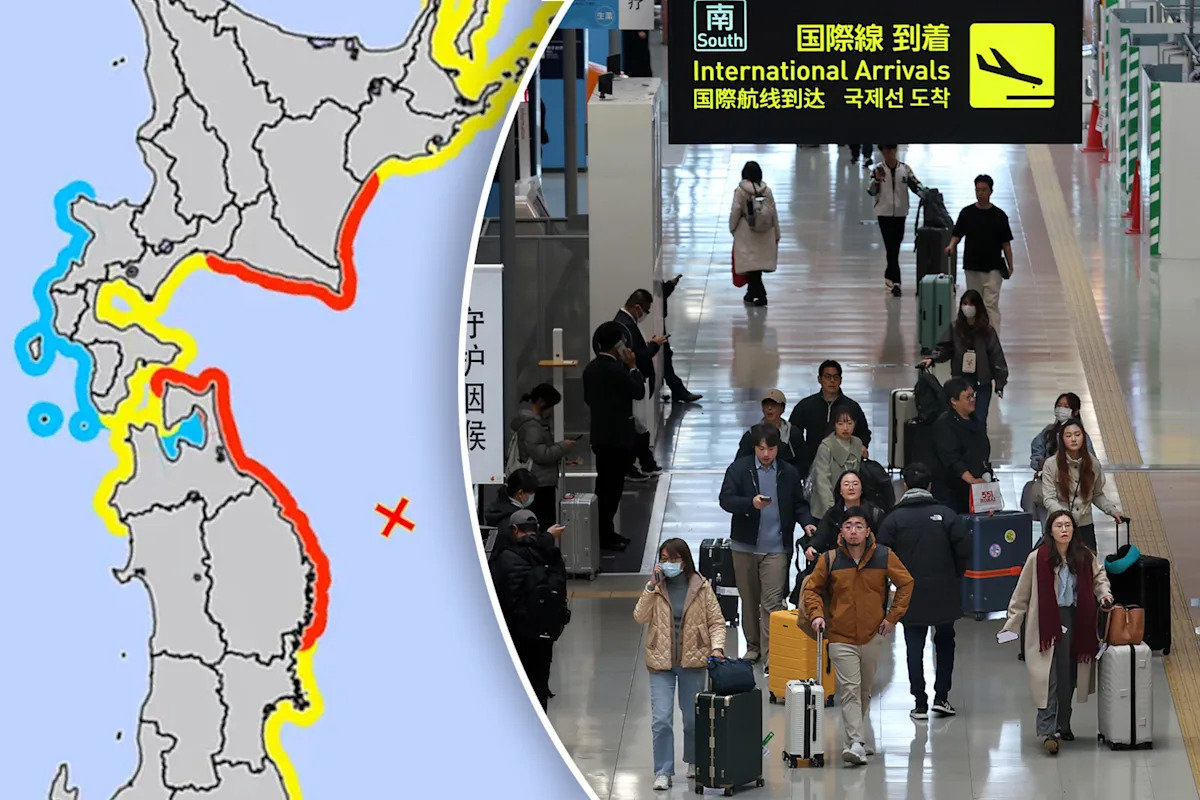
One of Australia’s favourite travel destinations was put on high alert this week after a 7.7-magnitude earthquake rattled the country, sparking fears a ‘mega quake’ could follow.
The powerful earthquake struck the northern coast of Japan on Monday, and authorities issued a special advisory warning to residents in the north of an increased risk of earthquakes of magnitude 8.0 or stronger.
The Cabinet Office and the Japan Meteorological Agency said there was a 1 per cent chance for a mega-quake to follow within the next week — a chance 10 times higher than normal.
The Australian Embassy in Tokyo has advised Australians in Japan to take preventative measures as there is a heightened risk of a further earthquake.
Tourists have been advised to monitor local media for updates and follow advice from local authorities.
So, if you have a holiday booked to Japan, should you cancel?
Is it too risky to travel to Japan?
Joseph Cheer, professor of sustainable tourism at Western Sydney University, told Yahoo News that Japan was one of “the most disaster-prone countries in the region” at any given time.
“It’s also a country that’s very disaster aware,” he said.
“Japanese buildings are very resilient to earthquakes. They can withstand earthquakes that are quite considerable. The infrastructure is relatively robust.”
He said there is no significant “infrastructural damage” from the 7.7-magnitude earthquake, and airports and train lines are still working as normal.
“Japan is very well organised for this kind of thing,” he said.
Japan records around 1,500 earthquakes a year, but powerful quakes above magnitude 7 are far less common, typically occurring every one to two years.
The mega-quake advisory feels daunting, but it should be mentioned that Japanese officials said it was not a prediction.
However, authorities have urged residents in 182 towns along the northeastern coasts to raise their preparedness while continuing their daily lives.
Officials will continue to monitor coastal conditions, but the immediate tsunami threat appears to have eased.
Should I cancel my Japan holiday?
Cheer said Australians reconsidering their travel plans to Japan should follow the advice from officials, which is to exercise caution.
He didn’t think this week’s current seismic activity warranted mass cancellations.
“Exercise more caution than normal,” he said. “But I would say go.”
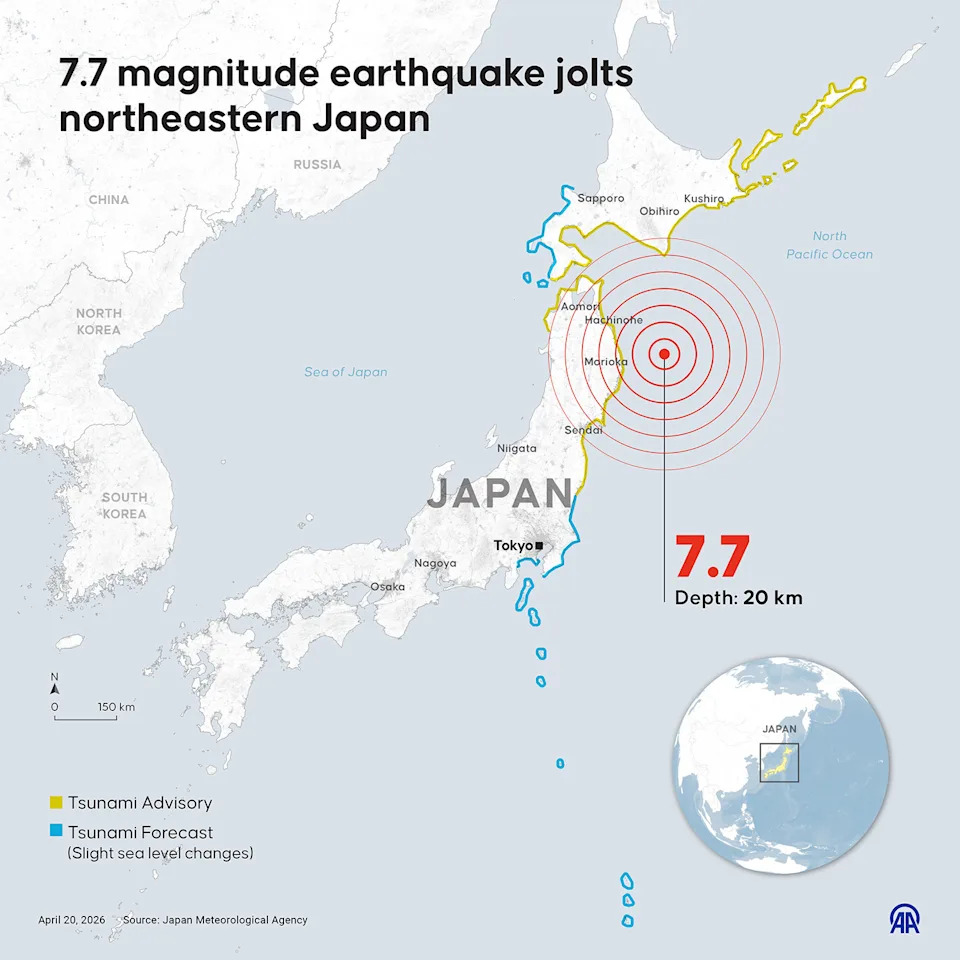
The 7.7 magnitude earthquake struck at a depth of 20 metres. Source: Getty
“Get insurance if you really want to be careful in case of cancelled flights,” he continued.
“But otherwise, I would suggest that the risk is relatively low.”
Cheer said financially it was a good time to travel to Japan as “the Yen is at historical lows”.
Early this year, the Australian dollar reached a 40-year high against the Japanese Yen (JPY), making it more affordable than ever for tourists to plan a trip to the sought-after destination.
He warned that one of the “biggest challenges” for Australians in an emergency would be the language barrier.
“But these days, phones will translate evacuation measures. So there’s no additional risk, generally speaking,” he said.
Angus Kidman, travel expert at Finder, agreed that Australians should not travel without insurance.
“The tsunami [threat] is a known event, travel insurers won’t cover you for any issues arising from it, and you should never travel overseas without travel insurance,” he said.
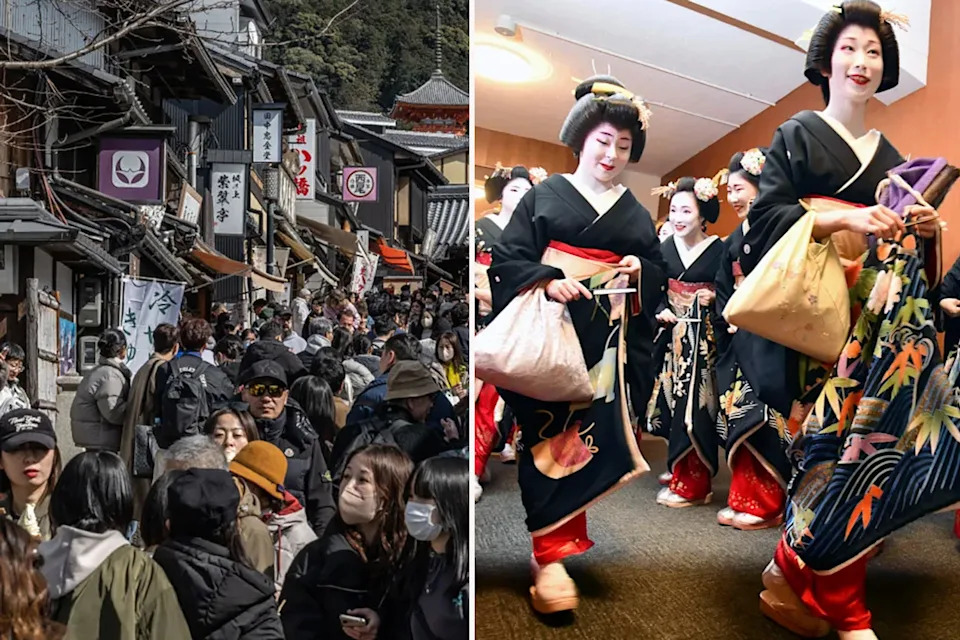
Australians travelling to Japan are encouraged to be aware in light of the recent earthquake. Source: Getty
“Demand for flights to Japan remains strong, especially since Japanese airports offer flights to Europe that don’t involve a Middle East transit.
“But always check the current situation before you book travel, and make sure you get travel insurance – it doesn’t have to cost a fortune to be protected.”
The Australian Smart Traveller website advises exercising normal safety precautions in Japan.
Do you have a story tip? Email: newsroomau@yahoonews.com.
You can also follow us on Facebook, Instagram, TikTok, Twitter and YouTube.
AloJapan.com