
I’ve been following the Japanese project NOT A HOTEL for several years now. I am not sure whether it is because of Japan, the design houses (sorry, hotels) where I would happily live and write poetry, or because NIGO, along with his good friend and collaborator Pharrell Williams (there is nothing this man cannot do), creatively wove themselves into the story from the very founding of this innovative project in 2020. (Entrepreneur Shinji Hamauzu is the mastermind behind the project.) To cut a long story short, it is a bit of all of the above, and the latest news, which we had actually been expecting this year, has confirmed this innovative hospitality concept as one of the most praised on the design ladder of life.
Related: Pharrell Williams delivers a lesson in architecture and design
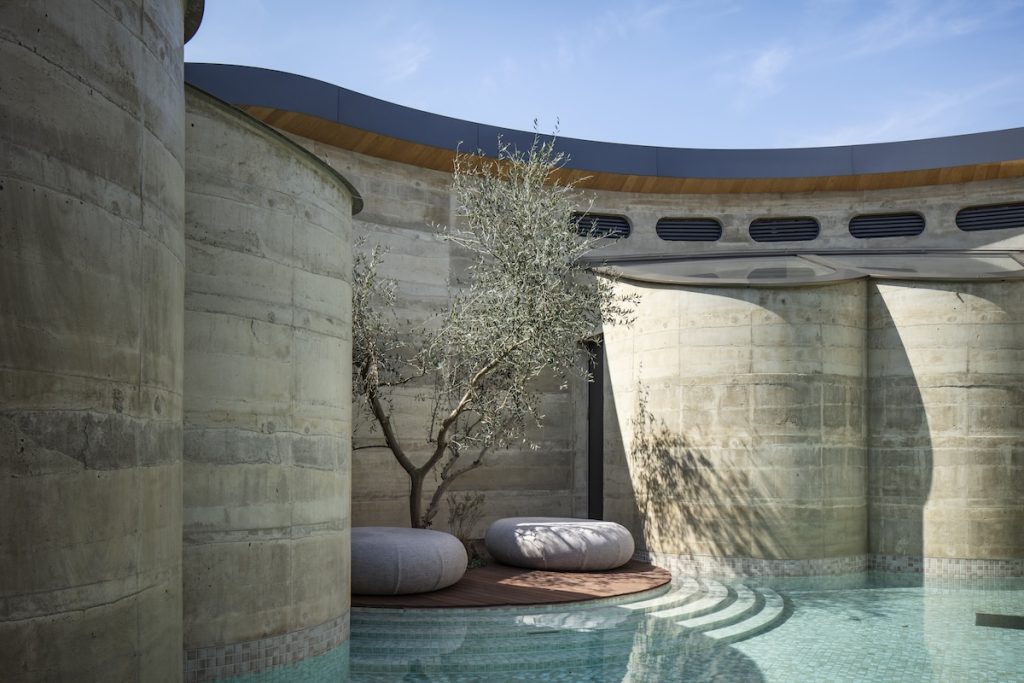
Photo: Kenta Hasegawa
A brief overview of the NOT A HOTEL concept
Instead of a classic hotel or vacation home, NOT A HOTEL is a system that merges ownership, hospitality, and a digital platform into a single experience. People do not simply buy one house, but enter a network of architecturally unique villas spread across Japan, which they can use and share over time. These houses are located in different parts of Japan: in Tokyo (urban residences), in the Niseko area of Hokkaido (mountain resort and snow), in Gunma in Kitakaruizawa (forest and mountain landscape near Tokyo), in Miyazaki (coastline and ocean in southern Japan), and in Setouchi, on Sagishima Island (islands, sea, and the newest architectural projects set within a natural landscape). Each location offers a completely different experience, and everything functions as a “lifestyle system”: reservations are digital, stays are flexible, and the houses are maintained like luxury hotels.
The idea is simple: less attachment to a single place, more freedom to live through different spaces and landscapes. What began as a startup idea quickly became a global architectural and lifestyle project that now collaborates with some of the world’s most renowned architects and designers. Speaking of the most famous architects, three new villas have just been completed on the remote Japanese island of Sagishima. And they are more beautiful than anything you could imagine when picturing a vacation home on a remote Japanese island.
NOT A HOTEL Setouchi
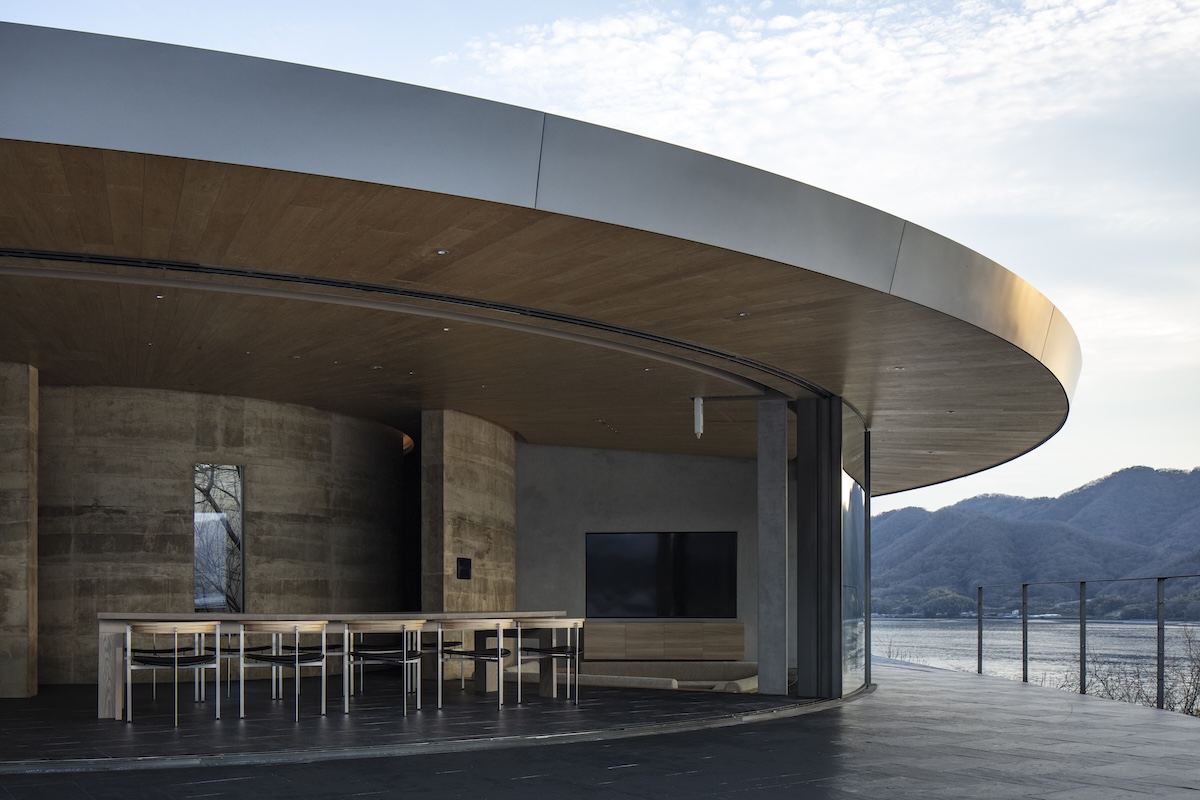
The three distinct Setouchi villas were made from earth taken directly from the site, using the traditional rammed earth technique, and carved into the island’s mountainous terrain. The project was designed by the Danish firm BIG (which truly is big in the world of architecture), and construction took less than two years. Guided by a dialogue between Scandinavian and Japanese design, NOT A HOTEL Setouchi emerges as architecture that is not placed into the landscape, but rises out of it. On Sagishima Island, the villas follow the natural contours of the hill, while the site was thoughtfully “returned” to its original state: grass was collected before construction, and olive trees, lemon trees, and native vegetation were replanted so the landscape could be restored rather than altered.
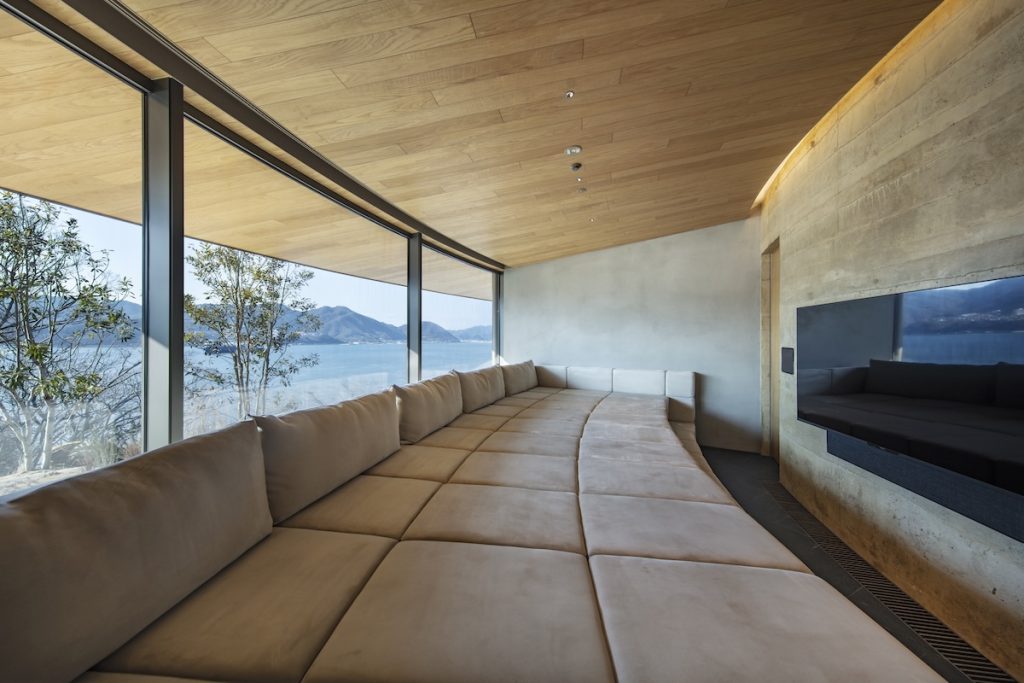
Photo: Kenta Hasegawa
The three villas, 180, 270, and 360, are embedded at different elevations and open onto different views, from an intimate stretch of shoreline to the wide archipelago beyond. Each one is positioned as an extension of the terrain, almost as if the hill itself had transformed into architecture. Bjarke Ingels, founder and creative director of BIG (Bjarke Ingels Group), describes the project as a space of contrasts: “The macrocosm meets the microcosm, the traditional meets the modern; the Scandinavian and the Japanese.” In his interpretation, the villas are not objects but “inhabited views,” architecture that frames the landscape instead of occupying it.
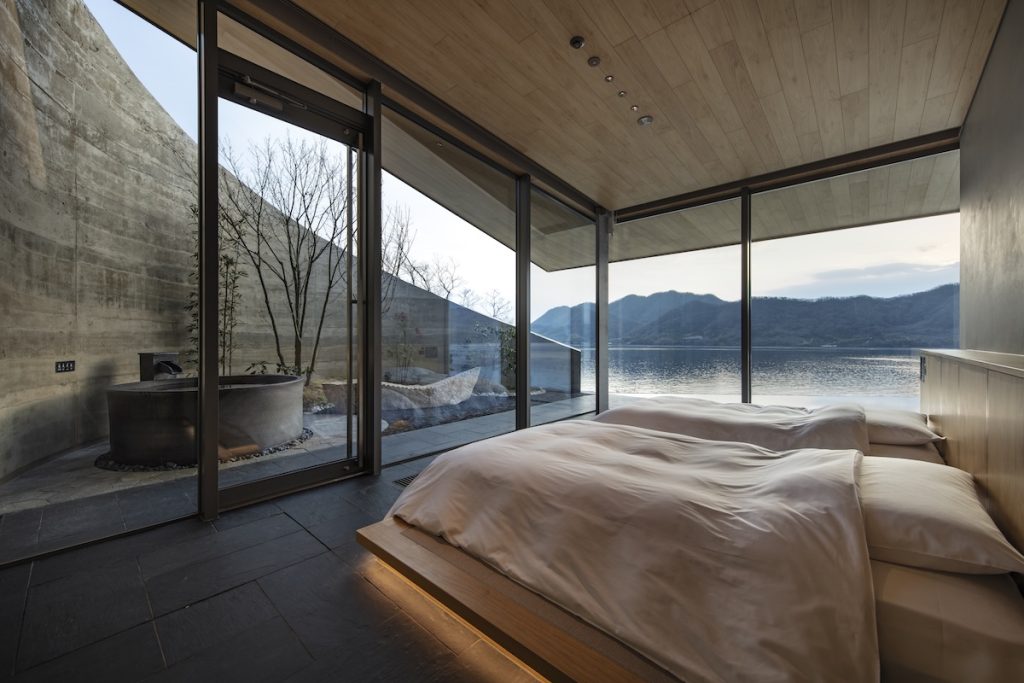
Photo: Kenta Hasegawa
The materiality further strengthens that relationship with place. Rammed earth from the island itself, glass surfaces that erase the indoor/outdoor boundary, and floors inspired by tatami layouts create the impression of a space that is both contemporary and deeply rooted in Japanese tradition.
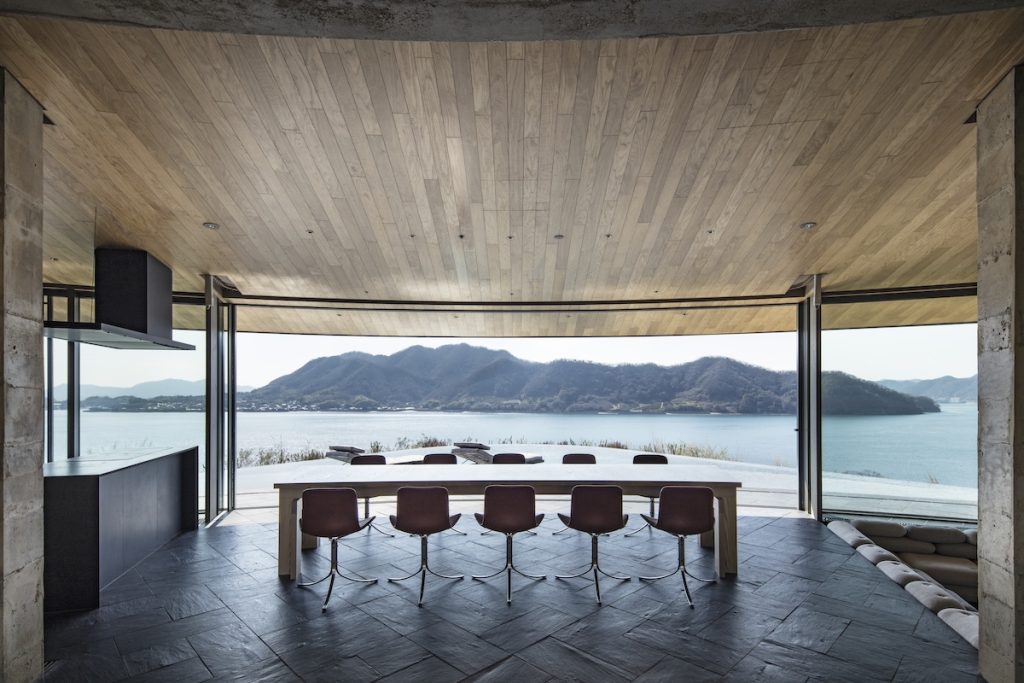
Photo: Kenta Hasegawa
Each villa has its own atmosphere: 360 looks in all directions, 270 opens onto a panoramic view of the islands and the sea, while 180 follows the shoreline itself and curves along the terrain. Inside, the space flows without interruption, with roof openings, courtyards, and pools that constantly bring nature into the interior. As Leon Rost of BIG says, the architecture grew out of walking the terrain itself: “Every step along the slope became form.” That is precisely why the villas feel less designed than discovered in the landscape. Roofs with solar tiles, passive cooling, and rainwater harvesting further complete the circle, with contemporary technology integrated into the landscape without disturbing its silence.
What makes this project special is not only its aesthetics, but the idea that luxury no longer lies in opulence, but in time, space, and the way one lives. BIG also has reason to celebrate, as NOT A HOTEL Setouchi joins their growing hospitality portfolio, which includes Hôtel des Horlogers Audemars Piguet in the Swiss mountains, The Biosphere at Treehotel in Swedish Lapland, and the upcoming El Cosmico in Texas.
AloJapan.com