
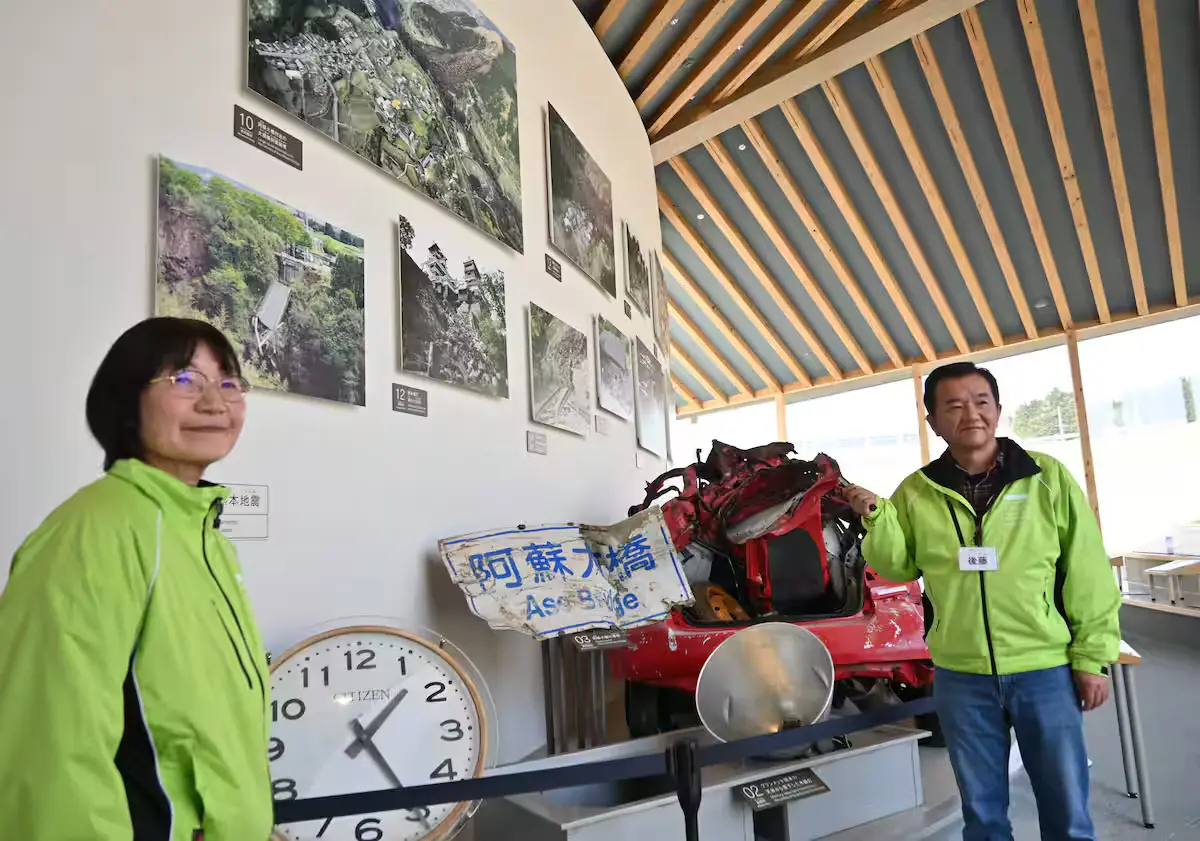
As disasters strike Japan with increasing frequency, “disaster-prevention tourism” is gaining attention by turning preparedness into a tourism asset and linking the story of recovery with travel.
The approach is said to have gained traction after the 2011 Great East Japan Earthquake and is now spreading in Ishikawa Prefecture, where communities are still recovering from the 2024 Noto Peninsula Earthquake.
With attracting visitors to regional areas still a challenge, there are growing hopes that the initiative can promote both disaster awareness and local economic revitalization.
Turning Risk Into Readiness
Kuroshio in Kochi Prefecture was once dubbed Japan’s “most dangerous town.” In the event of a major Nankai Trough earthquake, it is expected to be hit by a tsunami as high as around 34 meters (111 ft), the highest projection nationwide.
After the projections were released, the town built six tsunami evacuation towers and moved its town hall to higher ground. It has also strengthened preparedness through both infrastructure and community-based measures, including planned evacuation drills and its own disaster-prevention education programs.
These forward-looking efforts began drawing national attention, with local governments from across the country visiting the town for inspection tours.
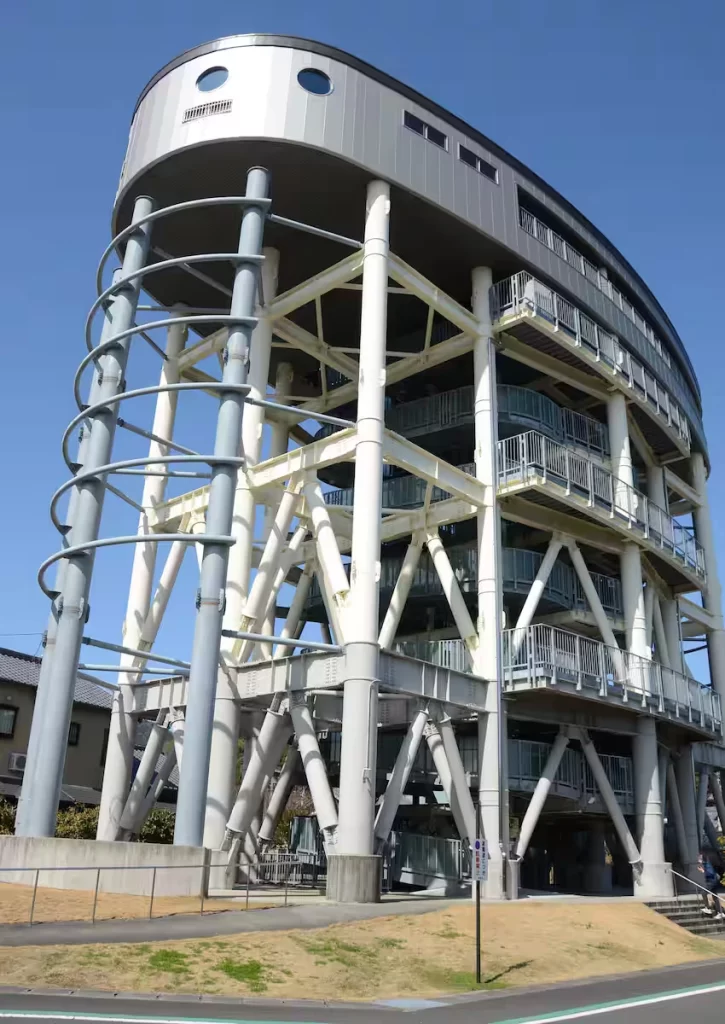 The nation’s largest tsunami evacuation tower, capable of sheltering 230 people, stands in Kuroshio, Kochi Prefecture, on March 4. (©Sankei/Norihiro Akiyama)
Kuroshio also introduced paid programs that teach disaster preparedness through activities such as tours of its evacuation towers—among the tallest in the country—and nighttime evacuation drills.
According to the town, it has hosted more than 1,500 visitors in some years, and eventually came to be known as “Japan’s leading disaster-prevention town.”
Stockpiling With Local Flavor
Another popular program lets visitors sample creative dishes made with emergency canned foods. Produced by the local company Kuro Can, it aims to manufacture emergency food within the community while also creating local jobs.
Using local ingredients such as bonito, sugar, and salt, the company has expanded its line of original products to 24 varieties. “We hope people will incorporate them into their daily meals and replenish what they use to keep a steady emergency stockpile,” said its president, Kimio Tomonaga.
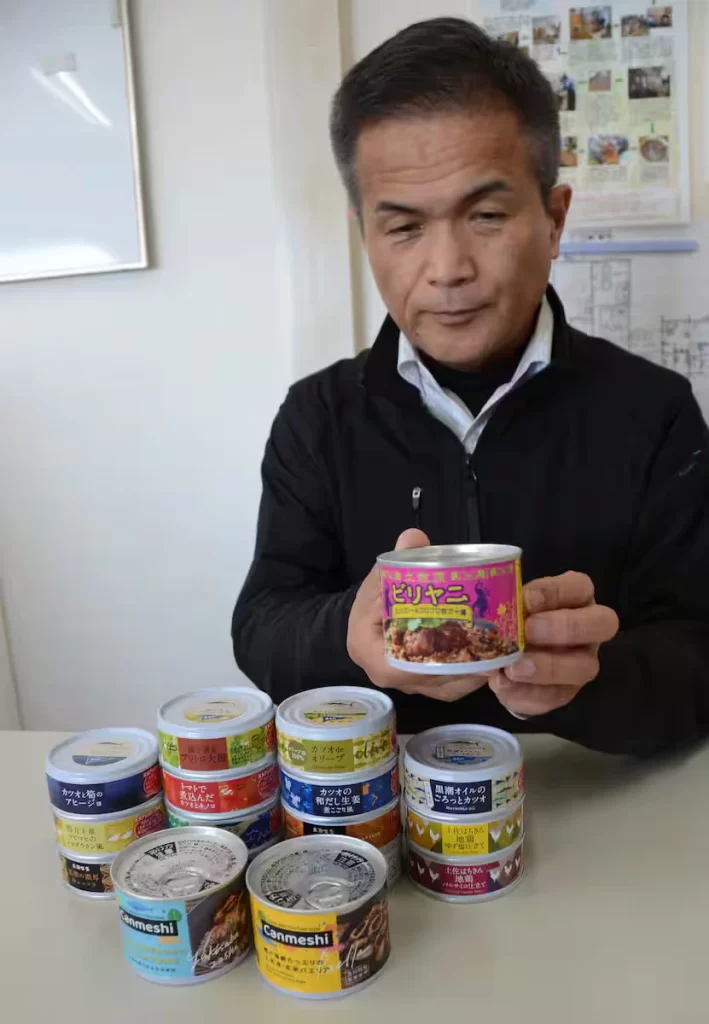 Tomonaga Kimio of the Kuro Can explains the lineup of canned products in Kuroshio, Kochi Prefecture, on March 5. (©Sankei/Norihiro Akiyama)
Jun Murakoshi, head of Kuroshio’s information and disaster prevention division, said, “We want people to understand that nature has two sides, both blessings and dangers.”
Behind the town’s distinctive initiatives lies a strong sense of pride in leading what it sees as the country’s foremost disaster-prevention efforts.
“I hope visitors will not only learn about disaster preparedness, but also experience the town’s appeal through its local food and natural surroundings,” he added.

A Nationwide Trend
In western Japan, Hyogo Prefecture, which was heavily affected by the 1995 Great Hanshin Earthquake, underwent extensive post-disaster recovery and reconstruction. It has since taken a leading role in promoting disaster-prevention tourism.
The prefecture is home to a range of disaster-related sites, including the Disaster Reduction and Human Renovation Institution in Kobe and a seismic archive that preserves bridge piers from a collapsed expressway.
With many tourist attractions nearby, Hyogo is advocating a distinctive model that combines disaster education with tourism.
In Ishikawa Prefecture, where communities are still recovering from the Noto Peninsula Earthquake, reconstruction tourism is also gaining traction. By taking visitors through disaster-hit areas, the initiative seeks to deepen awareness of resilience and disaster readiness while also creating jobs for residents as storytellers and guides.
Fukushima Prefecture is promoting “Hope Tourism,” a program that invites visitors to see firsthand the progress of recovery from the Great East Japan Earthquake and the Fukushima Daiichi nuclear accident. Tailored programs are available based on departure point and length of stay.
Elsewhere in the Tohoku region, efforts to utilize preserved ruins from natural disasters are also gaining momentum.
RELATED:
Author: Norihiro Akiyama, The Sankei Shimbun
(Read the article in Japanese)
Continue Reading
AloJapan.com