
Key Takeaways
Japan’s transport ministry said major Japanese airlines reported 429 in-flight smoking incidents in 2025, the highest level since 2004.The figure was 6.60 times higher than the low of 65 cases recorded in 2019.The government said the spread of heated tobacco products was one of the key factors behind the increase.Under the revised Civil Aeronautics Act of 2004, smoking in aircraft lavatories is treated as an act that endangers safety, and failure to follow the captain’s orders can result in a fine of up to JPY 500,000, or about USD 3,100, as stated in the source.Japan plans to work with airlines through posters and in-flight videos to warn passengers about fire risks.
2Firsts, April 14, 2026
According to MGRonline, Japan’s Ministry of Land, Infrastructure, Transport and Tourism said on Monday that major Japanese airlines reported 429 cases of passengers smoking on domestic and international flights in 2025, the highest level in 20 years.
In-flight smoking cases rose to 429 in 2025
The report said the figure was the highest since comparable data collection began in 2004 and was 6.60 times higher than the record low of 65 cases in 2019. The Japanese government said the spread of heated tobacco products was one of the key factors behind the increase.
Japan plans a broader campaign with airlines
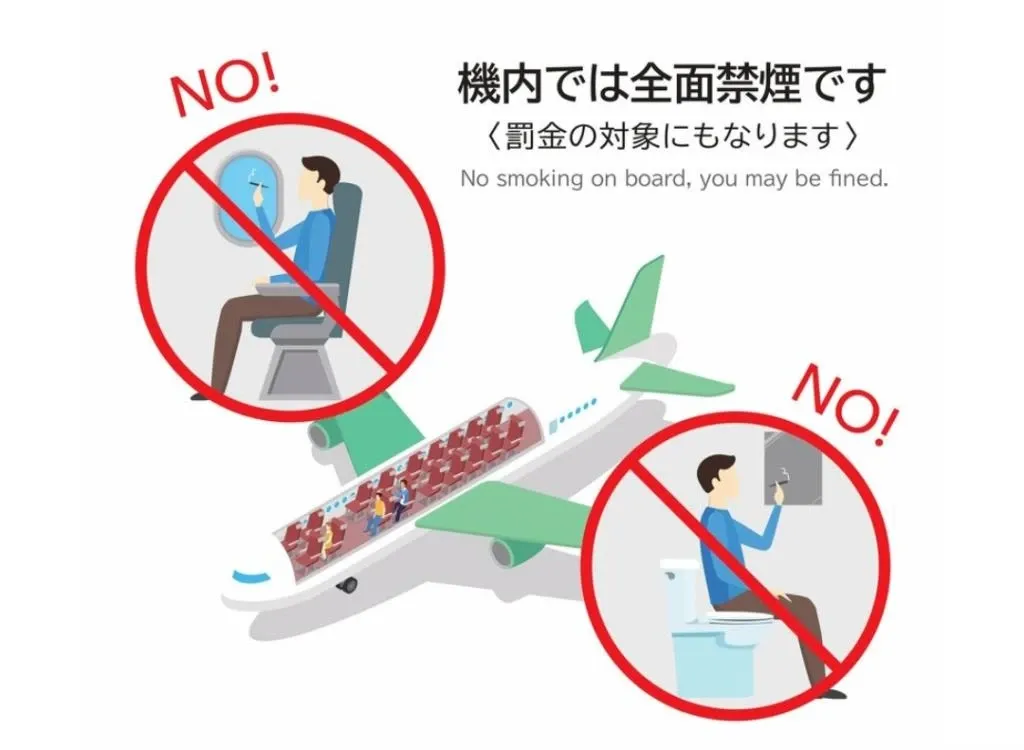
The government said it plans to work with airlines to raise public awareness of the risk of fires on aircraft. Japan’s transport ministry and airlines have already been urging passengers not to smoke on planes through posters and in-flight videos.
Smoking on aircraft can trigger fines of up to JPY 500,000
Under the revised Civil Aeronautics Act of 2004, smoking in aircraft lavatories is classified as an act that endangers safety. Passengers who fail to comply with a captain’s order can be fined up to JPY 500,000, or about USD 3,100, as stated in the source.
The report also said that smoking in seats or aisles may also be punishable if passengers fail to follow instructions from the captain or cabin crew.
E-cigarettes and heated tobacco were added to the guidance in 2020
Japan added e-cigarettes and heated tobacco products to revised government guidance in 2020 because the aerosol they produce may activate smoke detectors.
According to ministry and related agency data, annual smoking incident reports are collected from Japanese airlines operating aircraft with more than 100 passenger seats or with a maximum takeoff weight exceeding 50,000 kilograms. Although the number of reporting airlines fluctuates as new carriers enter the market, in-flight smoking cases stood at 359 in 2004, fell to 185 in 2007, and dropped below 100 for the first time in 2018, at 76 cases.
Heated tobacco now accounts for more than 40.00% of sales in Japan
The report said use of heated tobacco products in Japan has increased over the past decade and now accounts for more than 40.00% of total tobacco sales. As a result, reports of smoking on aircraft have been rising since 2020.
An official from the ministry’s Aviation Safety Office said the statistics do not distinguish between conventional cigarettes, e-cigarettes, and heated tobacco products, but said that “there may be less guilt associated with the latter.”
Hidehiko Yoshida, secretary-general of the Scheduled Airlines Association of Japan, said the group would work to understand the situation and cooperate with airlines and the government on necessary measures.
Image source: MGRonline
AloJapan.com