
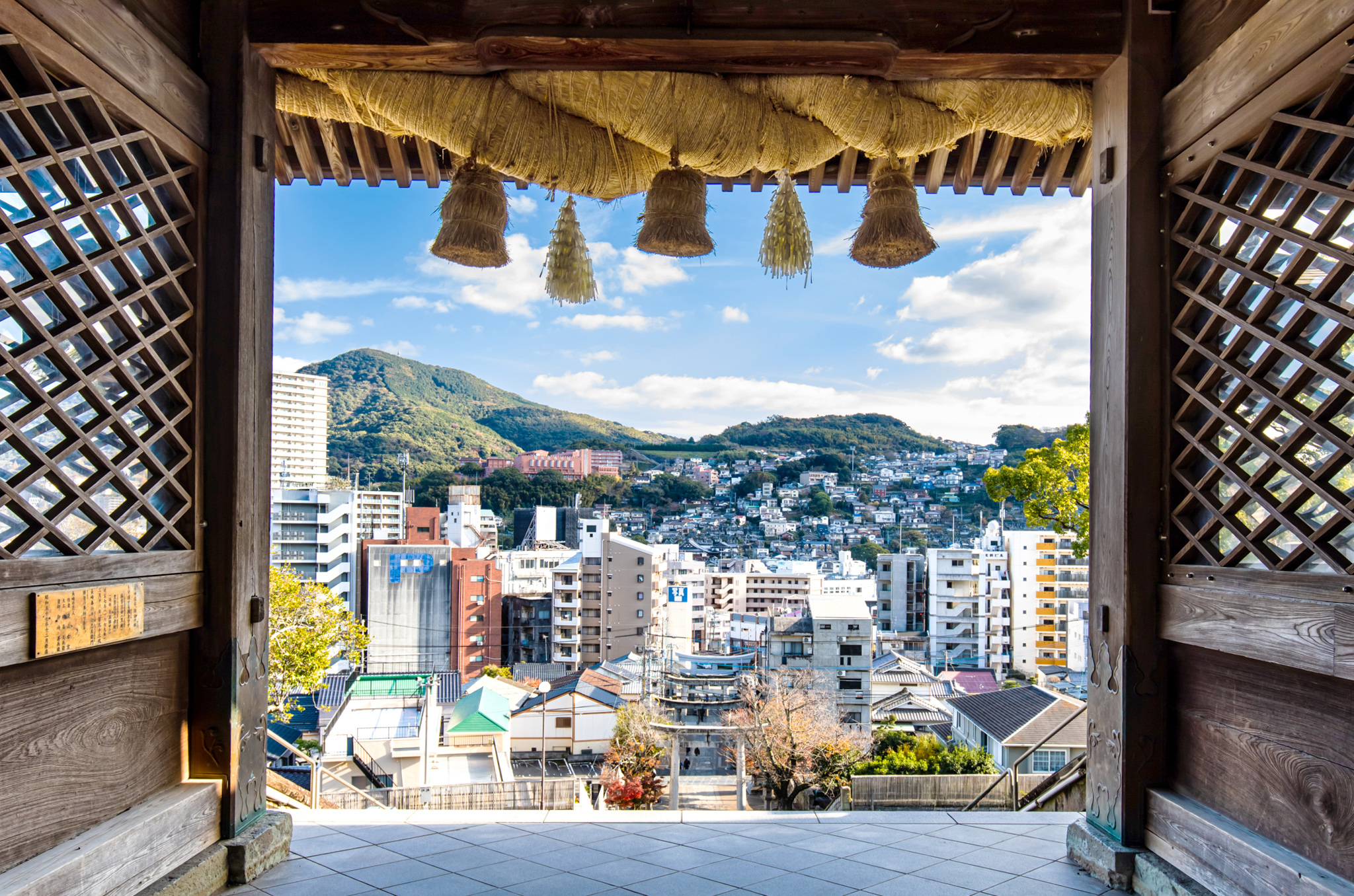
Nagasaki is unlike any other place on earth. Wrapped around a luminous harbor and carved into green hillsides, it’s defined by winding streets, walkable neighborhoods and a medley of architectural and culinary gems. But many people know the city for another reason: It is one of only two places in the world to have experienced an atomic bombing.
It’s for both of these reasons — Nagasaki’s evocative beauty and its history shaped by nuclear catastrophe — that it earned a place on the New York Times‘ “52 Places to Go in 2026” list. It’s a city that has overcome immense tragedy, while honoring what was lost. As the Times notes, it’s a particularly poignant place to visit as the threat of nuclear proliferation spreads worldwide. Yet it is also, quite simply, a deeply rewarding destination in its own right: a city of glittering vistas, centuries-old camphor trees, European-influenced architecture, intimate jazz bars and a rich, everyday local character that reveals itself slowly.
Honoring History: Monuments to Peace in Nagasaki
The heart of the city is anchored by the Nagasaki Atomic Bomb Museum and the nearby Peace Park — landmarks that are essential for understanding the weight of the past. In the Peace Park, you can find the Nagasaki Peace Statue and part of the ruins of Urakami Cathedral, which once served as the largest Catholic church in East Asia.
Another significant historic site, Sanno Shrine is most famous for its one-legged torii gate, all that remained of the shrine’s approach in the wake of the bombing. But it’s home to an incredibly moving natural memorial as well: a pair of great camphor trees that were scorched by the blast. Against all odds, they steadily sprouted new buds and continue to grow today, their massive, scarred trunks serving as living monuments to endurance.
Where To Wander in Nagasaki
Nagasaki’s topography is one that feels at once intimate and dramatic. Homes and shops dot the mountainsides along the Urakami River, creating a skyline that feels tucked away and unpretentious.
As you wander through the historic Minami Yamatemachi district, you’ll find narrow, uniquely Japanese passages that hug the slopes. This area was once the heart of the city’s 19th-century foreign settlement, a hub of modernity where the first coffee and steam engines arrived in Japan. Architecturally, it’s a rare treasure: Japanese carpenters built Western-style estates resulting in intriguing, fused structures, with French windows sitting beneath traditional Japanese tiled roofs. To see some of these residences up close, stop by Glover Garden.
To take in the scenery in full, head to the summit of Mount Inasa. You can take a ropeway to the top for a panorama officially recognized as one of the “World’s New Three Most Spectacular Night Views.” From up there, the valley sparkles like a dense chest of jewels.
Sampling Local Flavors: Where To Eat and Drink
Nagasaki has been an international melting pot for centuries, and its culinary scene reflects that fact. Try the sweets shop Fukusaya, which has been hand-making its famous castella cake since 1624 — a recipe brought by the Portuguese and perfected by locals over 400 years. The city’s dining scene is also famously shaped by its historic Chinatown, the oldest in Japan, which introduced dishes like chanpon — a hearty noodle soup topped with pork, seafood and vegetables — and sara udon, a crispy noodle dish smothered in a savory mixed-vegetable sauce, to the national palate.
These international influences continue to evolve in Nagasaki’s modern corners. Enjoy the specialty brews at Kariomons Coffee, or grab a New York-style slice at Couch Pizza. Nagasaki’s exciting blend of flavors is not one you would typically expect of a mid-sized city, and the best part is that you can avoid the long lines you tend to come across in Osaka and Tokyo.
Nagasaki also has a rich history of cozy jazz bars, with spots like Milestone offering a sanctuary for music lovers and novices alike. Milestone has been run for nearly 40 years by the son of atomic bomb survivors, and it’s the perfect example of that local warmth and the kind of cozy space that invites genuine conversation.
This authentic atmosphere is in the small details, too — from the surly hillside cats lolling on stone steps to the quiet pride the shopkeepers take in their craft. By spending time in Nagasaki, you’re helping preserve a culture that is both uniquely local and globally significant. It’s a city that rewards anyone who takes the time to look a little deeper, offering a hospitality that feels personal, sincere and entirely its own.
More Information
To learn more about Nagasaki, visit http://www.at-nagasaki.jp/nitca.
Nagasaki International Tourism and Convention Association
2F Dejima Wharf, 1-1 Dejima, Nagasaki City, 850-0862
TEL: 095-823-7423
AloJapan.com