
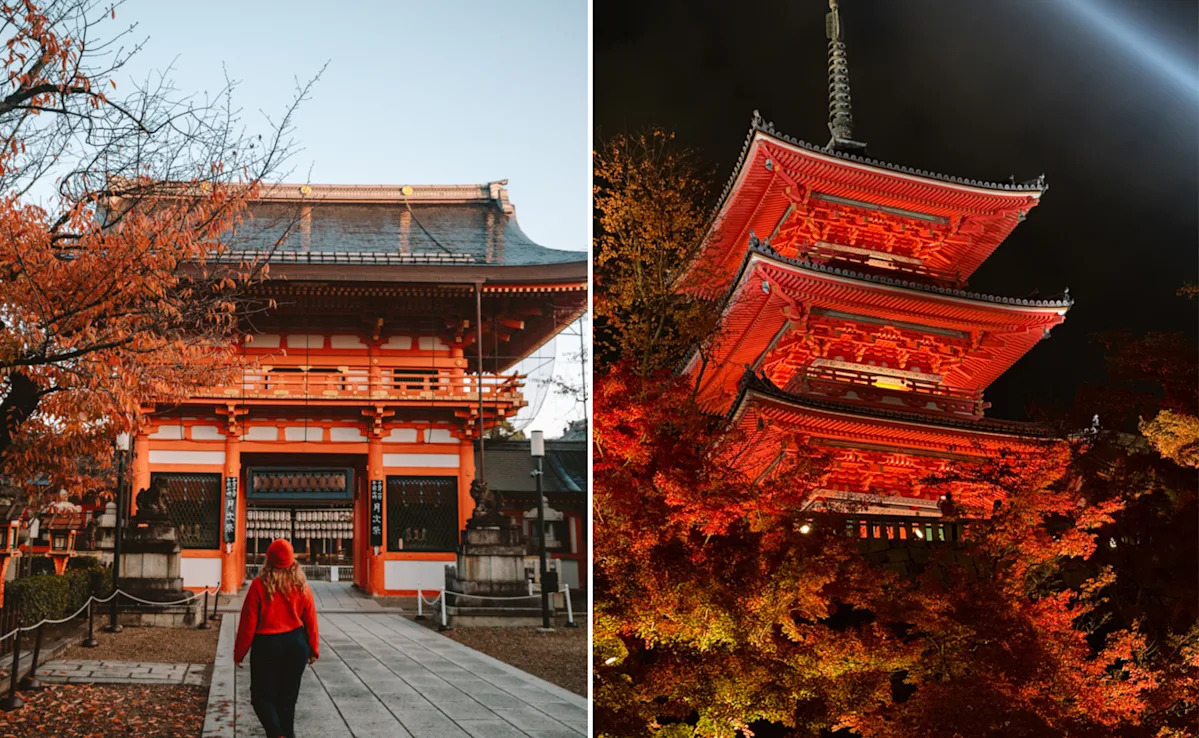
Kyoto doesn’t need hype or an introduction; it’s already carrying more history than most cities on the planet, and it shows in the way daily life moves through temples, side streets, and tea counters without ceremony.
This guide focuses on those moments. Not the everything you could do in 24 hours whirlwind itinerary you tend to find on travel features, but the things that made the city click for me.
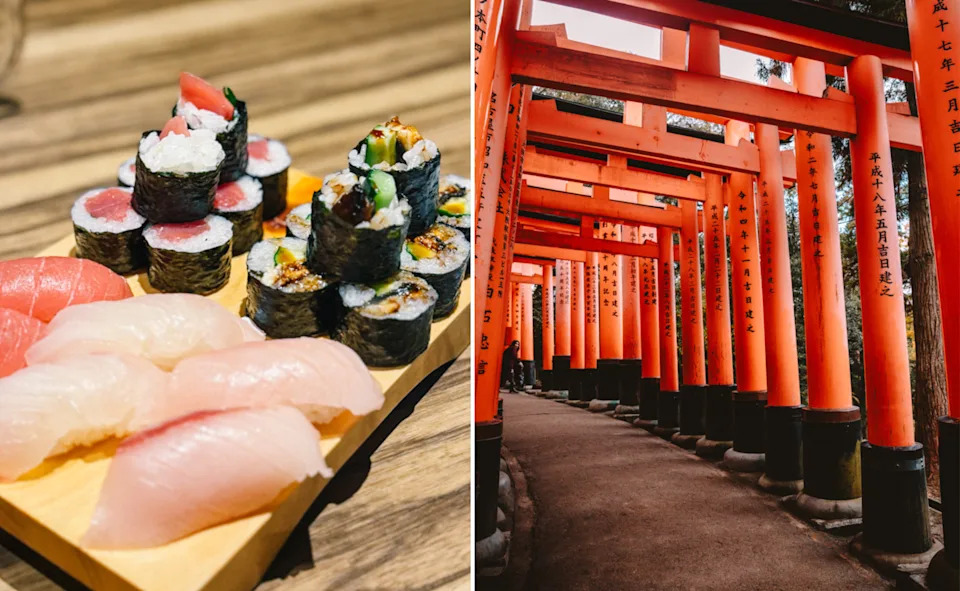
Photo by Kara Harms
Where to Stay
Moxy Kyoto Nijo
I like staying somewhere that gives me energy instead of draining it. Moxy Kyoto Nijo manages to feel current without clashing with its surroundings.
The rooms are comfortable and – dare I say it – large for Japan, the common spaces feel social but not chaotic, and the location near Nijo station makes getting around simple. It’s an easy home base if you want to balance sightseeing with downtime.
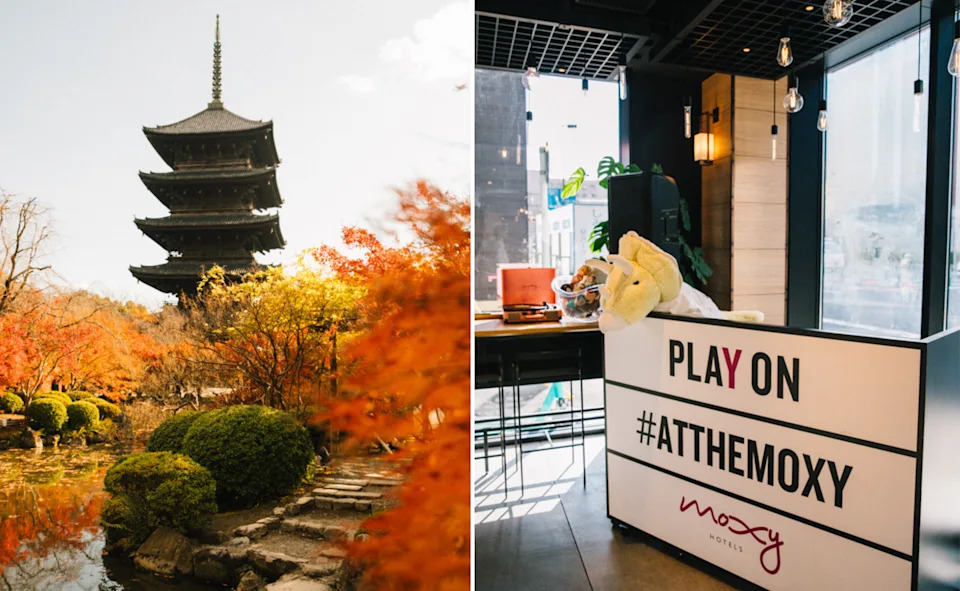
Photo by Kara Harms
Top Temples and Sights
Kinkaku-ji
The Golden Pavilion is as striking as everyone says, but timing matters. Go in the late afternoon if possible when crowds are thinner.
Kiyomizu-dera
Standing on the wooden stage gives you a sense of Kyoto’s scale, both past and present. The surrounding streets are worth just as much attention as the temple itself, plus the view is amazing.
If you’re traveling during autumn, check out the night illumination for a sense of magic and whimsy.
Yasaka Pagoda
This corner of the city is heavily photographed, but it still holds weight in person, especially in the late afternoon when the light softens.
Expect crowds every at sunrise but it’s worth it for that postcard view.
Fushimi Inari Taisha
These famous torii gates stretch far beyond where most visitors turn back. Keep walking, the farther you go, the quieter it becomes.
Bring at least 1000 in yen coins to use as offerings to the many shrines along the way or to buy tokens, fortunes and gifts.
Where to Eat and Drink
Imperial Palace Tea Houses
Simple tea houses near the Imperial Palace offer a pause from sightseeing in the heart of the city.
Beatle Momo
A music bar with personality and intention. Come here when you want a drink and a soundtrack that actually matters, just make sure to grab reservations ahead of time.
Monk
One of the most memorable meals I had in Kyoto. Seasonal, thoughtful, and worth planning ahead for.
Izuu
Traditional Kyoto sushi done with restraint and precision. This is a meal to slow down for after a long day on your feet.
Tsujiri Kyoto Gion Store
A reliable stop in Gion with Uji matcha desserts that strike the right balance between richness and bitterness.
Nishiki Market
Lively, crowded, and full of small bites. Wander without a plan and stop when something catches your eye. Make sure to bring cash.
Vermillion Cafe
Coffee near Fushimi Inari with views of trees and a small pond, plus vegan treats.
_(6)_2575.png)
Photo by Kara Harms
Unique Experiences
Matcha Tea Ceremony
Participating in a traditional tea ceremony gives context to something you’ll see everywhere in Kyoto. The process, the tools, the silence. It changes how you understand matcha afterward.
We booked this ceremony experience and I can’t recommend it enough.
Higashiyama in the Late Afternoon
Around 4 p.m., the neighborhood begins to shift. You may see geishas heading to appointments, so plan on hanging out around here casually to try your luck. After, head to a Gion Corner for a traditional show.
What to Buy
Lisn
Lisn offers over 150 unique incense scents. You can custom-build your own pack stick by stick to make sure it hits all your marks.
Le Labo Kyoto Machiya
The Kyoto-exclusive fragrance is bright and vibrant, and worth waiting in line for. Make sure to leave at least an hour for them to process your order before they close.
Matcha Bowls and Ceramics
Look for handmade pieces with small imperfections as those tend to carry the most character and mean they aren’t mass-produced.
Uji Matcha
High-quality matcha from nearby Uji is one of the most practical and meaningful things you can bring home.
Pokémon Cards
Japan treats collectibles with seriousness. Even casual fans will find something special.
_(7)_0674.png)
Photo by Kara Harms
How to Get Around
Walking is the best way to understand Kyoto’s layout and rhythms. Buses are often faster than trains for getting across the city, but the underground train system is reliable for longer distances and connections.
Before You Leave
Kyoto isn’t a place you conquer in a few days so don’t squash it as a quick stop between Tokyo and other destinations. It’s a city that settles in gradually, through repetition and small discoveries.
AloJapan.com