
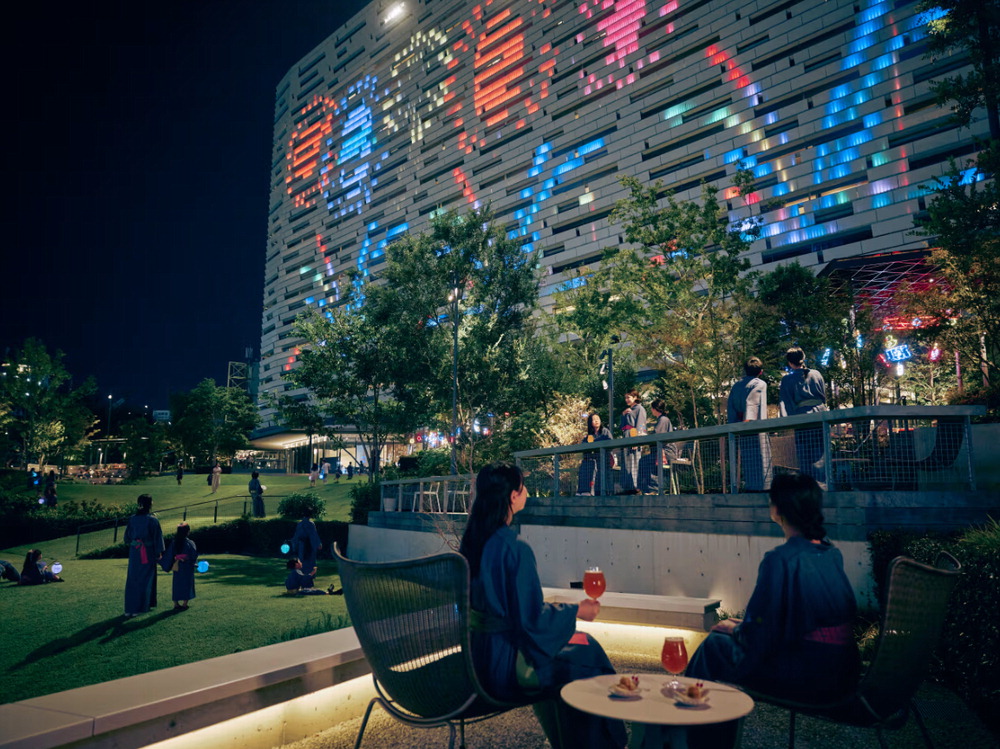
 사진 확대 Omo7 Osaka evening view. Hoshino Resort
“Naniwa (なにわ, 浪速)” is the old name used to call Osaka, Japan. Osaka has a faster mind than words. He laughs first and sits next to me even if I don’t ask him. It’s a warm nosiness of the Osaka people. People say this is ‘Naniwa Emotion’. People come before cities and relationships are more important than formality. As it was a merchant’s city, it has an open atmosphere.
Recently, a hotel that embodies Naniwa sentiment has appeared in Osaka. OMO7 Osaka by Hoshino Resort, which is called OMO7 Osaka. Hoshino Resort Group, well-known as Hoshinoya, launched the urban hotel brand “OMO” in 2018.
Omo7 Osaka, which opened in April 2022, has a total of 436 rooms. Omo brands separate service ranges by numbers. The higher the number, the more auxiliary facilities and programs. Omo7 Osaka is a partner of the 2025 Osaka and Kansai World Expo (Expo) and operates expo-linked contents in the hotel.
The hotel is located near the Irene district, which was once considered an underdeveloped area in Japan. The Irene district began to change into redevelopment after the 2020s. Hoshino Resort noted the potential of the neighborhood. Hotel paper was a cosmetics factory. This is the place where the headquarters and factory of Nakayama Taeyangdang (currently Club Cosmetics) were located. The traces can be encountered in the room. Skin care products have been placed under the brand. The basic amenities are Hoshino Resort products. It’s a downtown hotel, but its large garden and lounge are close to a resort.
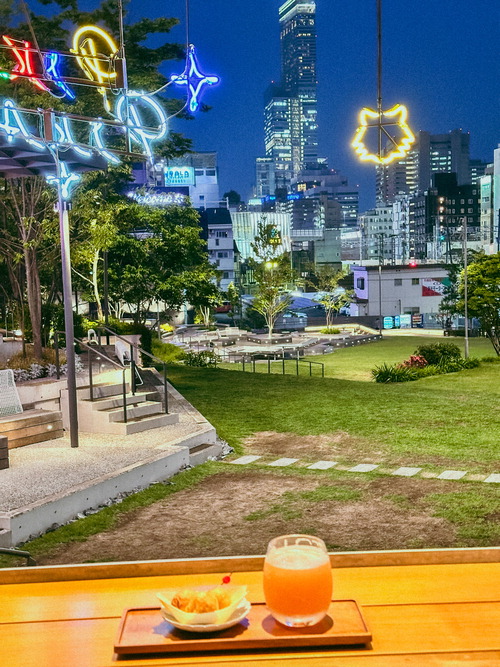 사진 확대 Pikapika Night.
If you go out of the north exit of JR Shin-Mamiya Station, a white building stands right in front of you. The exterior looks like a white film. The fluororesin titanium oxide photocatalyst material has been used to reduce insolation by more than 30% and increase cooling efficiency. At the entrance lies a gold sculpture, Billiken. Billiken is a “God of Fortune” character born in the United States in 1908 and is a symbol of the Osaka region. There is a story that if you touch the soles of your feet, your wish comes true.
When I arrived at the hotel, I was greeted by an employee of the Hasegawa Rina public relations team who was fluent in Korean. It is said that my mother likes Korean dramas, so she naturally learned Korean. Most of the hotel’s facilities are on the second floor, called Omobase. There is a free locker room at the entrance to the second floor. You can leave your luggage before check-in or after check-out. The space leading to the lobby was filled with black circles. It is an image of Osaka Solfood Takoyaki.
A welcome drink was placed around 2 p.m. It’s Osaka specialty mixed juice. During the Showa period, Shinsekai fruit shops started to grind ripe fruits into milk without just throwing them away. Bananas, canned persimmons, peaches, pineapples, apples, and milk are basic. It is a drink made by the thrifty lifestyle of an Osaka merchant who uses everything without leaving anything behind.
The interior of the hotel reflected Osaka symbols everywhere. Takoyaki, octopus, tigers, and Osaka Castle are carefully melted into the interior. I even paid attention to the room license plate and one window sticker.
The rooms are quite spacious for a Japanese hotel. The windows are horizontally long, so the scenery is framed. The floor of the room is finished with tatami mats, so slippers should not be worn. There are two food and beverage establishments. “Omo Dining” and “Omo Cafe & Bar”. Breakfast is available at both places. Omo Dining runs a breakfast buffet and Omo Café & Bar offers a morning set. There is also a service for family travelers. It runs a free shuttle bus to Universal Studios Japan.
In front of the building, a wide green garden fills the view. It is called “Miya Green” and takes up more than half of the hotel’s land. Sitting on a bench on a hill, the platform of the subway station meets the eye level. The garden landscape changes as the sun goes down. The “Pika Pika Night” will be held from 7:30 p.m. to 10 p.m. Like the Japanese word for ‘sparkling’, the outer wall of the hotel turns into a large screen, and LED fireworks are held. Fireworks shoot over the outer wall, embodying Osaka symbols. It is free for guests only. Takoyaki is also grilled on site. It is baked without sauce in the way of the original Takoyaki store “Aizuya”. Beer and non-alcoholic beverages are unlimited. People wearing yukata and walking on the lawn, a smile in Takoyaki’s hand spread under the light one by one.
A five-minute walk from the hotel will reach Shinsekai and Mega Don Quixote, the representative downtown area of Osaka. In the middle of Shinsekai, there is an observatory, Tsutenkaku. Shinsekai is the neighborhood where Kushikatsu (fried skewers) was born. If you’re hesitating where to go, look at the map of Gokinjo on the lobby wall. It is easy to organize the course by organizing the main attractions easily.
The core of Omo7 Osaka is the local expert ‘Omo Ranger’. Hotel staff conduct the tour themselves without using an outside guide. The Shinsekai walking tour starts at 4 p.m. in front of the map of Gokinjo on the second floor. Walk for about an hour around Shinsekai, centering on Tsutenkaku. What’s more interesting is the Kushikatsu tour. It is a fried dish that started in 1929 and was quickly solved by office workers. Omo Ranger chose only real local restaurants, not franchises. Two people enjoyed a guest-only menu while traveling around a small store full of guests. It also included the etiquette that skewers taken once in the sauce container should not be dipped again. At that moment, he was no longer a stranger.
[Kwon Hyojung’s trip to Osaka + Reporter]
AloJapan.com