
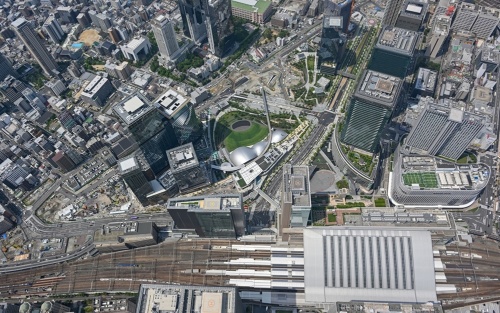
Half of the “GRAND GREEN OSAKA” site in Kita-ward, Osaka City, is park space that is one of the largest urban green parks in the world connected directly to a major terminal station.
The United States is suffering severe headwinds blowing against resolutions for social issues highlighted by the United Nations Sustainable Development Goals (SDGs). This is especially so for diversity, equity, and inclusion (DEI). Some appear to expect Japan to step up to replace the U.S. as the driving force in repairing these discrepancies. Right now, a project is underway in Osaka city, to overcome social challenges using company operations by way of integrating business and social values.
Enhancing Ecosystem to Nurture Osaka’s Abundant Green
“Tokyo has no sky, while Osaka has no greenery,” according to a quote from “Chieko Sho” by famous poet Kotaro Takamura. But can this assertion now be considered to be something from the past?
In September 2024, “Umekita Park” opened in advance on the northern side of Osaka Station. It is approximately 45,000 square meters of green space that directly connects to the city’s major railway hub. The park’s major claim to fame is being one of the world’s largest public spaces directly connected to a large terminal station inside a capital city. The green zone is part of the large-scale redevelopment project “GRAND GREEN OSAKA,” and it is a fact that half the area in this project is really plants and gardens. Mitsubishi Estate Co. Ltd is leading a joint development venture that established the general incorporated association Umekita MMO to manage the public space for 50 years.
This development is a kind of experimental site for new corporate sustainability initiatives. In spring of 2024, Mitsubishi Estate revised its key sustainability themes in response to the changing natural and social environments surrounding the entire Mitsubishi Estate Group. This repositioning also reflects the growing complexity of demands faced by companies in the area of sustainability. Mitsubishi Estate’s revisions redefined the key points related to the spirit of the SDGs, which have trained the focus for the company’s ways of creating value for society, as “actions aimed at realizing sustainability for both the Group and society.”
The revised four focus themes are: firstly, pursue tangible and intangible urban development for the next generation; secondly, maintain commitment to reducing environmental impact; thirdly, consider people, empathize with people, protect people; and fourth, create and circulate new value. These focal points demonstrate the company’s dedication to the importance of social value in all its business activities, while also working to enhance its business value as a corporation.
This strategy was already foreshadowed in the motto “Be the Ecosystem Engineers,” a phrase that is part of the Mitsubishi Estate Group’s Sustainability Vision 2050, a document launched in 2020. This statement defines the Group’s wish to be companies -engineers- that provide ‘a place and mechanism’ – ecosystem – where individuals and stakeholders from all walks of life can build sustainability-based symbiotic interconnections that benefit both the natural world and society.
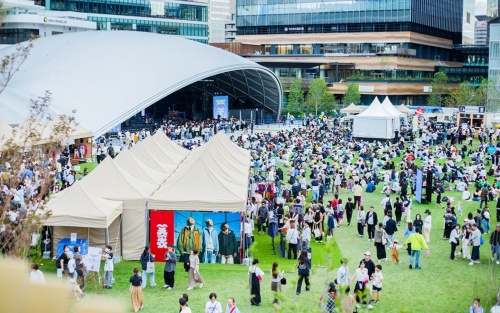
New “greenery,” something formerly lacking in Osaka’s city center, is bringing a new liveliness through drawing crowds of people to the area (BAYCREW‘S FESTIVAL 2024 OSAKA was held in October 2024). Described as, “most wonderful free festival,” it attracted over 20,000 people to enjoy music, fashion, and food
Sustainability’s emphasis in the GRAND GREEN OSAKA project is demonstrated by the fact that the development has been recognized with several international certifications for sustainable urban development. Attained credentials include the U.S. Green Building Council’s LEED-ND Plan Certification, evaluating the walkability and proximity of the facility and its surroundings to work and residential areas; the SITES Preliminary Certification, assessed by the U.S.-based Green Business Certification Inc. to evaluate all aspects of the project from site selection and management practices to preserving the natural environment as well as positive impacts on health, and education.
In addition to these certificates, the project has also been recognized with the “DBJ Green Building Certification,” the “ABINC ADVANCE Certification,” the “ZEB Oriented Certification (office portion),” and the “CASBEE Smart Wellness Office Certification.”
One of the most distinctive features of this project’s “ecosystem” creation was the establishment of “MIDORI Partners,” a system of partnerships with companies that cooperate in managing the park. Using donations from partner companies, MIDORI Partners will work to protect the park’s greenery and find resolutions for social issues such as the creation of a sustainable society and ensuring the well-being of park visitors. These operations can be seen as a new type of ecosystem.
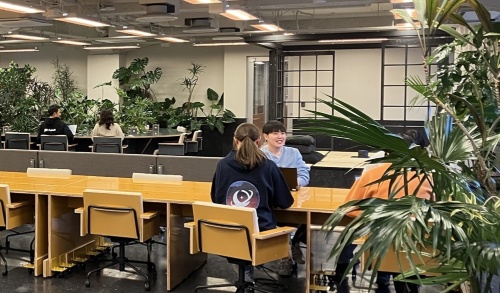
“0 Club,” an incubation center for innovation specializing in Climate Tech in Otemachi, Tokyo
As part of creating this ecosystem, Mitsubishi Estate has also launched a new startup support program in its home base of Otemachi, Tokyo. The new facility is called “0 Club” and is aimed at tech companies addressing climate change. Until now Mitsubishi has been supporting startups in FinTech and other fields, but this time the services that opened in October 2024 focus on combating environmental degradation. The company will use the mechanisms it has cultivated with the FinTech sector to promote innovative ways to tackle climate change through leveraging already existing collaborations with large companies, venture capitalists, financial institutions, and universities that have strengths in these areas.
These ecosystems will flow on into the future ecosystems in an evolution of creative innovation. The world is looking forward to the realization of this virtuous cycle.
‘Two-Pronged Management’ Brings People, Companies Together
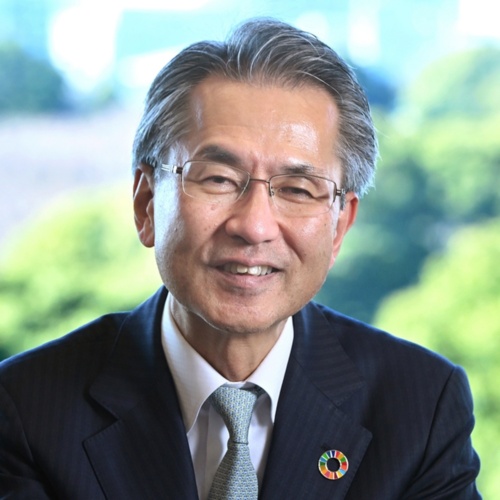
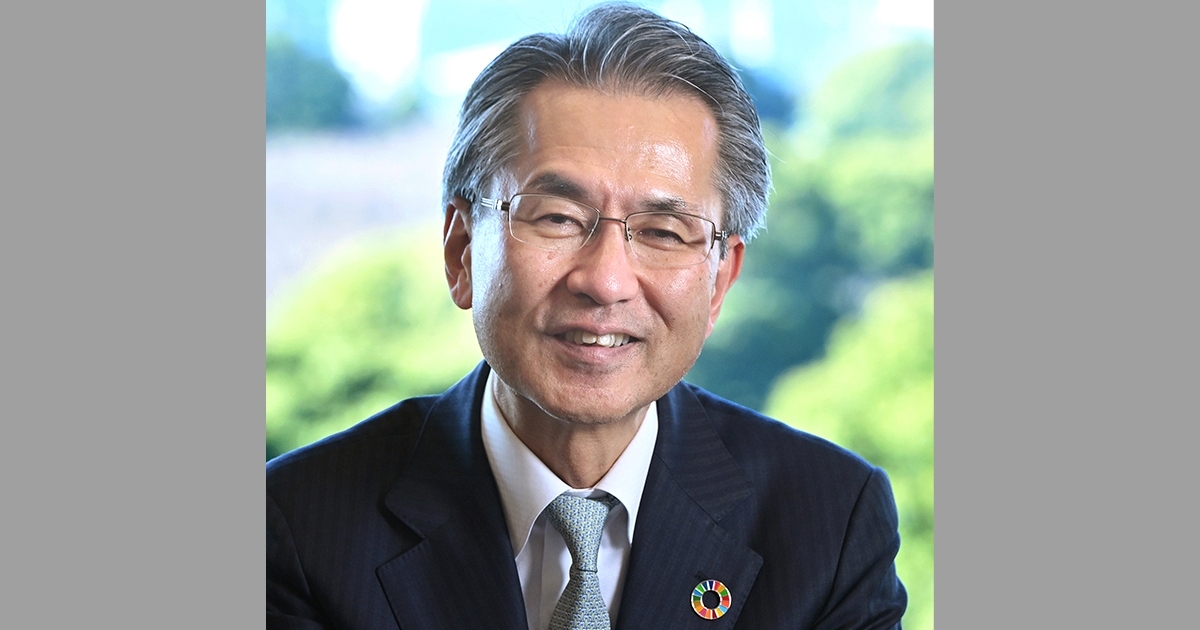
Atsushi Nakajima
Representative Corporate Executive Officer, President & Chief Executive Officer
Mitsubishi Estate Co., Ltd.
What I consider important is for our company to engage in creating intrinsic value. We can achieve this by enhancing both what is valuable to society and what is valuable as a business. These two aspects tend to be seen as separate goals, and in fact they may contradict each other over the short term. However, keeping in mind a medium to long-term view, we believe that they are one and the same, leading in the same direction.
If our company attempts to focus only on social value, there might be times when we cannot continue along this path for economic reasons. But then again, if we only think about profiting immediately without a thought for the future of society, the properties we build and the estate services we offer may end up as economic waste. We will build infrastructure that is valuable to society to bring shared economic benefits in the long run. This stance is what we call “two-pronged management.”
“GRAND GREEN OSAKA” demonstrates this idea in an easy-to-understand way. By properly building a city with an abundance of greenery, we provide social value, while also promoting the preservation and revitalization of the global environment and biodiversity, creation that leads to more innovation. The local authorities have shown their determination to boost the area of plants and gardens, and nine joint ventures, including this company, have partnered to unite their efforts to lift social value, resulting in the successful creation of a city that will improve society as a whole. As greenery begins to appear on site, the number of contracts is increasing progressively, as is business value that is clearly evident across the project as a whole.
This is an example of how “GRAND GREEN OSAKA” is a combination of various elements to create a place by being the “ecosystem engineers” we aim to be. In this role we are bringing together a diverse range of people and companies in a mutually beneficial relationship with the new green space. We will face many challenges in managing the green zone that is Umekita Park for the next 50 years. It’s a big task, but I am sure that after overcoming everything, we will have created more essential value than existed before.
AloJapan.com