
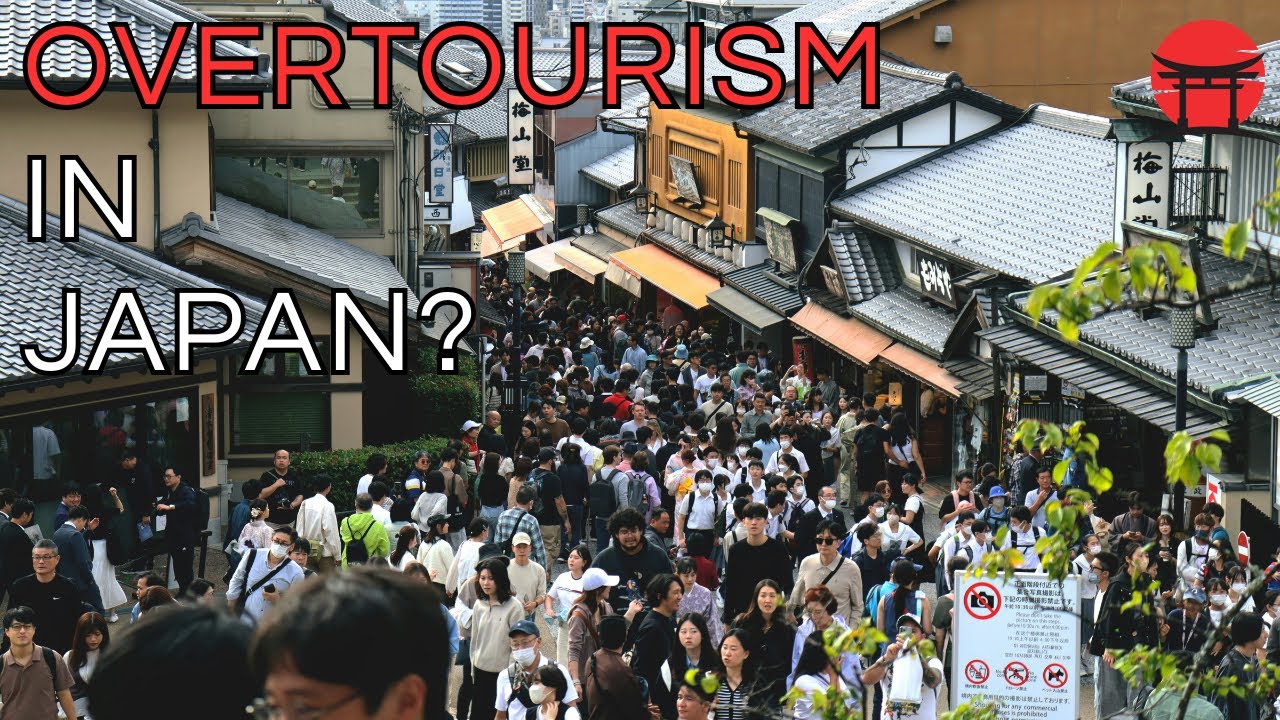
🇯🇵 Japan’s Overtourism Crisis: Kyoto & Tokyo Under Pressure | What Can Be Done?
[Music] Japan, a country where the ultramodern and the ancient coexist, is experiencing a tourism boom that is reshaping its urban landscapes. Tokyo’s dazzling neon jungle and Kyoto’s serene ancient temples have long been magnets for travelers, but the tourist title wave is drowning local life. Crowded streets, skyrocketing rents, and eroded traditions are fueling what locals call tourist fatigue. Yet, both visitors and residents are fighting for balance. I visited Japan over 20 times, and I can vouch for the explosion in tourism, and the Japanese are trying to accommodate this. for example, subways, tourist buses, and popular locations that had signs mainly in Japanese and English just a few short years ago now multilingual in four to six languages. In this video, we dive into the dark side of over tourism in Tokyo and Keyoto. Explore its societal toll and uncover what tourists and locals are doing to ease the strain. Stick around to see if there’s hope for harmony. In 2019, Japan hosted 31.9 million tourists with Tokyo and Kyoto as must- visit hubs. Post pandemic numbers are surging with Kyoto seeing over 20 million visitors annually and Tokyo’s tourist districts like Shinjuku bursting at the seams. This influx pumps roughly $45 billion into Japan’s economy, but locals pay a steep price. A 2023 Kyoto survey revealed 60% of residents feel tourism disrupts their daily lives, citing clogged streets, lost access to cultural sites, and a sense of alienation in their own cities. Over tourism involves more than just the influx of visitors. It disrupts the delicate balance of communities striving to maintain their cultural identity. A significant part of this disruption arises from tourists who lack an understanding of Japanese culture. Take crowded streets and skyrocketing rents for instance. One of the most visible impacts of over tourism is the sheer number of people. Crowded streets in both Tokyo and Kyoto have become a norm, making everyday life a challenge for locals. Public transportation, once a convenient option, now often feels like a sardine can. Another significant consequence is the skyrocketing rents. As demand for short-term accommodations like Airbnb rises, landlords can charge more, driving up the cost of living for residents. Let’s talk about eroded traditions. Overism affects nearly all Japan destination. Kyoto in particular is known for its rich cultural heritage and traditions. However, the relentless wave of tourists is eroding these traditions. [Music] Local customs and rituals once intimate and sacred are now often staged attractions for visitors. [Music] There is a growing concern about tourist fatigue. The term tourist fatigue has emerged as a descriptor for the growing dissatisfaction among locals. It represents a weariness of constantly accommodating outsiders and the loss of the city’s essence. Residents find themselves caught between maintaining their cultural identity and the economic benefits tourism brings. These are their stress points. One, Kyoto’s cultural strain. Sacred sites like Kiomi Zudera and Fushimi Inari are overrun, turning spiritual spaces into selfie backdrops. Locals report feeling disconnected from their heritage with some temples now restricting access to preserve sanctity. Gian’s narrow streets are so packed that residents avoid them and local shops display no tourist signs to protect community spaces. Two, Tokyo’s economic squeeze in districts like Asakusa and Shinjjuku. Rents have soared, displacing longtime residents. A 2024X post from a Tokyoite lamented, “I can’t afford my own neighborhood anymore.” Tourism jobs, hotel staff, tour guides, are often low-wage and seasonal, leaving locals resentful of serving an industry that prices them out. Three, the cultural erosion in Kyoto. Traditional practices like tea ceremonies and kiosin dying are commercialized, losing authenticity to cater to tourists. In Tokyo, Akihabara’s anime culture feels more like a tourist trap than a local haven sidelining longtime fans. Fourth, behavioral tensions. Locals site tourist misbehavior, littering, ignoring shrine etiquette, or loud behavior in quiet neighborhoods as a major issue. A 2023 Kyoto survey found 40% of residents feel disrespected by tourists, fueling fatigue and frustration. Overism’s environmental toll amplifies social tensions. In Kyoto, the Arashiamyama bamboo grove is trampled by foot traffic, eroding a cherished natural landmark and frustrating locals who see it as part of their identity. Tokyo struggles with waste with tourist heavy areas like Shabuya generating 20% more trash during peak seasons. Residents often clean up the mess, adding to their resentment. Increased carbon emissions from tourist travel and accommodations strain both cities infrastructure, making daily life harder for locals navigating polluted or overcrowded [Music] spaces. Tourists too have a role to play. Many are becoming increasingly aware of their impact and are seeking ways to travel more responsibly. This includes respecting local customs, supporting local businesses, and choosing sustainable travel options. Travel off peak. Visit in shoulder seasons like late November or early March when crowds thin out. Kyoto’s temples like King Kakuji are serene in fall, and Tokyo’s Weno Park is quieter in spring, easing pressure on locals. Explore hidden gems. Skip overcrowded spots like Kyoto’s Gian for quieter areas like Kuramadera or O’Hara where locals welcome smaller groups. In Tokyo, wander Yanuka or Coenji for authentic vibes without the crush. Respect local etiquette. Follow no photo signs at shrines. Keep noise low in residential areas and learn basic customs like bowing or removing shoes to show respect. In Kyoto, sort trash meticulously per local recycling rules. Support local businesses. Stay in familyrun riocans or guest houses instead of chain hotels and dine at small local eeries. This directs tourism dollars to communities, not corporations. Choose guided experiences. Join small residentled tours that teach cultural norms and avoid congested sites. For example, Kyoto’s localled walking tours offer insights while reducing strain on popular temples. In response to these challenges, both Tokyo and Coyoto are exploring ways to ease the strain. Local governments have started implementing measures such as promoting off- peak travel seasons and developing lesserk known attractions to disperse crowds. Efforts are also being made to preserve cultural sites. Initiatives aimed at restoring and maintaining traditional structures are underway, ensuring that these cultural landmarks can withstand the pressures of tourism. Kyoto’s initiatives. Residents have advocated for tourist taxes like 1,000 yen per night on accommodations to fund infrastructure like public transport. Though locals say it’s not enough, some temples like Fushimi and Ariari now offer residentonly hours to reclaim sacred spaces. Community groups organize cleanup days to tackle tourist litter, but only 10% of sites have effective visitor caps. Tokyo’s efforts. Local volunteer guides in popular areas like Tato Ward, home to Seno G and Capabashi Kitchen Street, educate tourists on etiquette, reducing conflicts. Some neighborhoods host cultural workshops like calligraphy or tao drumming where tourists and locals connect. Though these are smallcale, travel agents are building partnerships with local organizations to style and promote these workshops. Expost from 2025 highlight residents etiquette poster campaigns in Shabuya to curb bad behavior. Grassroots push. Overwhelmed with tourists, Kyoto locals use social media to call for stricter crowd controls while Tokyo residents petitioned for rent stabilization in tourist heavy areas. A 2024 expost celebrated a community-led trashfree Asakasa initiative, but scaling these efforts remains tough. Challenges enforcement is inconsistent and tourism revenue often trumps resident needs. Still, these steps show locals fighting to reclaim their cities. Tokyo and Coyoto are at a breaking point with tourist fatigue straining communities, culture, and daily life. Yet, hope lies in balance. Tourists can ease overcrowding by visiting off- peak, respecting local ways and choosing hidden gems while residents push for taxes, cleanups, and cultural bridges. Despite the challenges, there is hope for harmony. The Japanese are actively seeking to accommodate the tourist influx. Evidence of this can be seen in the multilingual signs now present in subways, tourist buses, and popular locations, which aim to ease navigation for international visitors. Ultimately, the key to balancing tourism’s benefits with its burdens lies in collaboration. Both locals and tourists must work together to ensure that the beauty and culture of Tokyo and Kyoto can be preserved for future generations. By understanding and addressing the issues of over tourism, there is potential to create a sustainable tourism model that respects both the needs of residents and the desires of visitors. Can this teamwork save these cities from over tourism’s grip? Share your travel stories or solutions in the comments. Let’s talk about it. [Music]
Japan is facing a surging overtourism crisis, especially in popular destinations like Kyoto and Tokyo. While rural areas are not as impacted (yet) Crowded streets, disrespectful tourist behavior, and strained local infrastructure are pushing Kyoto and Tokyo residents to their limits — and the cultural fabric of Japan is at risk.
In this video, we dive deep into:
🔍 Why overtourism is peaking in Japan now
📍 The impact on Kyoto’s geisha districts and Tokyo’s urban core
💬 Real voices from locals and tourists
✅ Proposed solutions – from sustainable travel to tourist caps and digital management tools
This isn’t just a travel issue — it’s a cultural and social challenge that needs urgent action.
🧭 If you care about responsible tourism and want to explore how we can strike a balance between welcoming travelers and protecting local life, this is a must-watch.
📌 Don’t forget to like, comment, and subscribe for more deep dives on global travel trends.
#JapanTravel #Overtourism #Kyoto #Tokyo #SustainableTourism #ResponsibleTravel #VisitJapan #tourismsolutions
#TravelJapan
#JapanTrip
#ExploreJapan
#SustainableTourism
#EcoTravel
#TravelResponsibly
#KyotoTravel
#TokyoTrip
#JapanCulture
#TravelVlog
#DocumentaryStyle
#CultureShock
#HiddenJapan
#TravelTips
AloJapan.com