The 1968 Japanese Grand Prix touring car race marked the end of the Skyline 2000GT-B’s reign over domestic Group 2 touring car racing. Toyota’s 1600GT began a win streak which lasted for the remainder of 1968, eased by the lack of factory supported Skyline 2000’s in contention.
This lasted until May of 1969, when the first JAF Grand Prix was organized on the dates of the original Japanese Grand Prix. The main focus of the event was put on open wheel racing, though domestic GT and touring car races were ran as support events. This not only attracted the many privateer racers, but also Nissan’s factory supported team. This time, they brought a new car…
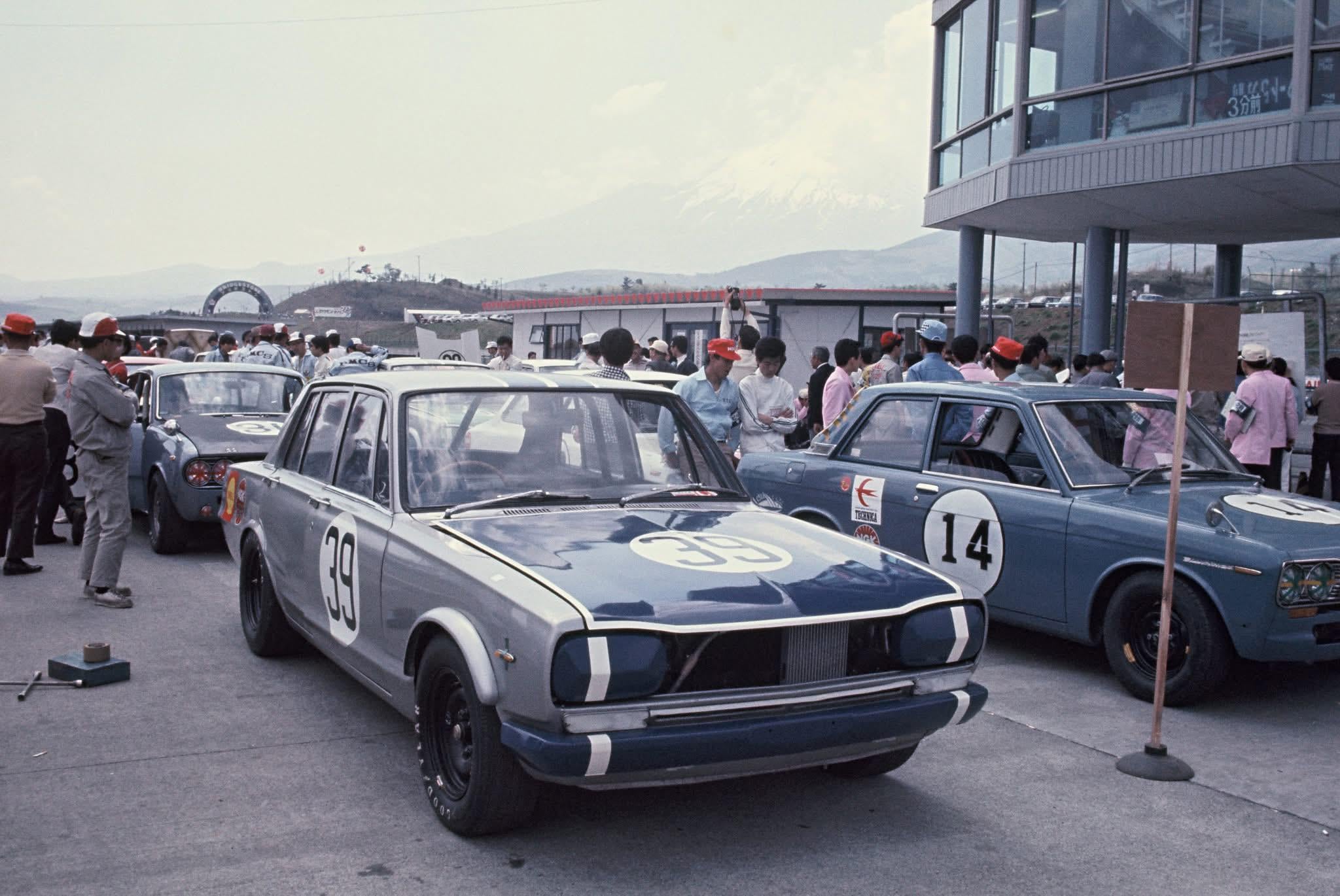
The newest generation C10 Skyline had been on sale since August of 1968, but had yet to make it’s debut in major motorsports events. For this, Nissan developed a special variant specifically to go racing with: the Skyline 2000GT-
R. The road going model already sported 160hp out of it’s refreshed 1998cc S20 inline-6 engine, but the works modified race cars took this number to around 200! This was achieved through various changes in the engine compartment, such as Weber 45 DCOE carburetors, new forged pistons (they are cast pistons on regular models) as well as the installation of a racing camshaft.
On top of the impressive power increase, the Skyline GT-R benefited from being in the Group 5 class, which allowed for more leniency in terms of weight reducing measures. As such, virtually every panel was made from lighter FRP materials, and the windows were made from acrylic resin. The result of these weight reduction measures was a total weight of around 980kg during inspection for the debut race.

1 Comment
The 1968 Japanese Grand Prix touring car race marked the end of the Skyline 2000GT-B’s reign over domestic Group 2 touring car racing. Toyota’s 1600GT began a win streak which lasted for the remainder of 1968, eased by the lack of factory supported Skyline 2000’s in contention.
This lasted until May of 1969, when the first JAF Grand Prix was organized on the dates of the original Japanese Grand Prix. The main focus of the event was put on open wheel racing, though domestic GT and touring car races were ran as support events. This not only attracted the many privateer racers, but also Nissan’s factory supported team. This time, they brought a new car…
The newest generation C10 Skyline had been on sale since August of 1968, but had yet to make it’s debut in major motorsports events. For this, Nissan developed a special variant specifically to go racing with: the Skyline 2000GT-
R. The road going model already sported 160hp out of it’s refreshed 1998cc S20 inline-6 engine, but the works modified race cars took this number to around 200! This was achieved through various changes in the engine compartment, such as Weber 45 DCOE carburetors, new forged pistons (they are cast pistons on regular models) as well as the installation of a racing camshaft.
On top of the impressive power increase, the Skyline GT-R benefited from being in the Group 5 class, which allowed for more leniency in terms of weight reducing measures. As such, virtually every panel was made from lighter FRP materials, and the windows were made from acrylic resin. The result of these weight reduction measures was a total weight of around 980kg during inspection for the debut race.