

The islands are the far southern end of Japan – once a separate kingdom, today a favourite travel destination offering unique culture, delicious foods, a beautiful tropical setting and a rich biodiversity. It is the last point that was especially important for Okinawa to attract the 2024 joint meeting of the Society for the Preservation of Natural History Collections (SPNHC) and the Biodiversity Information Standards (TDWG). Some 580 people took part in the event, 377 in person and the rest virtually. The opening-night event included Eisa Okinawan folk dance and a traditional lion dance.
Bringing two organisations together
SPNHC-TDWG 2024 was actually the second joint meeting for two related groups. SPNHC, pronounced ‘Spinach’, is a society for the preservation of natural history collections – specimen collections in museums and research centres, both digital and actual, but also observations and recording of things in the natural world – birds, plants, algae, fungi, etc.
TDWG, pronounced ‘Tadwig’, is an acronym for ‘taxonomic database working group’. Although, says conference co-chair and TDWG deputy chair David Bloom, “We changed the name to the biodiversity information standards organisation, or BIS, because that is what our activities have become: exchanging data about biodiversity, earth sciences and so on. But we kept the TDWG brand name because everyone has used that since the 1980s.”
Fellow event planner Dr Patricia Mergen, liaison officer at Belgium’s Meise Botanic Garden and AfricaMuseum, adds: “SPNHC is a sister association, and sometimes we do meetings together. We did in 2018 in New Zealand, and again in Okinawa. Collaborating gives us more delegates.”
“Because Dr Mergen visited Okinawa back in 2019, we knew this would be a promising candidate venue for a future event,” says Mariko Kageyama of SPNHC, one of the steering committee members for the event. “We had looked for a local host organisation, but when we couldn’t find a suitable partner, we decided to organise the conference directly under the oversight of a joint SPNHC-TDWG team. We received funding support from the Japan Tourism Agency and the Okinawa Convention and Visitors Bureau. But what really helped was to be able to work closely with a bilingual, Japanese American professional conference organiser. His presence convinced our international team that we could successfully hold an event here in Okinawa.”
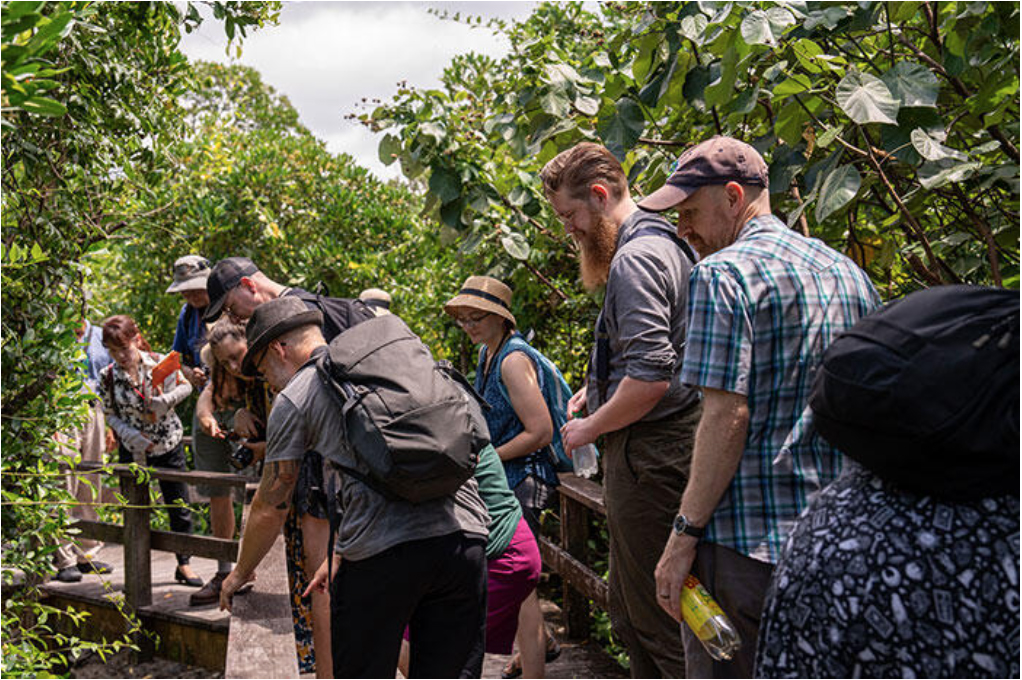
Visit to the Botanical Gardens
Okinawa: biodiversity, culture and more
Dr Mergen was the chair of the committee selecting the destination for the TDWG event. “JNTO invited us to take an inspection tour to help us choose from the different regions of Japan,” she says. “I came to Okinawa and really liked it, especially the rich biodiversity in the north. Then we convinced SPNHC to come, too.”
“We prefer to go to parts of the country that are not necessarily main cities, so we can discover more local culture and biodiversity,” Dr Mergen explains.
TDWG often meets in North America one year, in Europe the next, and then the third year is sort of wild card, where the association meets at a location that is not where the majority of participants live. Now that is changing because people involved in this work are not just from North America and Europe anymore.
“On the practical side, we need to have facilities able to accommodate a large group of people,” says Dr Mergen. “So, the convention centre, with three good-sized hotels within walking distance, was important. A facility that can handle the technology needs, allowing us to encourage the participation of virtual participants attracted us to Okinawa and this facility.”
Excursions
With support from the Japan Tourism Agency, the planners arranged for several excursions during the event. “Dr Mergen had checked out Shuri Castle and the royal garden, (the castle was the centre of the separate Ryukyu Kingdom, as Okinawa was known until the 19th century). During the conference, the castle was still in reconstruction, having burned down in 2019, but the old stone walls and the reconstruction still proved fascinating to the delegates.
“It was impressive to witness the amazing skills being used to rebuild it,” says Dr Mergen, adding that they had seen dragonflies and spiders in the garden and that delegates had been keen to take part in their traditional Bioblitz contest where they take pictures of plants and animals using an app called iNaturalist which then identifies them.
“Would I come back to Japan? Absolutely,” says Dr Mergen. “Okinawa is a great place to be, and Naha City was fun to explore. You feel safe; I could leave my bag on the beach and not worry about it at all. And the food is great. I really enjoyed Okinawan soup! Everyone really enjoyed the experience and will be talking about this for years to come.”
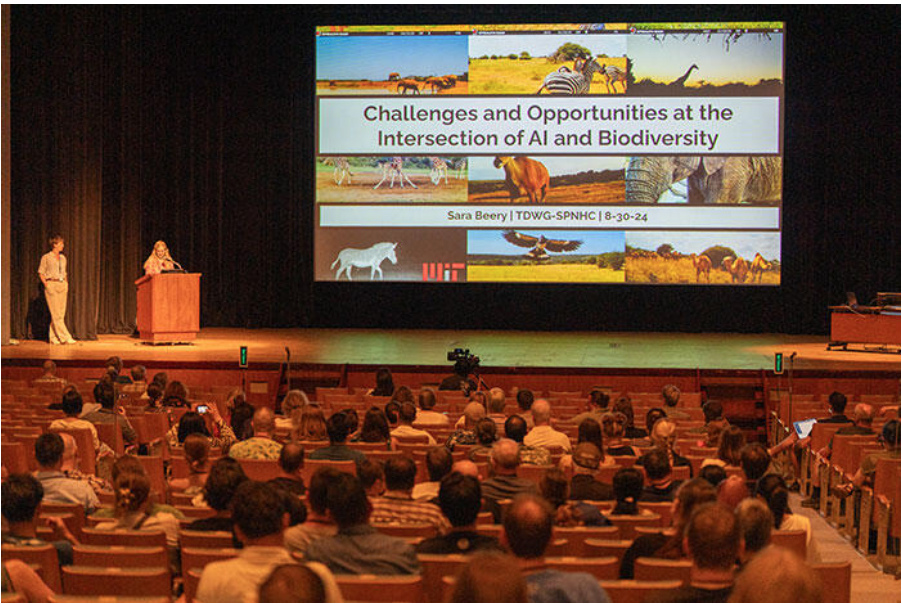
Time for indoor sessions as well as visiting the local biodiverse nature
World Expo
The World Expo takes place in Osaka this year, April-October, and other major conferences announced to be hosted in Japan in 2025 and 2026 include:
2025
Miyako Island in Okinawa is to host the International Conference on Financial Cryptography and Data Security (FC25). Approximately 150 participants are expected to attend.
IEEE R10 HTC (Humanitarian Technology Conference) 2025 will come to Ichikawa City, Chiba Prefecture, in September. That bid was won by JNTO MICE ambassador Ms Takako Hashimoto, an incoming director of IEEE R10 from 2025 to 2026.
The World Physiotherapy Congress is coming to Tokyo with 4,500 delegates expected later in the year.
2026
The 20th International Congress on Animal Reproduction – ICAR2026 – will be held in Obihiro and the 23rd Annual Meeting of Asia Oceania Geosciences Society – AOGS 2026 – will be held in Fukuoka with 4,000 delegates expected.
Also, the International Convention of the World Federation of Tourist Guide Associations – WFTGA2026 – will come to Fukuoka, as will the Conference of the International Planetarium Society – IPS 2026.
www.japanmeetings.org/
AloJapan.com