
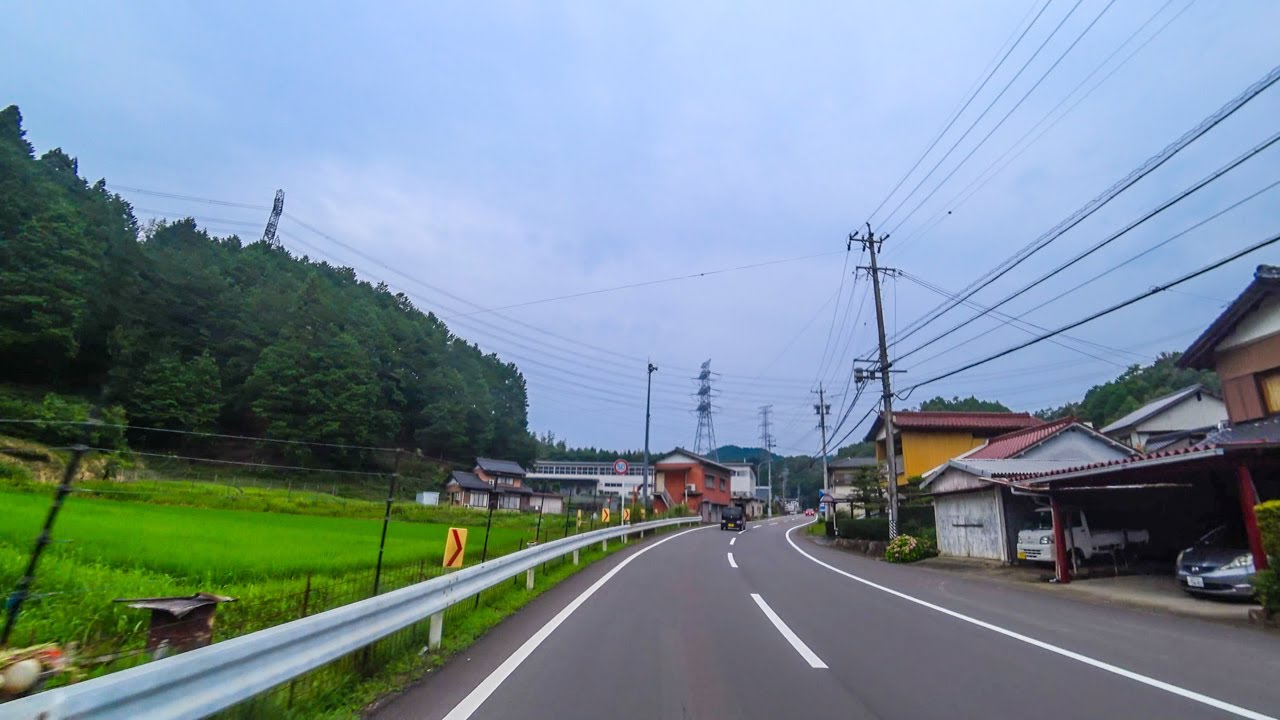
A scenic drive from Ghibli Park in Nagoya to Mino.
July 14, 2023
“Nagoya is an industrial powerhouse of some 2.3 million people at the center of an urban metropolis of about 10 million in central Japan, about two-thirds of the way between the better-known cities of Tokyo and Osaka.
Yet few international travelers visiting Japan experience it.
Nagoya might not have the international draw of Tokyo, Kyoto or Osaka, but it certainly doesn’t deserve the sobriquet of “Japan’s most boring city.”
The city and its surrounding region, known as Chukyo, are filled with a wealth of attractions. These include historical castles, delicious food, scenic rail journeys, exciting theme parks, a thriving local bar scene and some of Japan’s best museums.
So why does it have a reputation amongst some Japanese residents for being dull? It reportedly all started in 2016, according to the Japan Times, when Nagoya wound up last on a survey asking residents in eight cities to select which ones were the most appealing as travel destinations.
In the years since, the city has proven the opposite is true, according to Nagoya residents Lena Yamaguchi and Elisabeth Llopis.
In 2020, the pair founded Nagoya Is not boring, a local tour company that aims to share their passion for the city with visitors.
“Travelers can enjoy both traditional and modern in a compact size, and not only during the daylight, during which you can explore the many castles and temples and shrines of the area,” says Llopis. At night, she suggests visiting the local izakaya bars “to get a closer look at the local culture of the city.”
One of Nagoya is not boring’s street food or sake night walking tours is a great introduction to the city. For travelers who prefer to explore on their own, the city is easily navigated with a maps app and a transit smartcard – almost every type in Japan is interchangeable, but the local ones are called Manaca and Toica.”
–https://www.cnn.com/travel/article/nagoya-japan-things-to-do/index.html
“Ghibli Park is a park that represents the world of Studio Ghibli. With close consultation with the surrounding forest, it is being built on and within the grounds of Expo 2005 Aichi Commemorative Park (Moricoro Park).
There are no big attractions or rides in Ghibli Park.
Take a stroll, feel the wind, and discover the wonders.
The first phase of construction (opening on November 1, 2022) includes “Ghibli’s Grand Warehouse,” “Hill of Youth,” and “Dondoko Forest.” Ghibli’s Grand Warehouse is an indoor facility that stores all of the studio’s secrets, from large to small artifacts and exhibits from past Studio Ghibli movies. You will find from fantasy-filled exhibitions such as Robot Soldier, Cat Bus, and kid-sized film studio exhibitions, to materials and resources that reveal the secrets of Studio Ghibli films.
On the Hill of Youth, there stands World Emporium, the antique shop from Whisper of the Heart.
In Dondoko Forest, “Dondoko-do” awaits you at the top of the forest hill that sits behind Satsuki and Mei’s House.”
–https://ghibli-park.jp/en/
“Mino Province (美濃国, Mino no kuni) was a province of Japan in the area of Japan that is today southern Gifu Prefecture.[1] Mino was bordered by Ōmi to the west, Echizen and Hida to the north, and Shinano to the east, and Ise, Mikawa, and Owari to the south. Its abbreviated form name was Nōshū (濃州). Under the Engishiki classification system, Mino was ranked as one of the 13 “great countries” (大国) in terms of importance, and one of the “near countries” (近国) in terms of distance from the capital. The provincial capital and ichinomiya were located in what is now the town of Tarui.
“Mino” is an ancient place name, and appears in mokkan wooden tags from the ruins of Asuka-kyō, Fujiwara-kyō, and other ancient sites, but using the kanji “三野国”. Per the Kujiki, there were originally three separate countries in Mino, centered around what is now Ōgaki, Ōno, and Kakamigahara. Each had its own Kuni no miyatsuko, and together with Motosu (in eastern Gifu) and Mugetsu (in north-central Gifu), these five entities were joined under Yamato rule to form the province of Mino. The use of the kanji “美濃” is found in the Kojiki and became prevalent in the Nara period. Early Mino included much of Kiso District in Shinano and portions of northern Owari. The route of the ancient Tōsandō highway connecting the ancient capitals of Japan and the eastern provinces passed through Mino, and even in 713 AD, records indicate that the road was widened to accommodate increasing numbers of travelers.[2]”
–https://en.wikipedia.org/wiki/Mino_Province