
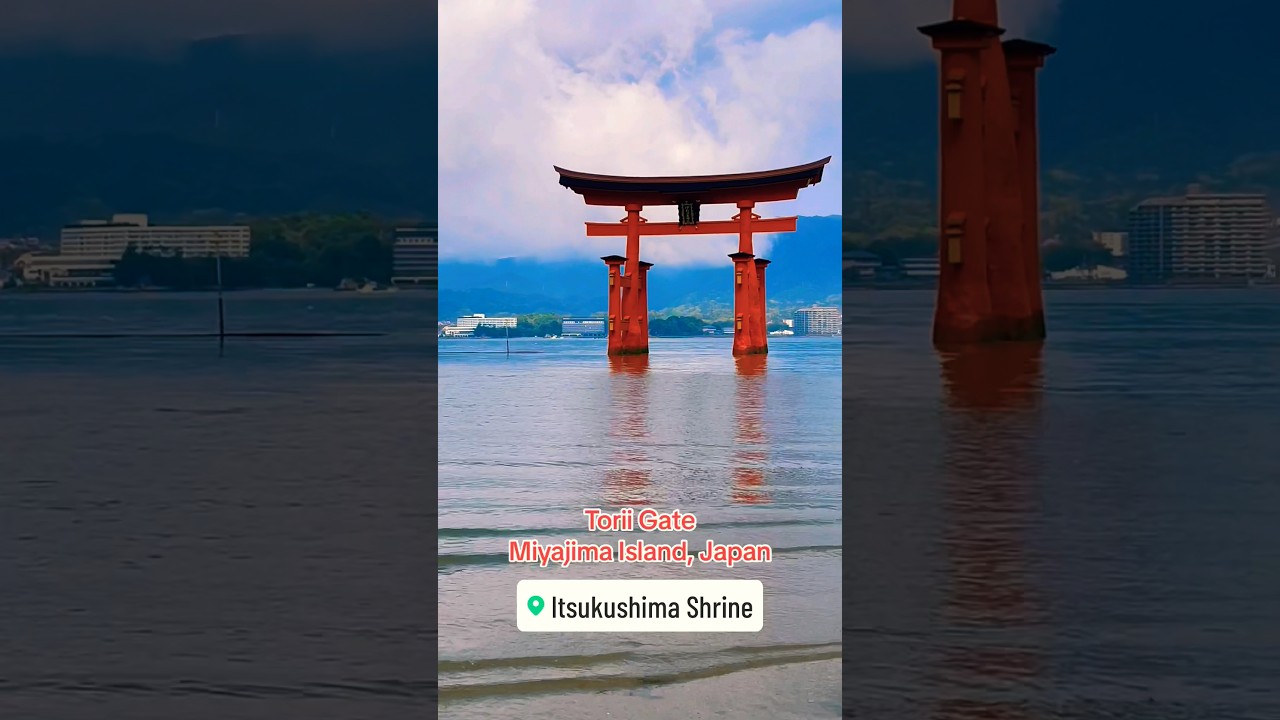
The floating Torii gate, known as the “O-Torii,” is one of the most iconic and enchanting sights in Miyajimacho (Miyajima), Hiroshima Prefecture, Japan. It’s a symbol of the Itsukushima Shrine and holds deep spiritual significance.
Architectural Beauty: The floating Torii gate is an architectural masterpiece that stands in the waters of the Seto Inland Sea, just offshore from Itsukushima Shrine. It is an example of the distinctive architectural style of Shinto shrines in Japan.
Symbol of Welcome: In Shintoism, torii gates mark the transition from the profane to the sacred. The floating Torii gate at Itsukushima Shrine represents the boundary between the human and divine worlds, creating a spiritual threshold.
Illusion of Floating: The Torii gate appears to float on the water during high tide, creating a magical and surreal visual effect. The reflection of the gate on the water’s surface enhances the illusion, making it seem as if the gate is suspended in mid-air.
Spiritual Significance: The gate has spiritual significance as a guardian and protector of Itsukushima Shrine. It represents the border between the sacred realm of the shrine and the mundane world beyond.
Historical Legacy: The Torii gate at Itsukushima Shrine has a long history, with the earliest versions dating back over a thousand years. The current gate was built in 1875 and stands as a testament to Japan’s architectural and cultural heritage.
The floating Torii gate at Itsukushima Shrine is a sight that awakens a sense of wonder and reverence. Its unique design, interaction with nature’s elements, and deep spiritual symbolism make it an unforgettable experience for visitors to Miyajima.