

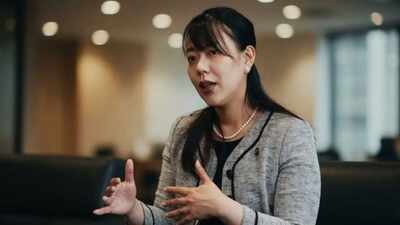
 Shoko Kawata, the Japanese mayor, makes it to TIME100: Her journey from sparking debate over taking maternity leave to earning global recognition When Shoko Kawata, a young female mayor of Yawata in Japan’s Kyoto Prefecture, announced she would take maternity leave, she probably expected some raised eyebrows. But what she triggered was nothing short of a national debate: could a woman really hold public office, give birth, and stay in her job without having to sacrifice one for the other?After a whirlwind year of headlines and arguments, Kawata is now in the international spotlight for a different reason. TIME has just named the 36-year-old to its 2026 TIME100 Next, the annual list that singles out rising global leaders and influencers. Her selection comes as no surprise to anyone who watched as she navigated not only the birth of her daughter but also the barriers stacked against women in power.The road to this recognition included making historic choices: planning her maternity leave as a sitting mayor, facing public criticism, pushing through new systems to let her govern and parent, and responding to the international attention that followed.
Meet Shoko Kawata: Who is she?
Born in 1990, Kawata studied economics at Kyoto University, where she probably picked up the practical, policy-minded approach that has served her in government. She started in Kyoto’s city administration in 2015, focusing on welfare programs, then worked as a political secretary before jumping into the Yawata mayoral race.She was just 33 when she won and became not only Yawata’s leader but Japan’s youngest female mayor at the time. Yawata isn’t that big a city with just 69,000 people on Kyoto’s southern edge. However, suddenly, it found itself the stage for a national conversation about women and leadership.Kawata’s platform matched the moment. She championed family-friendly policies: bringing down school-lunch costs, beefing up support for new mothers, and making preschool diapers free. TIME’s profile highlighted these policies, marking her dual role as both policymaker and living example.
Why was her maternity leave such a big deal?
Japan has solid maternity protections for regular employees. But politicians? That’s a gray area. Under Japanese law, working mothers can take maternity leave, but the rule doesn’t cover elected leaders like mayors. Now, mayors and lawmakers are considered “special public officials,” so the rules don’t automatically cover them. In Yawata, regular workers could take up to 16 weeks off, but there was literally no rule for the mayor.Kawata was shocked to find out that she was the first sitting mayor to take it. “I’m surprised this is a first,” she told reporters, per The Japan Times, insisting the city was well-prepared. She stressed that taking leave should be normal, not news, and that organizations (not just women) should carry the responsibility to adapt.“Honestly, I didn’t expect it to turn into a controversy,” she told The Guardian. “There’s still this idea that you have to set your personal life aside to be taken seriously at work.”She added, “Japan needs to create an environment in which people can take that leave as a matter of course,” emphasizing that the onus was on the organisation to create a structure that supported change.“For men, childbirth doesn’t physically affect their bodies, so technically it’s possible to continue working while pushing private life into the background,” Kawata said, “But for women, physically, that simply isn’t possible.”Kawata didn’t let that stand. She worked with city officials to carve out a plan: 16 weeks of maternity leave split before and after her daughter’s birth, and Deputy Mayor Shigeto Nose would handle daily leadership while Kawata stayed as engaged as possible. She started her leave in July, gave birth on September 15, and her return was scheduled for November.Kawata’s attitude was straightforward: if the system doesn’t fit, change the system. In interviews, she argued that running a city and having a family shouldn’t be seen as mutually exclusive. “If no precedent exists, we create the system,” she said, refusing to believe that tradition alone should block progress.Not everyone agreed, of course. Some argued that the mayor’s job was too important to allow absences, especially if she still collected her salary. Others wondered if Japan was prepared for leaders who might need maternity leave. And behind all these arguments was a deeper question: if Japan wants more babies and more women in power, how can it ignore the need for systems that support both goals?
From lightning rod to global influence
Kawata’s TIME recognition says a lot about how the narrative shifted: from controversy to admiration. The TIME100 Next isn’t just about who made headlines; it’s about who is actually shaping future norms. Kawata managed to do that not by waiting for permission, but by confronting the problem in public and building her own solution.And now, her story is bigger than herself or Yawata. She’s shown that leadership doesn’t mean erasing personal life or pretending parenthood can’t exist at the top levels of government. In fact, by making her maternity leave part of her story, by refusing to hide it, she’s shifting the whole conversation about what leadership can look like in Japan and beyond.At 33, she wrote a new chapter as Japan’s youngest female mayor. At 36, after having her first child, she’s made the TIME100 list. The truth is, her decision to take maternity leave didn’t interrupt her political story; it’s what turned her into a global example for doing things differently.
AloJapan.com