
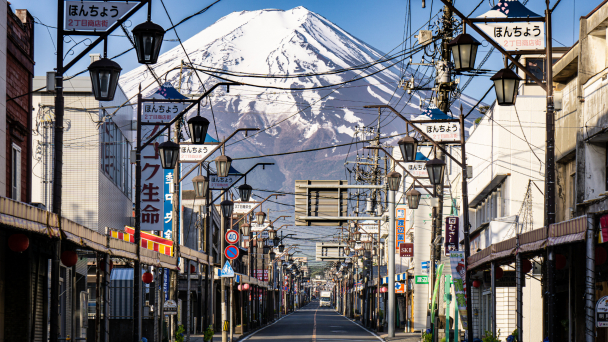
The nightmare of “million-view” photos.
In the age of Instagram and TikTok, a place can be transformed overnight by a single viral photo. But for Fujiyoshida, it’s more of a curse than a gift. Once hoping tourism would replace its declining textile industry, this city of 46,000 now struggles to cope with the dark side of its excessive popularity.
From dawn, as the sun just touched the snow-capped peaks, Arakurayama Sengen Park was bustling with footsteps. Junichi Horiuchi (54 years old), a local volunteer, began his unpaid patrol. His job was to pick up trash and remind tourists who were recklessly leaving designated paths to find unique photo spots. For him, it was a matter of survival: Last year, he broke nearly 30 bones in a bicycle accident while trying to avoid a group of tourists who were lined up across the road to take pictures.
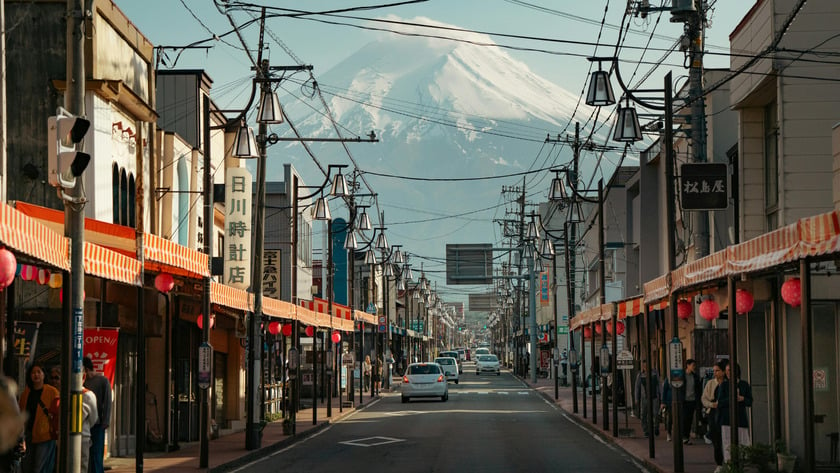 Tourists visit the town of Fujiyoshida, Yamanashi Prefecture, Japan.
Since Mount Fuji was recognized as a UNESCO World Heritage Site in 2013, Fujiyoshida has transformed from a tranquil stopover into a global check-in spot. However, the price of this popularity has been traffic chaos and serious privacy violations. Local residents constantly complain about tourists entering private backyards, using gardens as public restrooms, or obstructing school access. Furthermore, many groups of tourists even camp illegally overnight to await the sunrise, leaving behind litter and inconvenience for the neighborhood. These behaviors not only demonstrate a lack of respect for Japanese culture but also push the community’s patience to the limit.

Mayor Shigeru Horiuchi made a difficult but necessary decision: to cancel the long-standing cherry blossom festival. This was a drastic move to ease pressure on tourist hotspots and protect the peaceful lives of the city’s 46,000 residents. The city government is working to redirect visitors to less popular areas, rather than focusing solely on social media-sensational locations. However, the challenge remains, as tens of thousands of people still flock daily to queue at Chureito Pagoda or enjoy the famous Yoshida udon noodles. For many tourists, the meaning of a trip seems to be encapsulated in a perfect social media photo, regardless of the potential impact on the lives of thousands of others.
This overcrowding isn’t limited to Fujiyoshida. The neighboring town of Fujikawaguchiko once caused a media sensation when it erected a large barrier to block the view of Mount Fuji from a convenience store, in an attempt to prevent tourists from spilling onto the road and causing traffic hazards. These extreme measures are a natural consequence of the “check-in culture” getting out of control.
Coji Maeda, a local businessman who bought a house here in 2000 because he loved the tranquility, now shares his feeling of wanting to escape as thousands of people pass by his window every day, even crossing his front yard as if it were a public park. The peace – the greatest asset of this land – is gradually being taken away by the hurried footsteps of tourists.
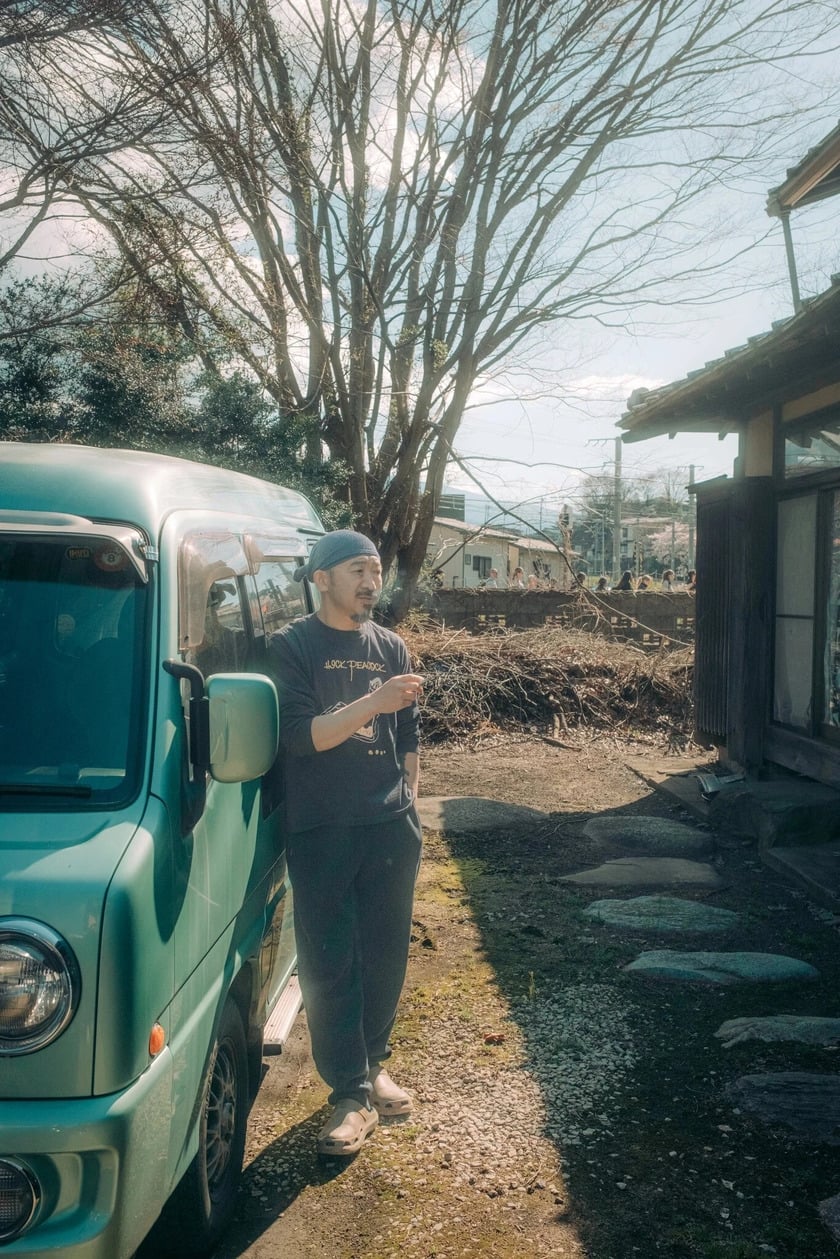 Coji Maeda and his life turned upside down at the foot of Mount Fuji after more than two decades of living there.
Amidst the tensions, more nuanced solutions have emerged. Eido Watanabe, the head monk of Nyorai Temple, believes that kindness and proper guidance on local rules are more effective than rigid bans. He believes that gentle reminders and kindness can yield more lasting results than harsh prohibitions. At the same time, local policymakers and businesses recognize the need to shift the tourism model: moving from quick “visit-based” tourism to more immersive “experiential tourism.” The goal is to encourage visitors to stay longer, spending at local restaurants and hotels to generate real economic value, rather than simply visiting to take photos and leave within a few hours.
The battle at the foot of Mount Fuji is essentially a matter of balance. Mount Fuji is not simply a perfect backdrop for social media; it is a spiritual and cultural symbol for the Japanese people. For truly sustainable tourism, every traveler needs to learn to respect the rhythm of the land they travel through, because the true value of a trip lies in the harmony between people and heritage, not just in the color filters on a phone screen.

AloJapan.com