
With Prime Minister Narendra Modi urging Indians to curb non-essential overseas travel and destination weddings to conserve foreign exchange amid the West Asia crisis, a new kind of travel arithmetic is taking hold among the country’s upper-middle-class and corporate India alike: if they are going abroad, every rupee must deliver more holiday for every dollar spent.
That calculation is reshaping India’s outbound travel map. Sri Lanka has emerged as the strongest value destination, with the Indian rupee buying about 34 per cent more than it did in 2019, allowing a family of four to enjoy a seven-night holiday in high-end villas and boutique resorts for roughly ₹1.8 lakh to ₹2.2 lakh.
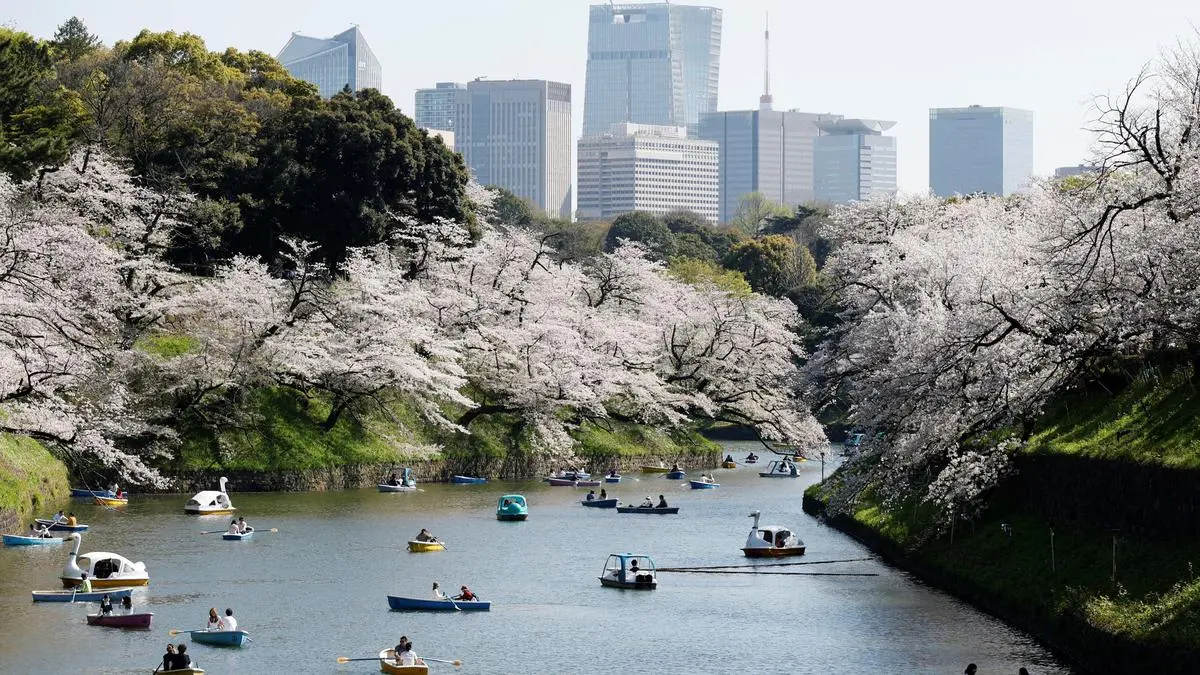
Japan has become the standout premium-value destination as the yen trades near a seven-year low, enabling a seven- to 10-day Tokyo-Kyoto-Osaka itinerary, including flights, hotels, Shinkansen (Japan’s bullet train services) travel and sightseeing, within a ₹2.5 lakh to ₹3 lakh budget. Vietnam remains the affordability champion, where a comfortable week-long family holiday can be completed for ₹2.2 lakh to ₹2.5 lakh.
Value Gap
An 800-yen bowl of ramen in Tokyo now costs roughly ₹480–₹550 for Indian travellers, compared with around ₹1,300 for a similar meal in Singapore and more than ₹2,000 for a basic pasta lunch in Rome.
What was once seen as an expensive aspirational destination is increasingly offering developed-world experiences at prices that undercut many traditional favourites.
By contrast, the rupee has weakened sharply against several familiar Asian destinations. It has lost roughly 23 per cent against the Thai baht, 29 per cent against the Malaysian ringgit and more than 31 per cent against the Singapore dollar since 2019, making once-reliable short-haul getaways materially more expensive.
For many Indian households, that means the same ₹3 lakh that may now fund only a compressed three- or four-night Singapore break can instead buy a full-fledged premium holiday in Japan, often saving ₹1 lakh to ₹1.5 lakh while delivering a richer and more immersive experience.
“If families are still travelling abroad, the real question is where the rupee buys the most and where the overall foreign-exchange outflow delivers the greatest value,” said Sheldon Santwan, a travel and hospitality expert.
Broken Flight Map
Currency is only part of the equation. Geopolitical tensions in West Asia and disruptions to Gulf airspace have sharply increased westbound airfares, particularly to Europe, where Middle East carriers traditionally handled a significant share of Indian outbound traffic.
“Both IndiGo and Air India alone cannot absorb the traffic previously carried by Gulf airlines,” Santwan said. During peak periods, Europe-bound fares have climbed to as much as ₹2 lakh per passenger, turning what was once an ₹8 lakh family holiday into an ₹8 lakh airfare bill alone.
Volume Champion
If Japan is the premium-value winner, Vietnam is the scale leader. Indian arrivals to Vietnam rose 42.5 per cent to 3,87,000 in the first seven months of 2025, supported by low on-ground costs, streamlined e-visas, expanding direct flights and growing demand for destination weddings and corporate offsites.
Thailand attracted more than one million Indian visitors in the first half of 2025, while Malaysia, Indonesia, Sri Lanka and the Maldives continue to compete across the value and middle-market segments.
New Hierarchy
A new outbound hierarchy is emerging. Sri Lanka offers the strongest currency advantage. Vietnam leads on affordability and scale. Japan delivers a developed-market experience without the Western inflation tax. Thailand, Malaysia and Bali occupy the middle ground. Singapore has become Asia’s premium anchor, while Europe remains aspirational but increasingly difficult to justify.
This summer, temperature is becoming as important as exchange rates. As much of India swelters under 40°C to 45°C heat, a new paradox is taking shape: staying in India to save foreign exchange can sometimes cost more than flying overseas. Luxury rooms in Srinagar, Gulmarg and Manali that might typically cost around ₹8,000 a night are, during the May rush, often quoted at ₹18,000 to ₹22,000 as occupancy levels approach 95 per cent.
For a family of four, a week-long premium holiday in Kashmir can now cost ₹3.5 lakh to ₹4 lakh, more than a seven- to 10-day Japan itinerary made affordable by the weak yen.
The reversal is striking. Tokyo and Kyoto are currently enjoying pleasant 18°C to 24°C weather, similar to Manali, while four-star hotels in Japan can cost about ₹9,000 a night, compared with ₹12,000 to ₹14,000 or more for comparable properties in India’s peak-season hill stations.
Sri Lanka and Vietnam
In Nuwara Eliya and Ella, temperatures hover between 16°C and 23°C, while the rupee buys roughly one-third more than it did in 2019. In Sapa and Da Lat, where temperatures range from 14°C to 22°C, a ₹10,000 daily budget can fund what travel planners describe as a near-luxury experience.
In the summer of 2026, the arithmetic has flipped: for many Indian families, it can be cheaper to fly 5,000 kilometres to Tokyo to stay cool than to drive 500 kilometres to Manali.
“By choosing high-value destinations such as Japan, Sri Lanka and Vietnam, travellers are not only escaping the Indian heat and stretching every rupee further, but also responding to Prime Minister Narendra Modi’s call to conserve foreign exchange by directing their travel budgets to destinations where every overseas dollar buys significantly more holiday,” Santwan further added
Published on May 14, 2026
AloJapan.com