
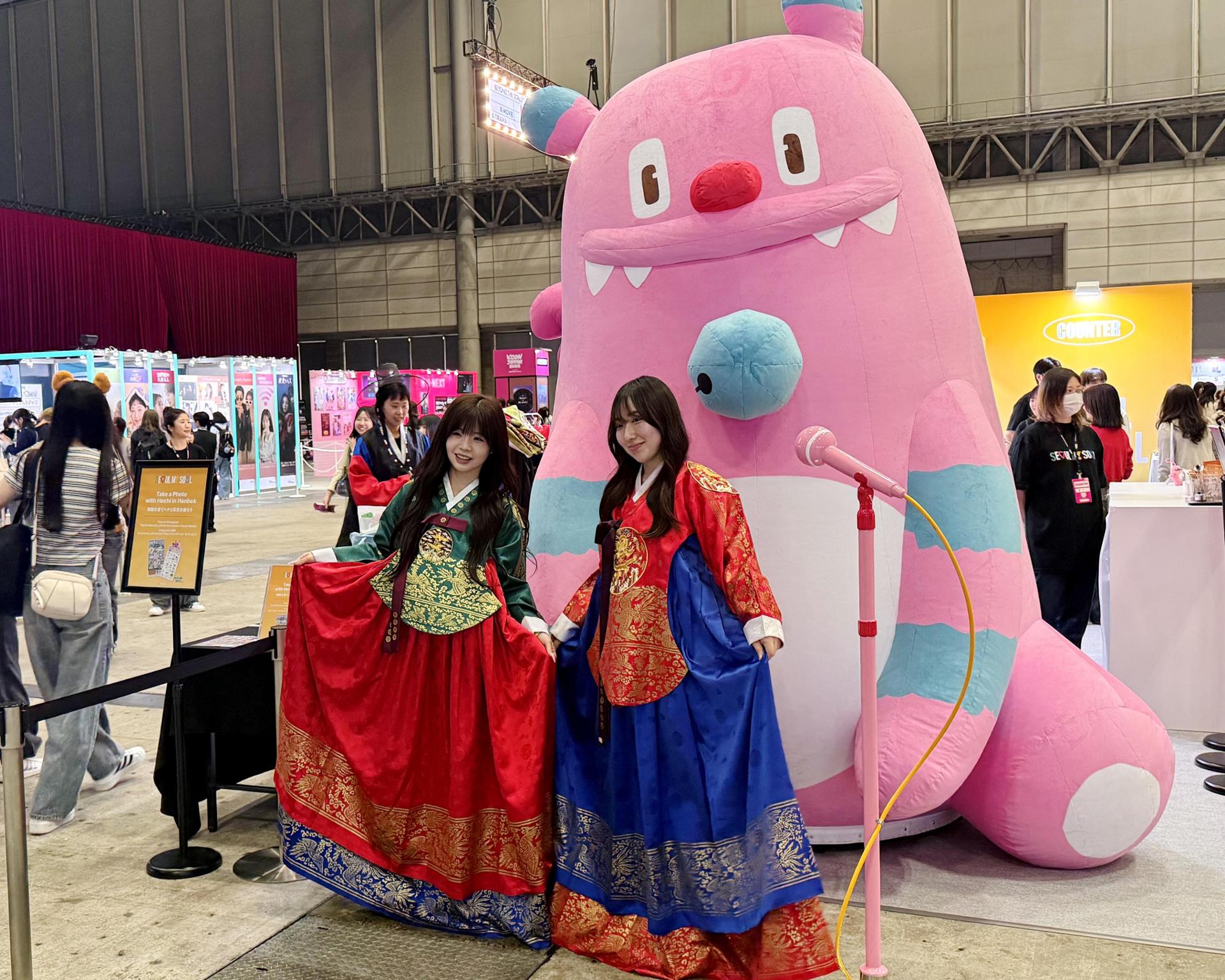
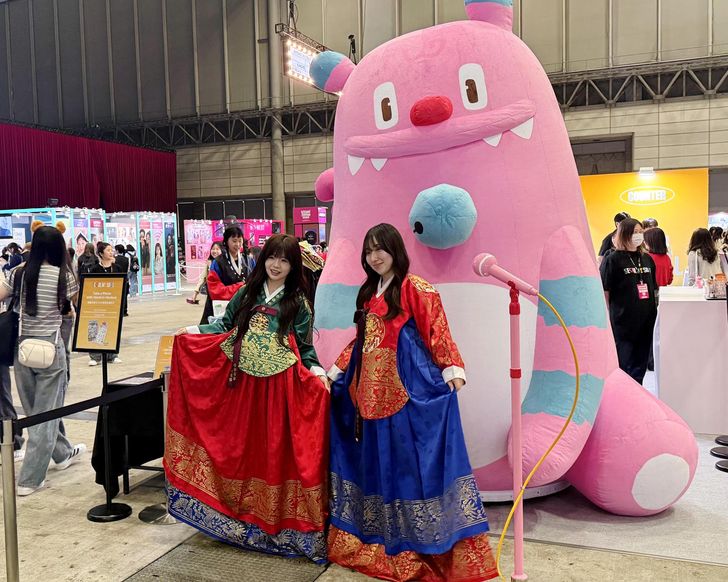
Tourists pose for a photo in front of Seoul’s official mascot “Haechi” during the KCON JAPAN 2026 event at Makuhari Messe in Chiba prefecture. Courtesy of Seoul Tourism Organization
Seeking to convert digital obsession into tourism revenues, Seoul is pivoting away from traditional landmark marketing to target the specialized world of K-pop fandom.
The Seoul Tourism Organization (STO) said Tuesday that its three-day exhibition at KCON Japan 2026 — the world’s largest festival dedicated to Korean pop culture — drew approximately 4,700 visitors. The success of the mission, held Friday to Sunday at the Makuhari Messe in Chiba, reflects a strategic shift in how Korea’s capital markets itself to its neighbors: moving away from static sightseeing and toward the hyperpersonalized “fandom marketing” preferred by Japan’s Gen Z.
Rather than highlighting traditional palaces or shopping districts, the city’s promotional booth, themed “PICK YOUR SEOUL,” prioritized interactive experiences. The centerpiece was a digital “playlist” zone where fans used near-field communication technology to pair images of Seoul landmarks with their favorite K-pop tracks, creating custom DIY keychains. This fusion of digital utility and physical souvenir is a direct play for a demographic that surveys show is overwhelmingly eager to travel. Nearly 95 percent of Japanese K-pop fans expressed an intention to visit Korea.
The push into the Japanese market follows a successful pilot at KCON Los Angeles last year and highlights the growing importance of “Seoul Goods” — the city’s official brand of lifestyle souvenirs. In satisfaction surveys conducted at the event, 85 percent of respondents praised the design of items like magnets and badges, suggesting that the city’s branding is successfully transitioning from official government outreach to a desirable consumer product.
By integrating royal hanbok, or traditional Korean clothing, experiences with oversized “Haechi” Seoul mascot photo zones, the city is betting that dominating the social media feeds of young Japanese fans today will secure the tourism revenue of tomorrow.
“We have confirmed that cultural content is the most powerful medium for tourism,” said Won Jong, head of the STO’s International Tourism and MICE (meetings, incentives, conferences and exhibitions) Division. “We will focus all our efforts on ensuring these fans choose Seoul for their next trip.”
This article was published with the assistance of generative AI and edited by The Korea Times.
AloJapan.com