
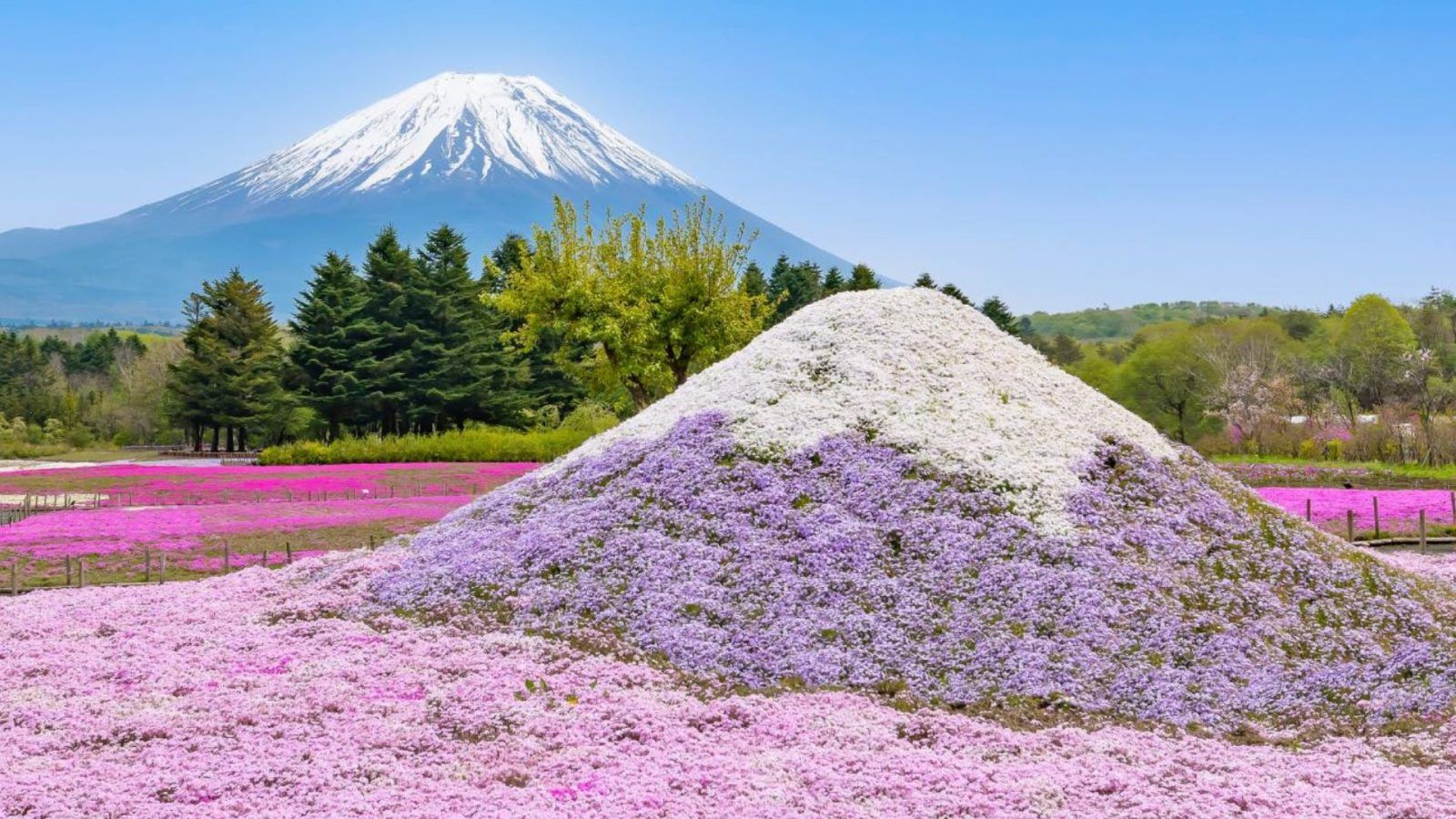
Fujikawaguchiko, Japan | Image credit: Japan National Tourism Organization
At a glance
Japan’s flower calendar stretches far beyond cherry blossom season, with everything from blue nemophila fields and hydrangea-lined shrines to lotus ponds and sunflower festivals taking over through spring, summer and autumn.
This guide covers some of Japan’s most spectacular floral festivals, including Osaka’s Nemophila Festival, Tokyo’s Hydrangea Festival, Kyoto’s Hagi Matsuri and Niigata’s famous lotus blooms.
Expect flower-filled parks, historic shrines, tea ceremonies, illuminations, food stalls and dreamy seasonal landscapes that make an excellent excuse to plan a trip beyond sakura season.
Sakura season is probably one of the most convincing arguments for booking a trip to Japan. And we, too, fully subscribe to the belief that you absolutely have to catch’em at least once in your lifetime since no amount of poetic monologuing about their ephemeral beauty really prepares you for how absurdly beautiful the whole thing feels in real life.
But the country’s floral calendar hardly begins and ends with cherry blossoms. Beyond the pink fever dream are parks washed in electric-blue nemophila, tunnels dripping with wisteria and temple paths lined with rain-soaked hydrangeas. If you couldn’t make it for the famously fleeting sakura spectacle, or simply want to appreciate Japan’s other floral stars, these flower festivals make an excellent excuse to plan a trip.
A year-round floral calendar
Himawari Festival, Manno Town
Manno’s sunflower obsession began in abandoned rice fields back in the late ’80s and has since escalated into one of Kagawa’s brightest summer spectacles. Every July, roughly 1.2 million sunflowers burst across the countryside in enormous waves of yellow, drawing crowds far larger than the town’s own population. Japan’s annual Himawari Festival leans fully into the flower frenzy, with visitors wandering through towering flower fields under the midsummer sun. The flowers are more than just photogenic, though — locally grown sunflower seeds are now pressed into cooking oil, salad dressings, and even feed for the region’s aptly named “sunflower beef”.
Takada Castle Site Park Lotus Festival, Joetsu City
Cherry blossoms may dominate Japan’s floral reputation, but Niigata’s lotus season delivers a spectacle on an entirely different scale. Every summer, the moat surrounding Takada Castle Site Park erupts into waves of crimson and white lotus flowers, transforming the former castle grounds into one of the world’s largest lotus ponds. The blooms trace their history back more than 150 years, when lotus roots were first planted in the moat during the late Edo period as a commercial crop. Today, the annual flower festival draws visitors to Japan for early-morning walks, dreamy reflections across the water and a floral display that feels more otherworldly than ornamental.
When: Mid-July to mid-August
Also, check out our guide to the best city escapes that trade Japan’s neon skyscrapers for cedar forests, open skies and calm.
Sapporo Lilac Festival, Sapporo
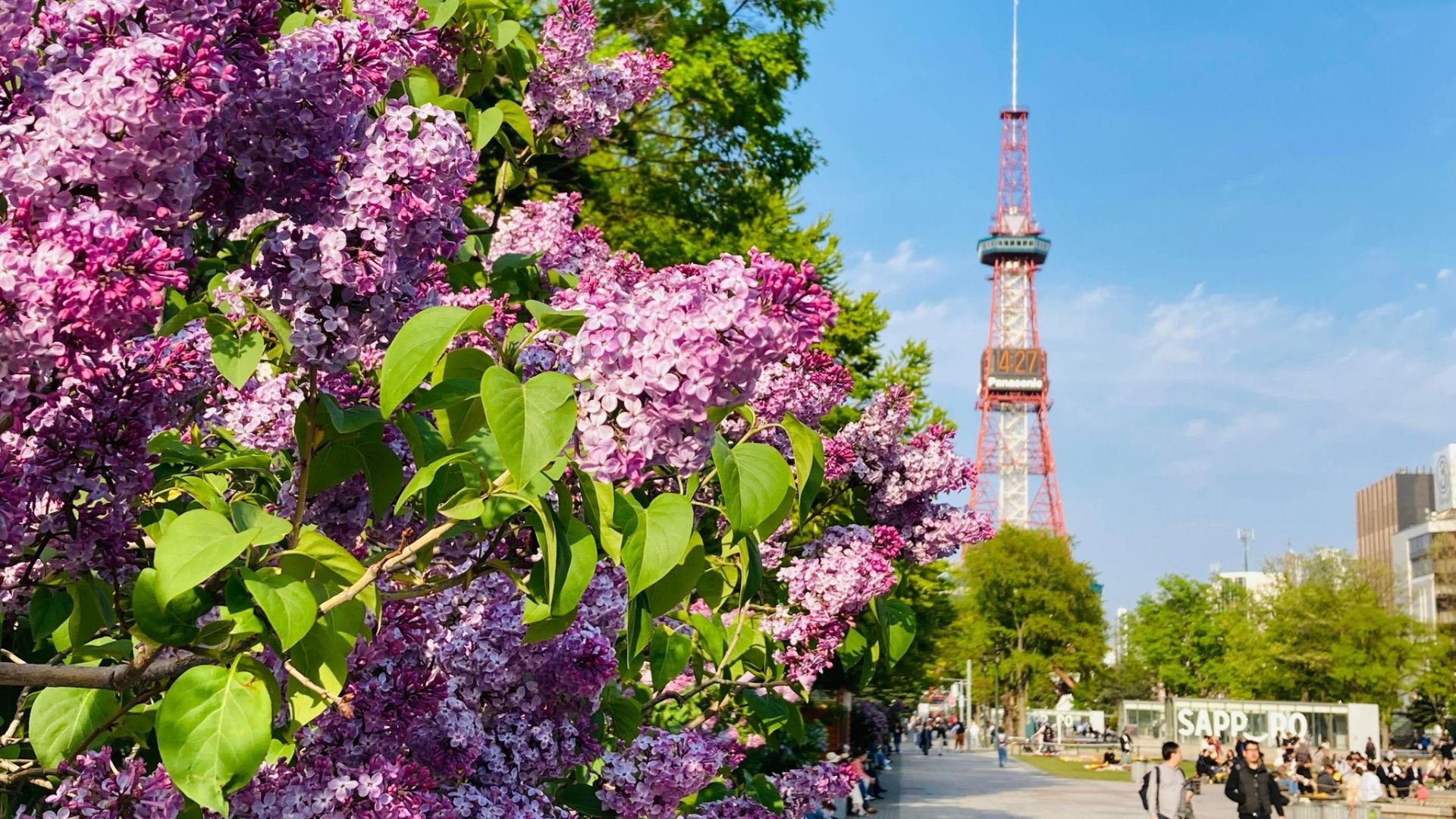 Image credit: さっぽろライラックまつり/Facebook
Sapporo takes its flowers seriously enough to have an official tree, and every spring the city throws a festival in its honour. The Sapporo Lilac Festival has been marking the arrival of early summer since 1959, when locals first began gathering beneath the fragrant purple blooms after Hokkaido’s famously long winter. Held across Odori Park and Kawashimo Park, the celebration mixes lilac-lined strolls with outdoor concerts, wine gardens and guided tours, giving the city a softer, almost Parisian mood for a few weeks each May.
Osaka Nemophila Festival, Maishima
Osaka isn’t usually the first place people imagine when talking about flower fields, but every spring, Osaka Maishima Seaside Park turns into a haze of blue. The park’s annual Nemophila Festival carpets roughly 44,000 square metres in delicate baby blue eyes, creating the sort of surreal, sea-meets-sky landscape that floods Japanese travel feeds every April. Last year’s edition drew nearly a quarter of a million visitors, and it’s easy to see why. Alongside the blooms, food trucks roll into the waterfront grounds throughout the festival, making it entirely possible to spend an afternoon alternating between flower photos and street snacks.
When: April 11 to May 10, 2026
Also, check out our guide to Japan’s one-of-a-kind bullet trains.
Chiryu Park Iris Festival, Chiryu
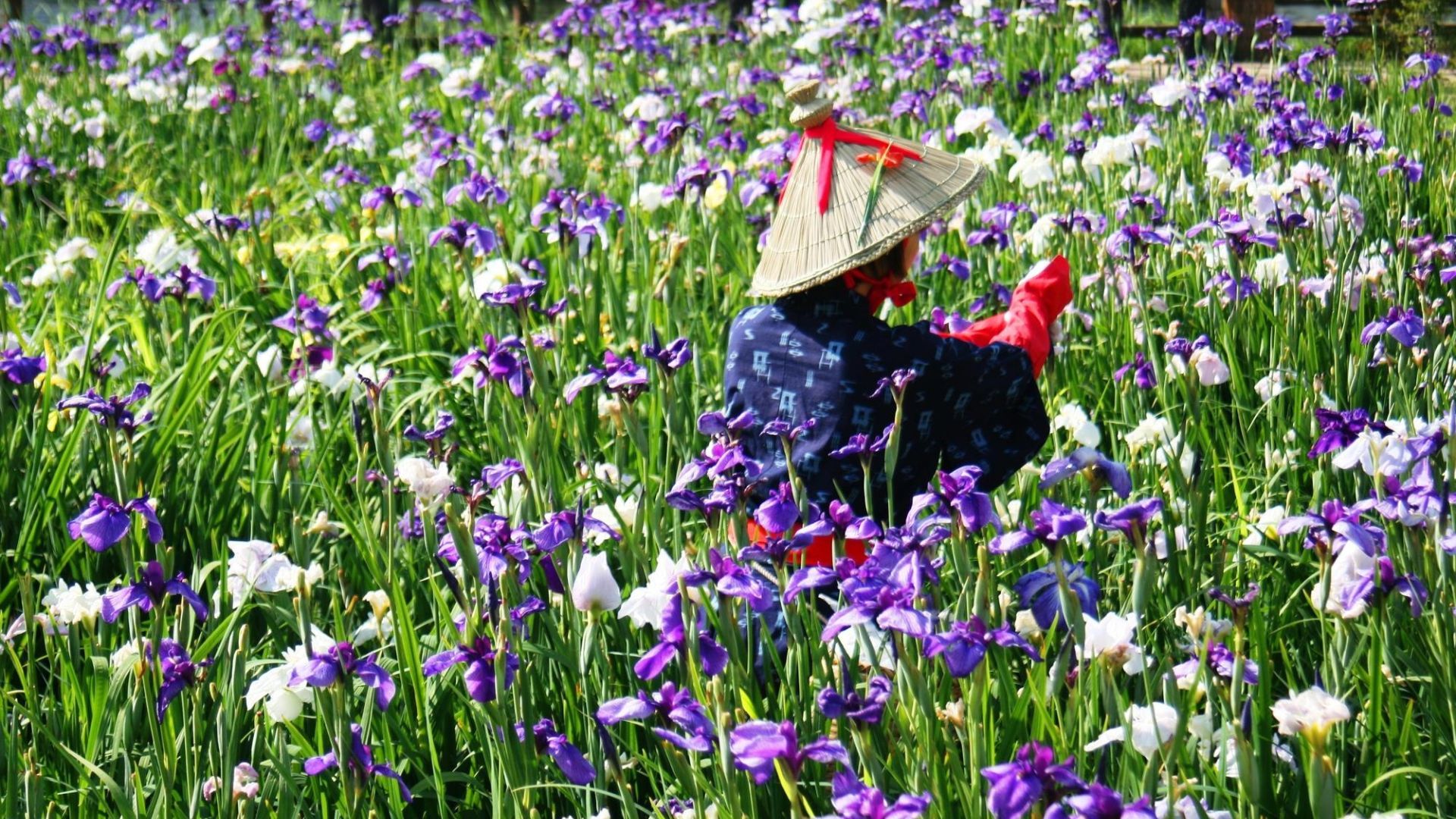 Image credit: Visit Japan International/Facebook
Chiryu Park’s iris festival comes with plenty of floral beauty, but it’s the history woven into the blooms that makes it especially compelling. The park’s elegant purple-and-white Japanese irises — many descended from varieties once cherished by Emperor Meiji and Empress Shoken — have been drawing visitors here for decades, typically reaching their peak from mid- to late May. Beside the gardens sits Chiryu Shrine, a former Edo-period post town shrine known for its cultural treasures and ties to Tokugawa Ieyasu’s inner circle. During the festival, the grounds fill with court music performances, kagura dances, tea ceremonies and softly illuminated evening displays.
When: May 11 to June 14, 2026
Here’s the schedule posted by Aichi Prefecture Tourism Bureau’s Aichi Now English for the 2026 festival at Chiryu Shrine:
Dwarf azalea exhibition — May 9 to 17
Batik and plant-dyed textile exhibition — May 20 to June 7
Japanese court music performance — 11 am to 11:40 am, May 23
Kagura dance performances — 9 am to 3 pm, May 24
Traditional mechanised doll performance: Battle of Ichinotani — 1 pm to 1:30 pm, May 31
Tea ceremonies — 10 am to 3 pm, May 17 to June 14 (excluding Mondays and Tuesdays)
Night illuminations in the iris garden — Daily from sunset to 9 pm throughout the festival
Shrine treasure exhibitions and iris photography displays — 9 am to 4 pm daily throughout the festival
Bunkyo Hydrangea Festival, Tokyo
Tokyo’s rainy season can be a hard sell, but Bunkyo’s annual Hydrangea Festival makes a convincing argument for embracing the drizzle. Held around Hakusan Shrine and neighbouring Hakusan Park, the event sees more than 3,000 hydrangeas burst into bloom in shades of blue, purple and pink. The flower festival has been brightening the old-school neighbourhood in Japan for over four decades, with weekend food stalls, concerts, sketching meetups and mikoshi processions adding to the atmosphere. There are even vendors selling potted hydrangeas along the shrine path, making it dangerously easy to leave with an extra plant or two.
This year’s schedule is yet to be confirmed.
Also, check out our guide to Japan’s Shinkansen network.
Hagi Matsuri, Kyoto City
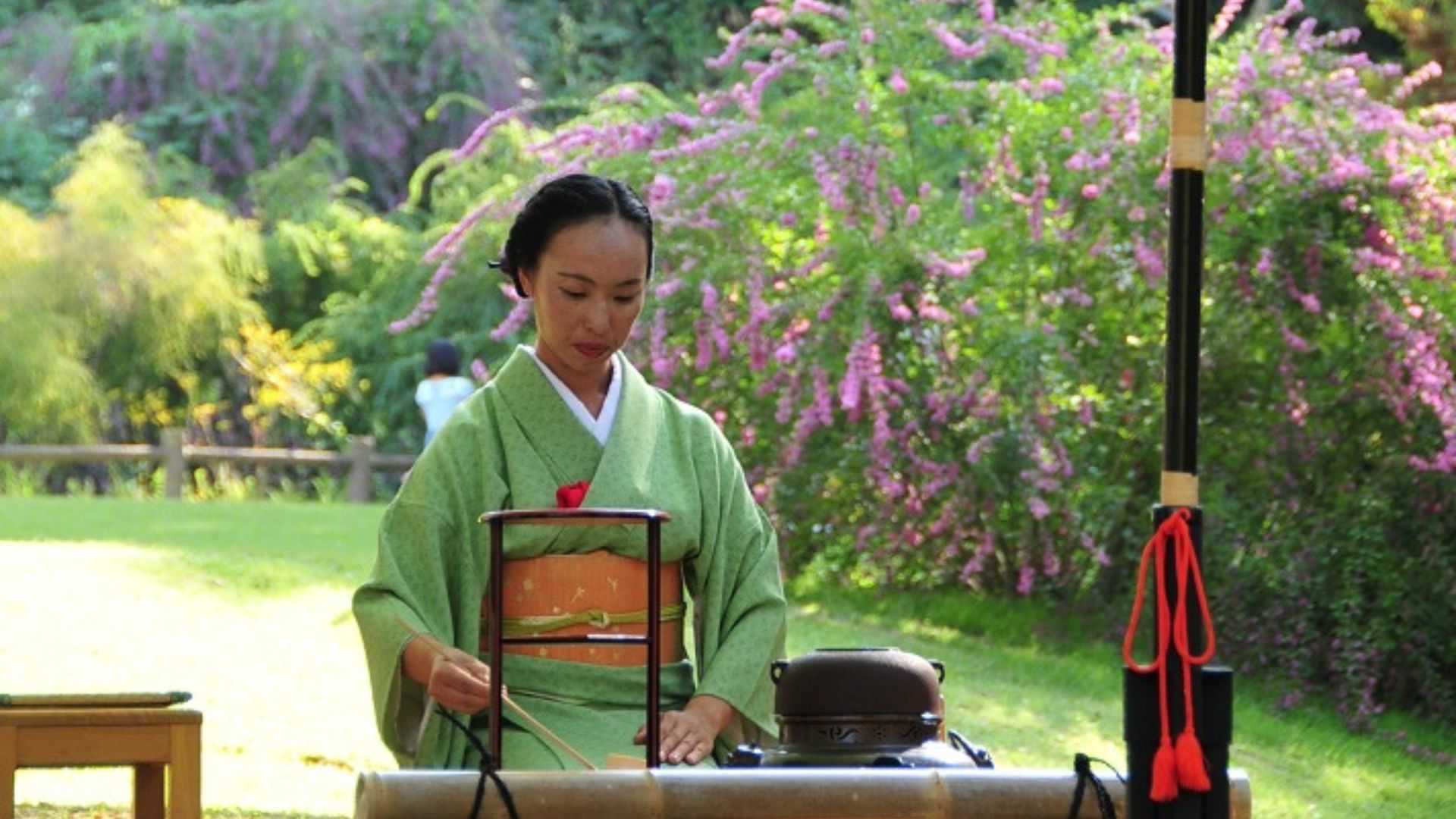 Image credit: Visit Miyagi/Facebook
Often overshadowed by Japan’s louder autumn foliage spectacles, Kyoto’s bush clover festival is a quieter, more poetic affair. Held at Nashinoki Shrine, affectionately known as “Hagi no Miya” or the Shrine of Bush Clover, the event celebrates hagi, a delicate flower so adored during the Manyo period that it became the most-mentioned plant in the ancient Manyoshu poetry anthology. More than 500 bush clover plants spill across the shrine grounds each September, their soft pink blooms setting the scene for tea ceremonies, traditional music performances, archery displays and poetry offerings tied delicately onto wooden plaques.
When: Usually around September 20 to 23, 2026
(Feature image credit: Japan National Tourism Organisation)
Related | This Airport Has Not Lost A Bag In 30 Years — And They Say, “It’s Not A Big Deal”
Note:
The information in this article is accurate as of the date of publication.
Subscribe
Share:

Written By

Sneha Chakraborty
Sneha Chakraborty is a journalist and photographer covering how travel intersects with food, culture, ..Read Moreand identity. Her reporting has appeared in National Geographic Traveller India, Lonely Planet, Conde Nast Traveller, Vogue India, and Hindustan Times, where she spent two years on staff as a correspondent covering travel and culture. She is an alumna of the University of Westminster`s Westminster School of Media, Arts and Design. Currently based in Delhi, she grew up in various cities across India and has lived in Amsterdam, and London. Read Less
AloJapan.com