
The only reason Kazuo was allowed to leave was because of his answers to a questionnaire all incarcerees were required to answer. Part of this questionnaire, which offered a possibility of families being released from incarceration early, required first-generation immigrants to renounce their citizenship to Japan, leaving individuals like Kazuo’s mother without citizenship anywhere, due to the Alien Land Laws mentioned earlier in this story. Kazuo answered yes to these questions, and another asked if he would serve in the war to fight against Japan. In order to be able to start farm labor so his mother, brothers, and himself could afford to pick up the pieces of their farm and start again, Kazuo answered “Yes, yes.”
Kazuo went to work in Idaho, then Chicago, and then Utah seasonally. By the time he went to Utah, Gila River and other sites of incarceration had begun to close in early 1945, upon the end of World War II.
Sei Ikeda returned to Arroyo Grande in June of 1945. With none of her sons there, Sei stayed with a neighboring family until Kazuo returned in November. Upon his return, Kazuo connected with Vard Loomis, who, just as he promised, had kept the land for the Ikedas to return to. Loomis had leased it out to some other farming families on a short-term lease, and as soon as they had rooted up all of the crops they planted, the Ikedas were able to start farming again. Kazuo and Sei, having lost their house, lived in the two-room building that had stored all of their life’s belongings and farming equipment while they were incarcerated. In an oral history, Kazuo remembered “making the little two-room into a makeshift home, kitchen on one side and bedroom on the other. It was only 12’ by 24’… the first several years we struggled… we had to work day in…”
As Kazuo and Sei picked up the pieces, Saburo was off serving in the intelligence corps in Japan. Seirin got sick while farming in the harsh cold in Toledo, and one of his old tuberculosis scars from a childhood illness flared up, so he was hospitalized in Toledo and then transferred to a hospital in San Luis Obispo, where he got well. As soon as his lungs allowed, Seirin returned to farm on his family land.
Despite these additional challenges, as soon as he returned to the Central Coast, Kazuo began farming again, and his strong ties to his community saw him through the impossible task of managing 100 acres of land solo. While Kazuo farmed as much land as he could starting back up, he also lent some of his land to other returning Nisei who had lost their own farms. This allowed other Japanese American families to rebuild their own wealth and ensured the Ikedas could stay at home on the Central Coast.
By 1948, Kazuo had built the land back up to a fully functional and working status with the help of his brothers. This included a home on the 60-acre farmland in Oceano, so his mother and himself no longer had to live in a two-room shack. Saburo returned after the war and enrolled at UC Berkeley, earning a degree before returning to farm on the Central Coast with his brothers.
In 1950, Kazuo met his wife, Mitzi, through a friend in Morro Bay. By 1955, Kazuo purchased a new home in Oceano.
The Ikeda brothers soon transformed their family farm into a business that still runs today. They became members of the Pismo Oceano Vegetable Exchange, and their farming legacy took off. Tom Ikeda, grandson of Juzo, was president of POVE for seven years. He is now a co-owner of Ikeda Bros farm and market.
Mr. Clyde Ikeda, son of Seirin, remembers hard days of farm labor during his childhood. He helped “wash, sort, and pack tomatoes and bell peppers on the weekends,” while his father and uncles worked 10 to 12 hours a day. He values the memories of his summers working with his family and is happy that as he grew older, the farm grew more successful and their family got to spend more time together.
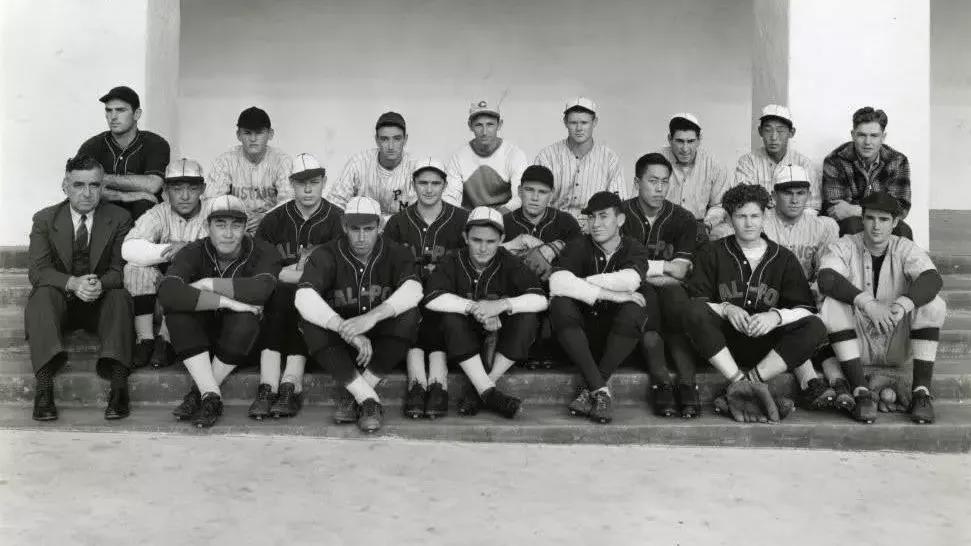
Another aspect of the Ikeda brothers’ childhood has trickled down through generations: the love of the game. All three of the Ikeda brothers became coaches for baseball teams in San Luis Obispo County. Clyde remembers his family ethics on the farm, transferring to how his dad and uncles coached baseball: “As in farming, you need to know the basis, the fundamentals to create a winning, successful environment.”
Kazuo coached the 13–15 Babe Ruth League, Seirin coached the 9–10 age group Little League, and Saburo coached the 11–12 age group Little League in the area. Kazuo’s team traveled to Ohio for the Babe Ruth World Series in 1977. His long-lasting passion and efforts on and off the field placed Kazuo’s name and legacy on a field at the Soto Sports Complex and Paulding Middle School in Arroyo Grande. Clyde Ikeda played for all of them. He remembers always having winning teams, a testament to his coaches’ perseverance and wisdom.
These brothers maintain impact in the wider Central Coast community through their influential family and lasting philanthropic contributions to youth baseball, religious organizations, and farming efforts.
AloJapan.com