
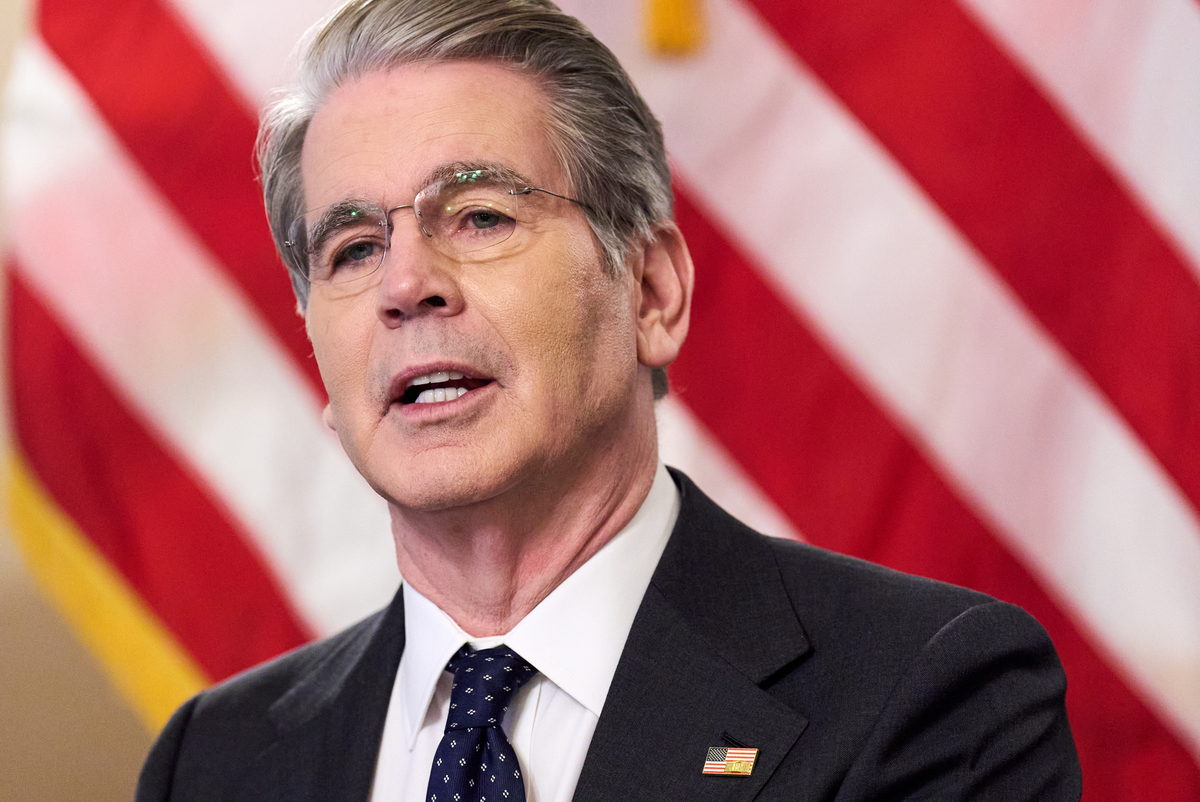
 U.S. Treasury Secretary Scott Bessent. AP-Yonhap
U.S. Treasury Secretary Scott Bessent will visit Japan next week to discuss joint measures to halt the slide in the yen’s value. With the yen-dollar exchange rate recently breaching 160, Washington is moving to coordinate with Tokyo, which has carried out market interventions worth at least tens of trillions of won. The visit also aims to align U.S.-Japan positions ahead of the U.S.-China summit scheduled for the 14th and 15th of this month.
The Nihon Keizai Shimbun reported Friday, citing government sources, that Bessent will visit Japan for three days starting the 11th. During his stay, Bessent is scheduled to meet Prime Minister Sanae Takaichi, Finance Minister Satsuki Katayama, and Bank of Japan Governor Kazuo Ueda. According to the Nikkei, the two sides plan to address responses to yen weakness, economic security issues including critical minerals such as rare earths and energy, and the Iran issue.
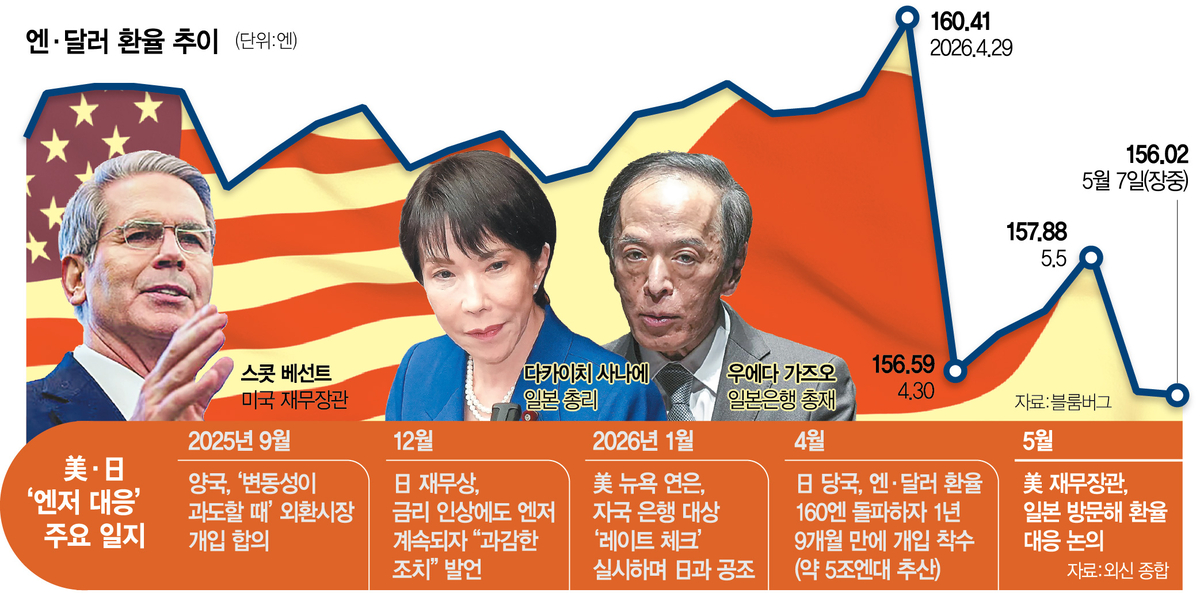
Countering yen weakness is expected to be the central agenda item. Japanese authorities are currently waging “war” against speculative selling that has driven down the yen. After the exchange rate surged to 160.41 yen on a closing basis on the 29th of last month and climbed further to 160.70 yen intraday the following day, breaching the psychological resistance level of 160 yen, Finance Minister Katayama opened fire, saying “the time to take decisive action is drawing near.”
Immediately following her remarks, the closing rate on the 30th fell sharply to 156.59 yen, down more than 2 percent from the previous day. Market participants estimated that Japanese foreign exchange authorities had intervened by purchasing yen worth 5 trillion yen (approximately 46.46 trillion won). It was the first time Japanese authorities had carried out currency intervention in about one year and nine months, since July 2024. The Nikkei noted that at least three sharp drops in the exchange rate (rises in the yen’s value) occurred during the holiday period from the 1st of this month through the 6th. The previous day, the exchange rate briefly recovered to the 155-yen range, marking the yen’s first rebound in about two months.
 –
–
The yen has shown such a strong downward trend that Japanese authorities have had to step in. Although the Bank of Japan raised its benchmark interest rate to 0.75 percent in December last year, its highest level in 30 years, the exchange rate instead climbed to the upper 150-yen range. Even after the hike, the rate remains in the 0 percent range, insufficient to stimulate demand for yen purchases. When adjusted for inflation, real interest rates remain negative. Another factor is the diminished status of the yen as a safe-haven asset in the aftermath of the Iran war. The Yomiuri Shimbun analyzed that “the practice of buying yen in times of global crisis is now a thing of the past.”
Yen weakness is also unwelcome news for the United States. With the yen continuing to weaken even after Japan’s rate hike, Japanese investors who had invested in U.S. Treasuries could sell the bonds and repatriate funds. Global hedge funds, anticipating such flows, are also likely to offload U.S. Treasuries first. The Nikkei assessed that “if Japan’s rate hikes and yen weakness proceed simultaneously, it could intensify speculative movements and potentially trigger sell-offs of U.S. Treasuries.”
For this reason, the United States concluded an agreement in September last year approving Japan’s currency interventions “only for the purpose of limiting excessive volatility.” In January this year, the New York Federal Reserve Bank conducted an unusual “rate check” targeting foreign exchange dealers, helping to stabilize the yen. Bessent’s visit to Japan itself carries the effect of signaling to institutional investors who have led the yen sell-off that Washington “will be paying attention to the exchange rate.”
However, Bessent’s visit to Japan is driven not only by a desire for coordination but also by significant interventionist aims. If the Japanese government sells off large quantities of U.S. Treasuries to secure “ammunition” for currency intervention, it could lead to a decline in bond prices and a rise in yields. Goldman Sachs estimated that the Japanese government has the capacity to intervene in the market roughly 30 times.
As such, the United States is pressuring Japan on the grounds that rate hikes could serve as a fundamental alternative for reversing yen weakness. The Bank of Japan has also maintained a stance favoring rate hikes this year, but the Takaichi government’s calculations are complex. Amid already accumulated national debt, the government is pursuing expansionary fiscal policy, and raising rates would increase the government’s interest burden.
AloJapan.com