
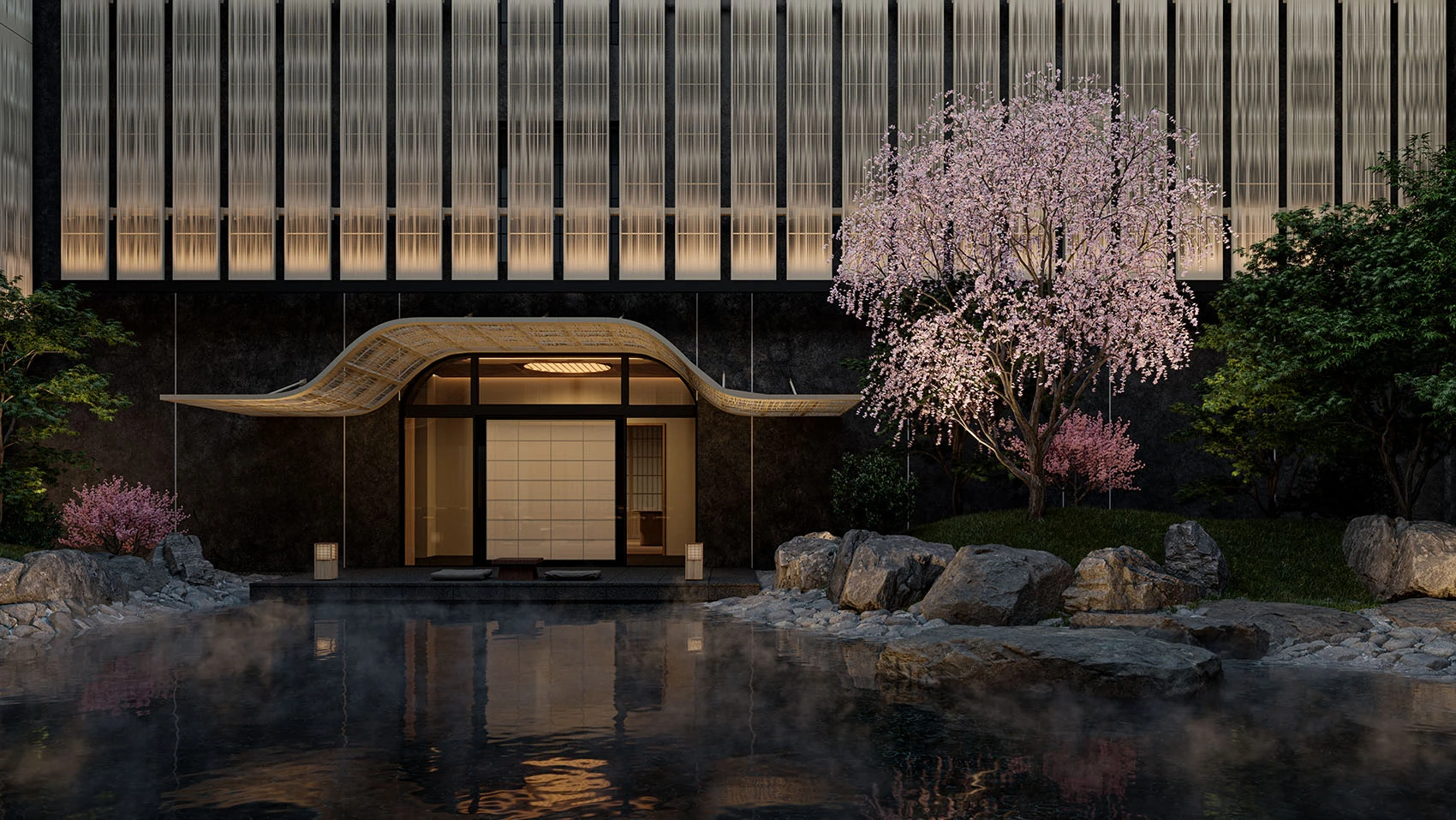
Capella Kyoto Hotel emerges as a serene space. Walking through the historic district, past timber-fronted machiya houses and narrow stone lanes, the building reveals itself gradually through layers of wood screens, softened edges, and shadowed thresholds. Kengo Kuma designed the project as something that could settle into Kyoto’s existing urban fabric without disrupting its rhythm.
Located in Miyagawa-chō, one of Kyoto’s historic geisha districts, the project occupies the former site of the Shinmichi Elementary School and forms part of a wider cultural redevelopment that also includes the reconstruction of the Miyagawa-chō Kaburenjo Theatre and a community building.
A Capella Kyoto Hotel, Designed as a Part of Kyoto
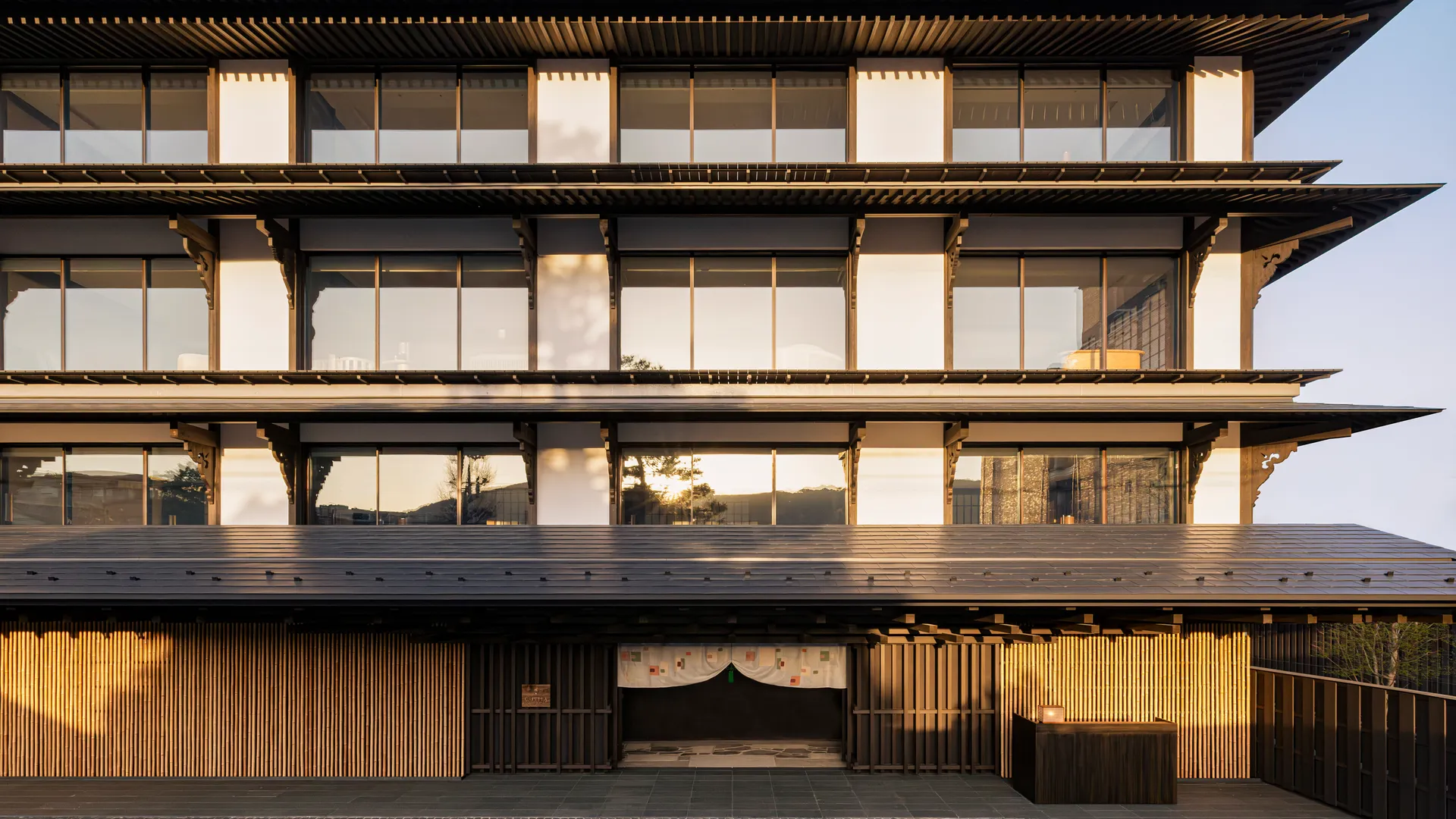
Kengo Kuma approached the project as an urban continuation of Kyoto’s existing fabric. The hotel embraces the scale, rhythm, and material language of the traditional machiya townhouse. The design avoids spectacle and instead relies on compression, layering, filtered light, and framed transitions between spaces.
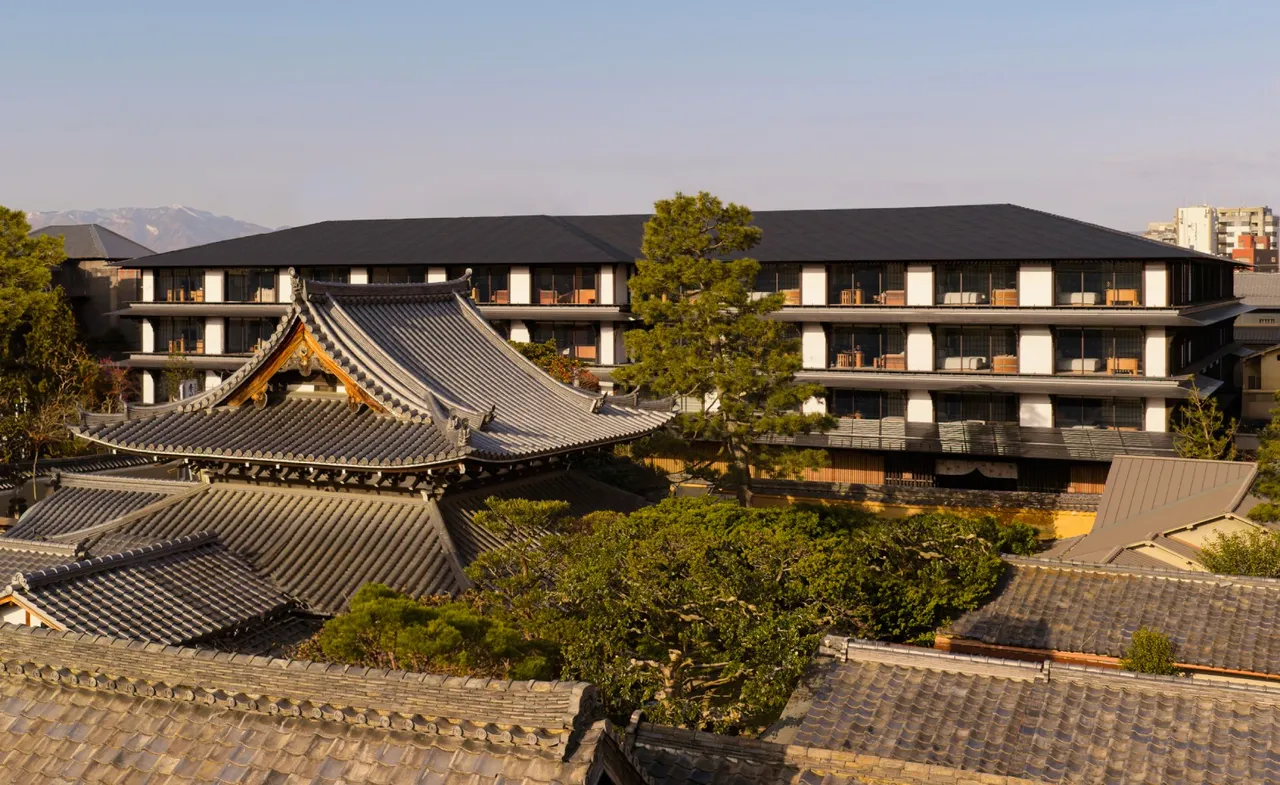
The building remains deliberately low-rise at four stories and 89 rooms, maintaining the visual continuity of the district. This decision is important in Kyoto, where excessive verticality often disrupts the relationship between streetscape, temple roofs, and mountain horizons. Kuma’s intervention respects that established spatial order rather than competing with it.
Reinterpreting Kyoto’s Machiya Architecture
© Brewin Design Office
The strongest architectural character within Capella Kyoto is its reinterpretation of the machiya typology. Traditional machiya houses are defined by narrow street-facing facades, layered interiors, internal courtyards, timber lattice screens, and carefully controlled natural light. Kengo Kuma translates these elements into a hospitality environment without turning them into decorative replicas.
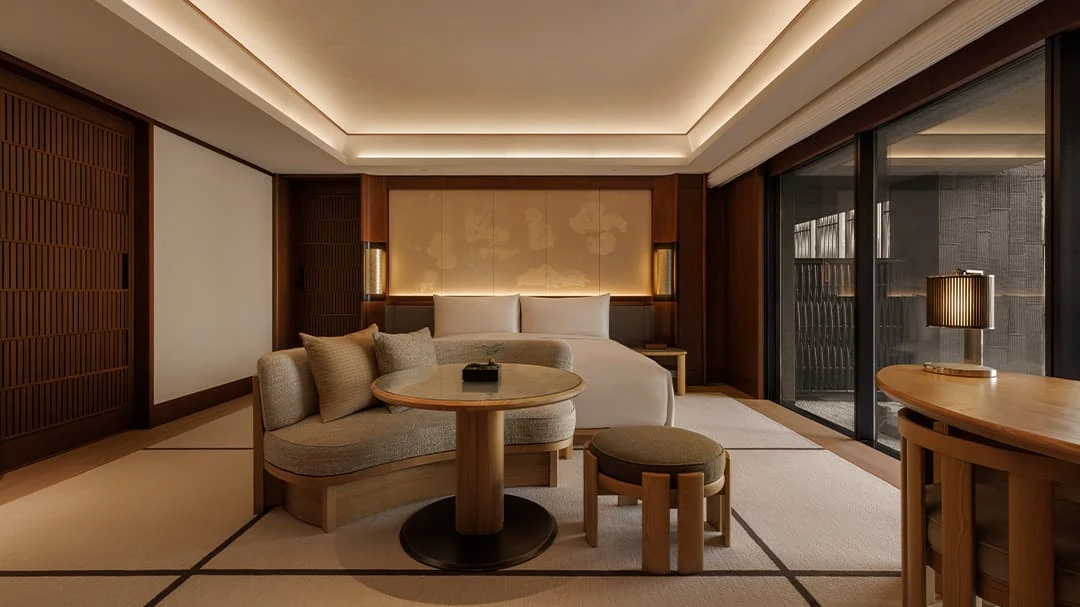
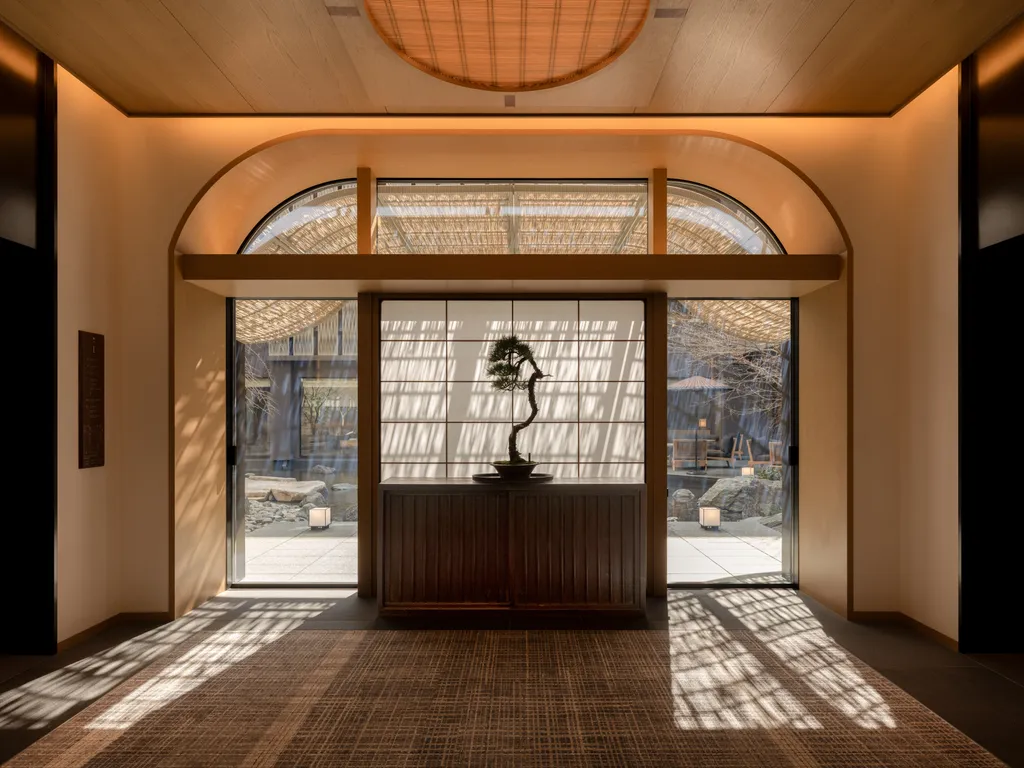
Movement through the hotel resembles movement through Kyoto’s side streets. Corridors narrow and widen gradually. Sliding partitions reveal partial views. Interior features are softened through translucent screens, bamboo filters, noren curtains, and timber detailing. The experience becomes sequential.
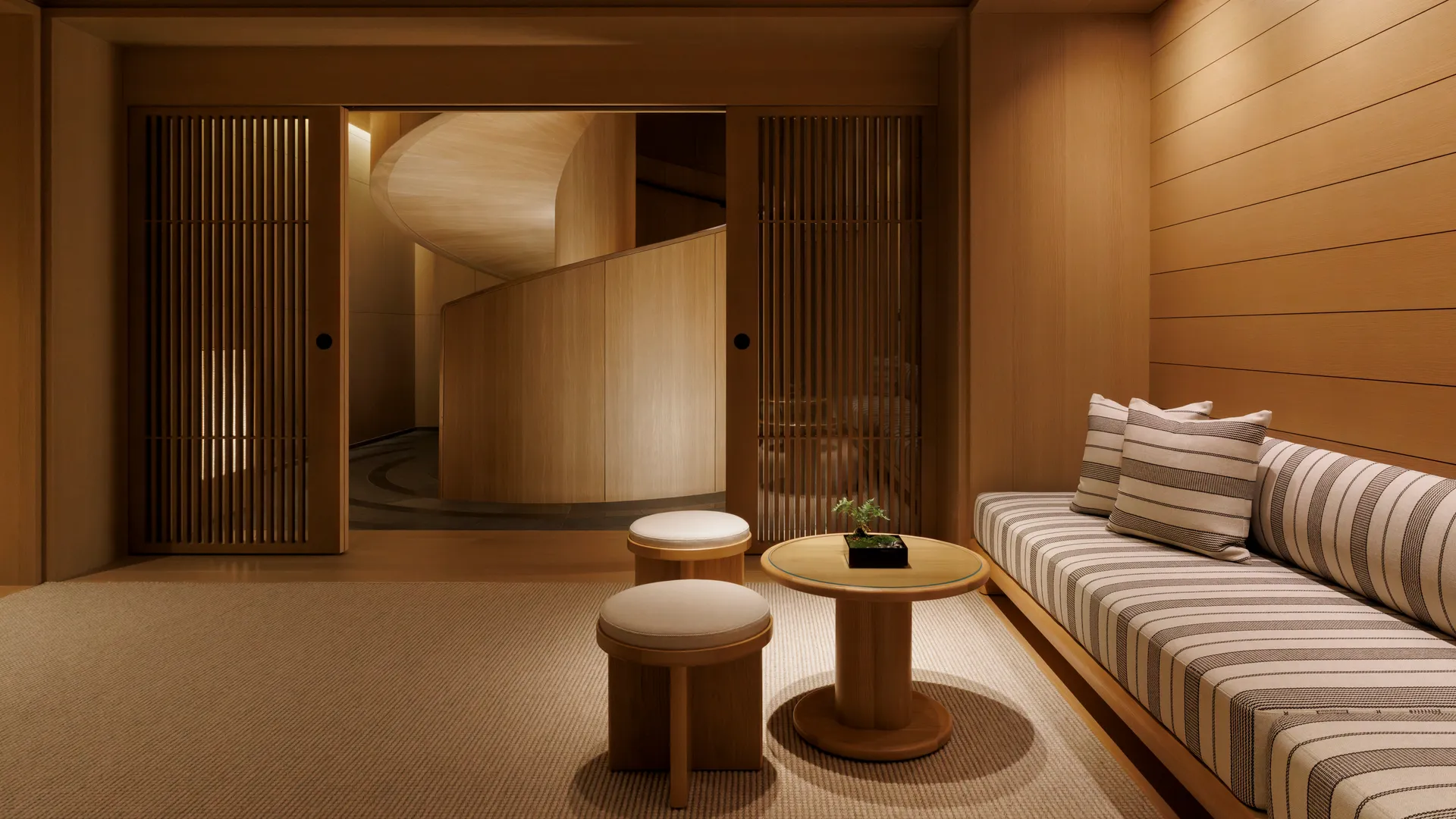
This space reflects Kuma’s long-standing architectural interest in ambiguity and fragmentation. Instead of emphasizing solid form, he works through layers, permeability, and atmosphere. At Capella Kyoto, architecture is experienced through shadow, texture, and sound as much as through structure itself.
Kengo Kuma’s Approach to Materiality and Craft
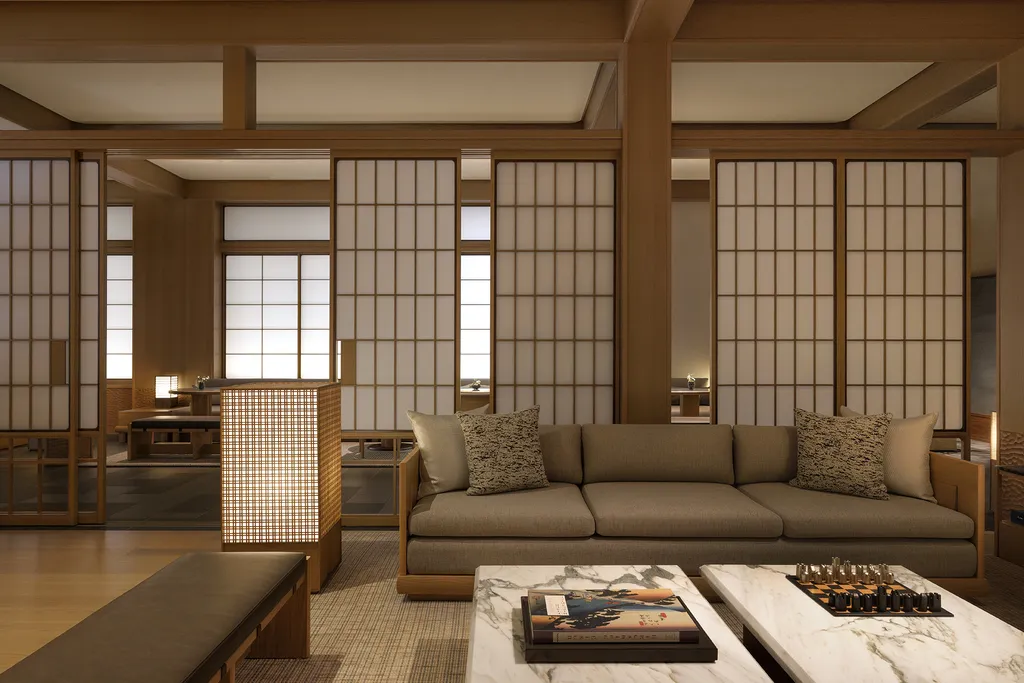
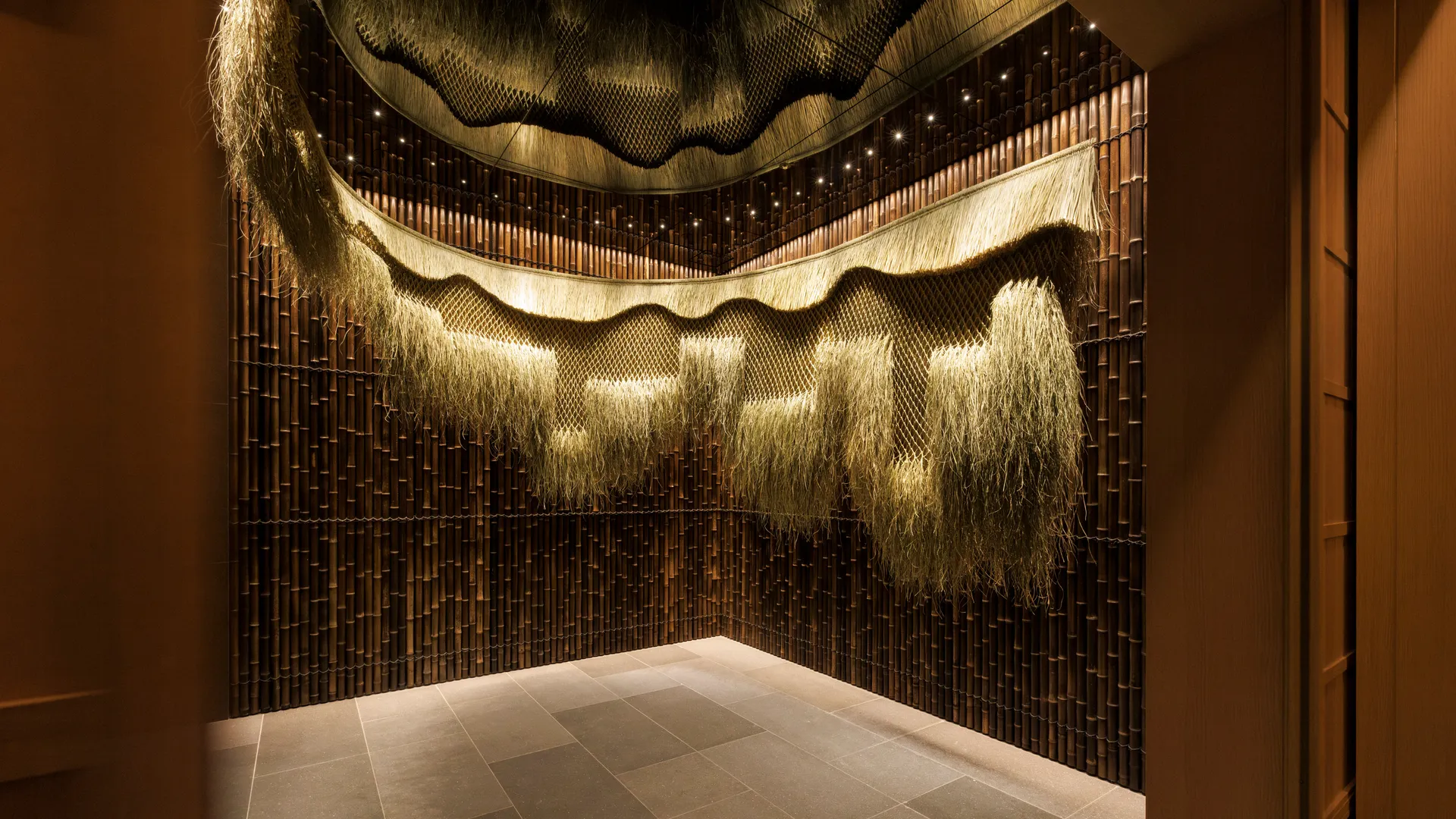
The material palette is deeply connected to Kyoto’s artisanal traditions. Bamboo latticework, natural timber, washi paper, stone surfaces, and muted textiles dominate the interiors and exterior transitions. Kuma avoids polished excess. Surfaces are tactile, allowing natural aging and imperfection to become part of the hotel’s visual character.
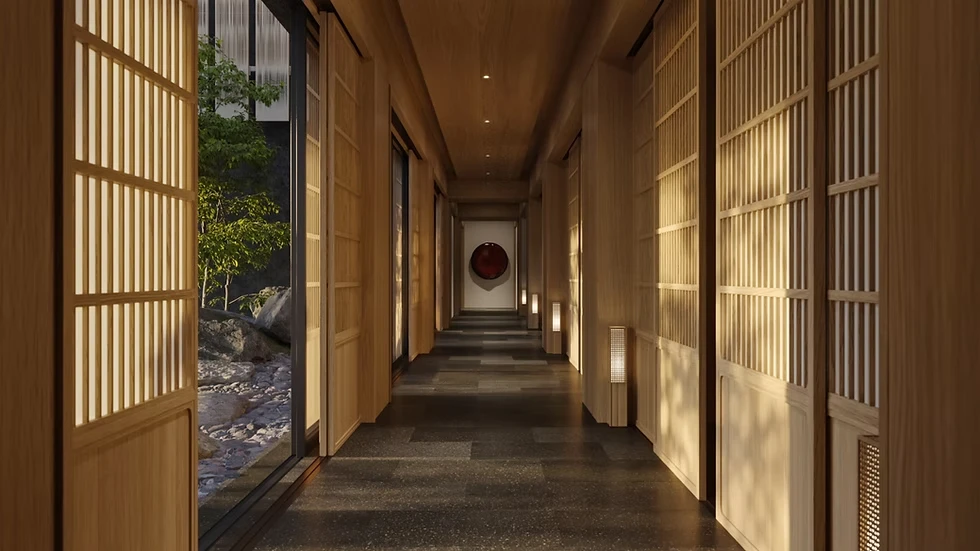
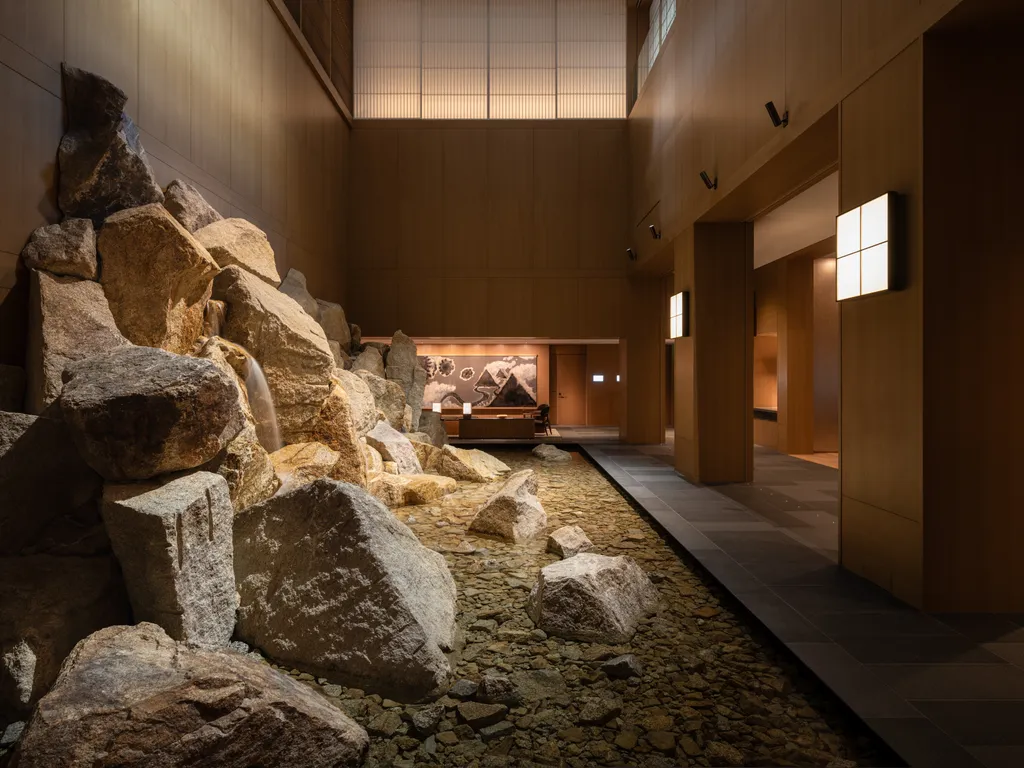
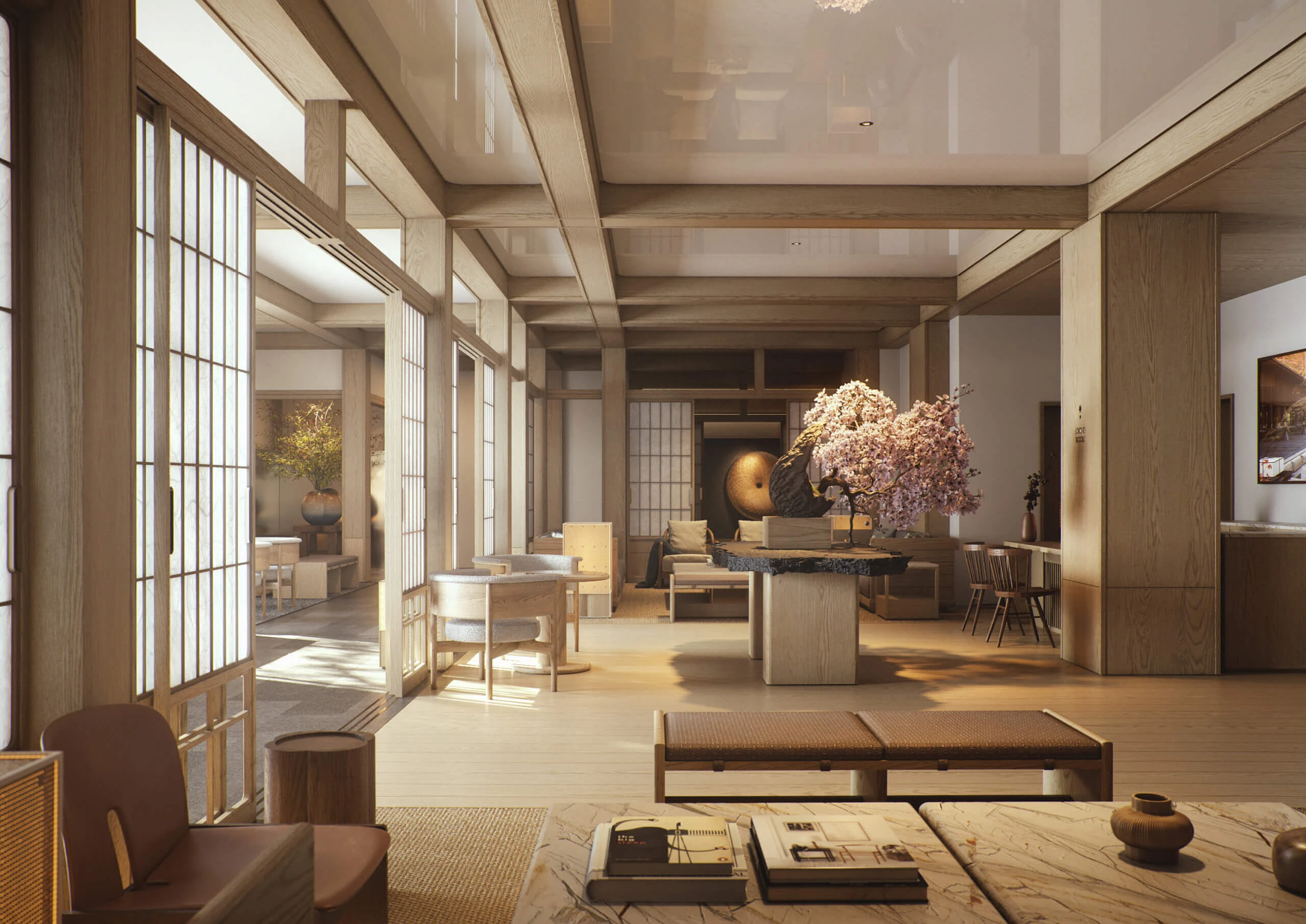
One of the defining elements is the extensive use of timber layering across ceilings and screening systems. In several public spaces, overlapping wood members create a porous canopy effect that diffuses light and reduces visual hardness. Bamboo appears as an environmental filter that mediates privacy and daylight.
The curved awning within the inner courtyard references the karahafu gable roof of the adjacent Kaburenjo Theatre. This connection anchors the hotel architecturally to the neighborhood’s cultural history.
© Brewin Design Office
Landscape design also contributes significantly to the hotel’s atmosphere. Existing cherry blossom and maple trees from the former school site were reportedly preserved and replanted after construction. Gardens are integrated as visual pauses within the circulation sequence.
Architecture of Serenity Through Controlled Light
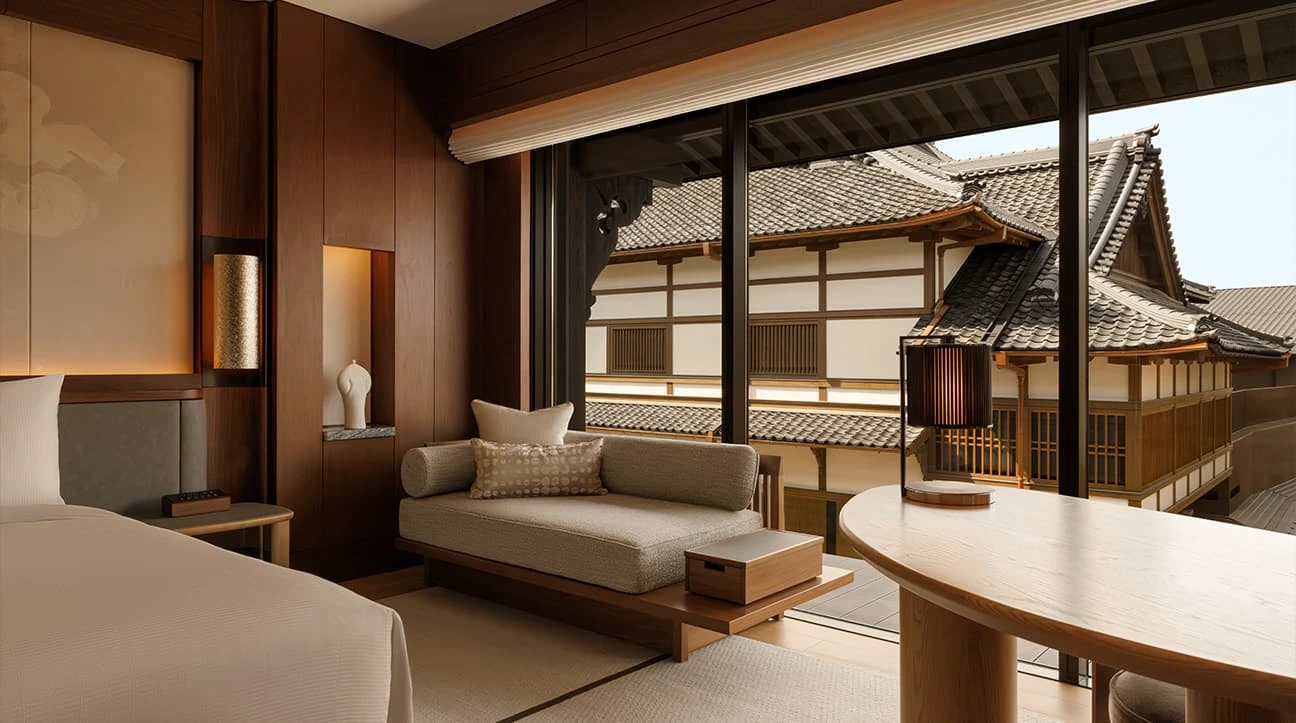
Serenity in Capella Kyoto is achieved architecturally through controlled sensory reduction. Kengo Kuma minimizes visual noise through subdued palettes and layered translucency. Light enters indirectly. Public spaces remain intentionally dim in places, producing gradual transitions between brightness and shadow.
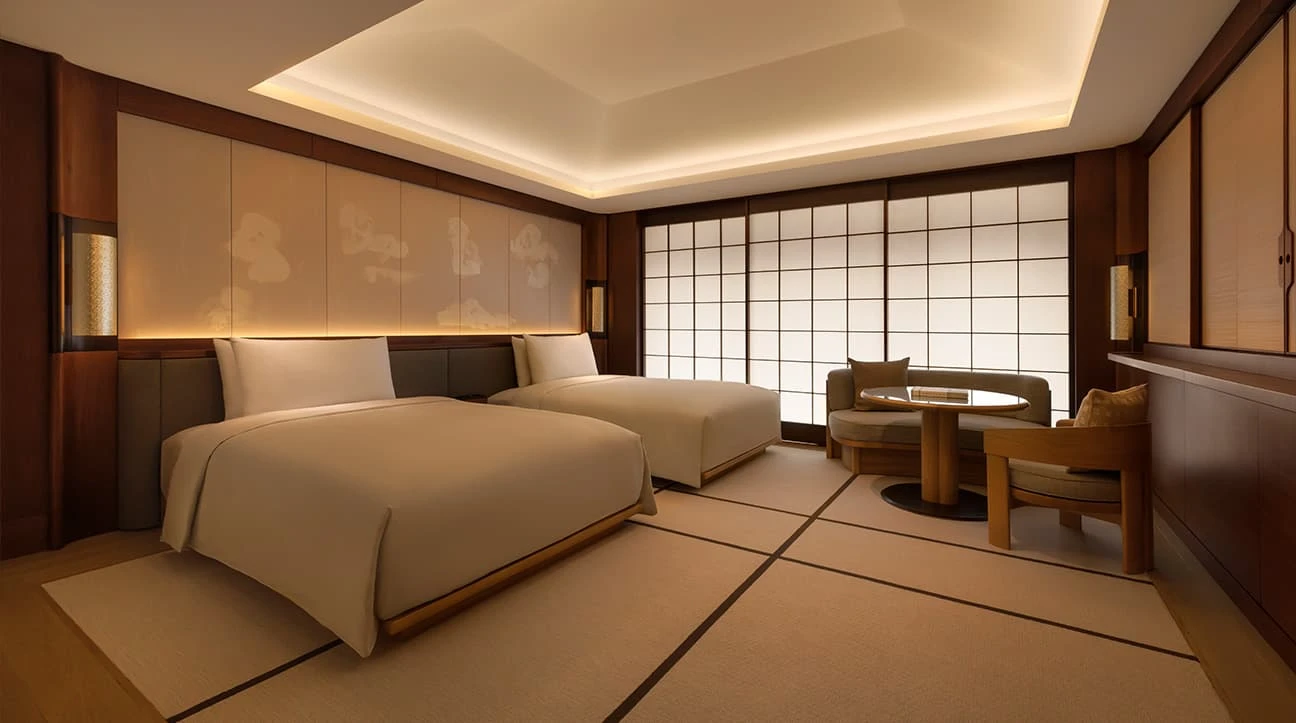
This treatment of light aligns with traditional Japanese spatial philosophy, particularly the idea that atmosphere emerges through concealment. Sliding shoji-inspired partitions and screened corridors create partial visibility throughout the hotel. Guests rarely encounter a fully open panoramic interior. Instead, the building reveals itself incrementally.
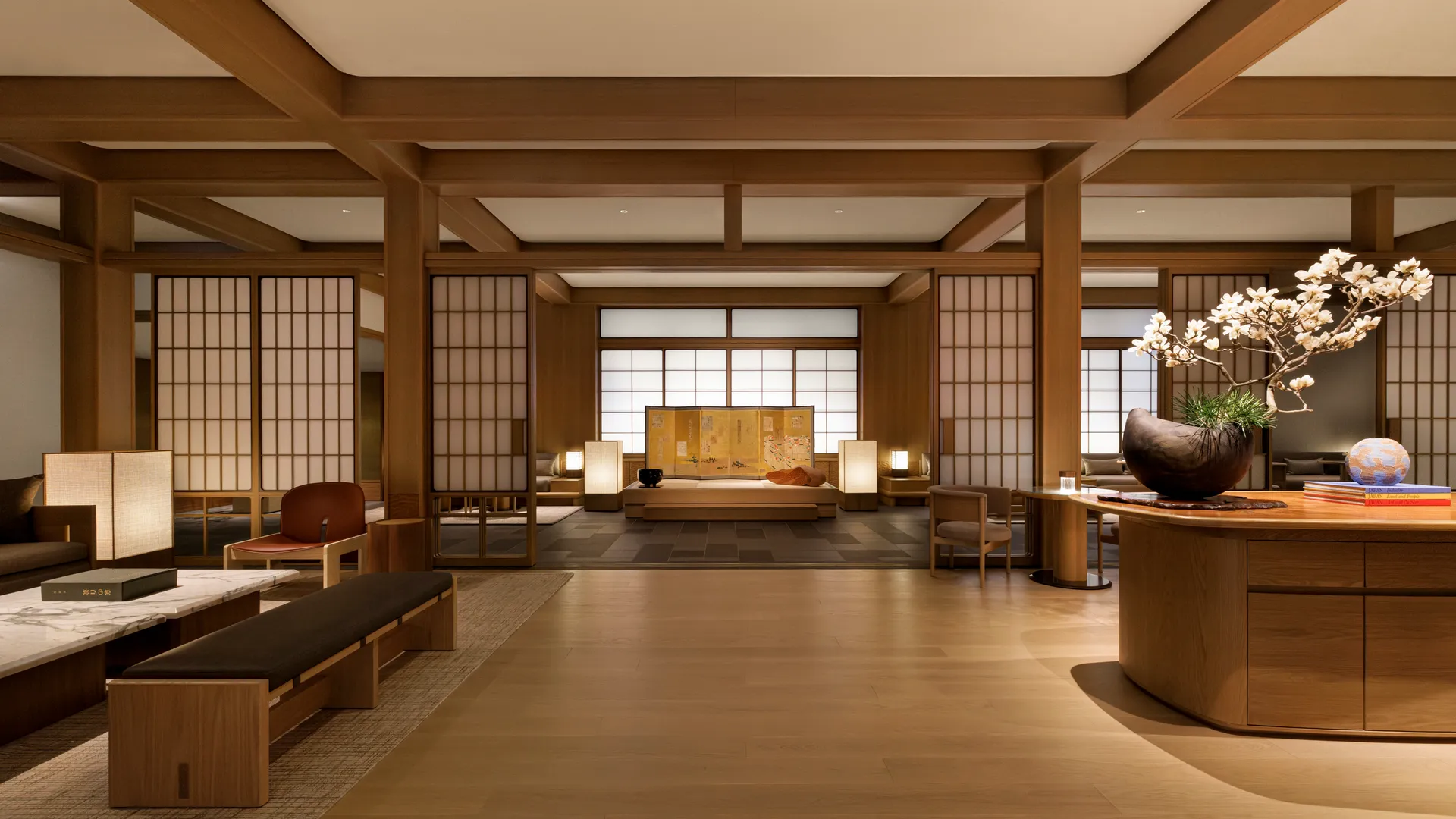
The effect is especially noticeable in transitional areas. Hallways, entrances, and courtyards are treated with the same care as guestrooms. The project’s calmness comes from carefully managed spatial rhythm.
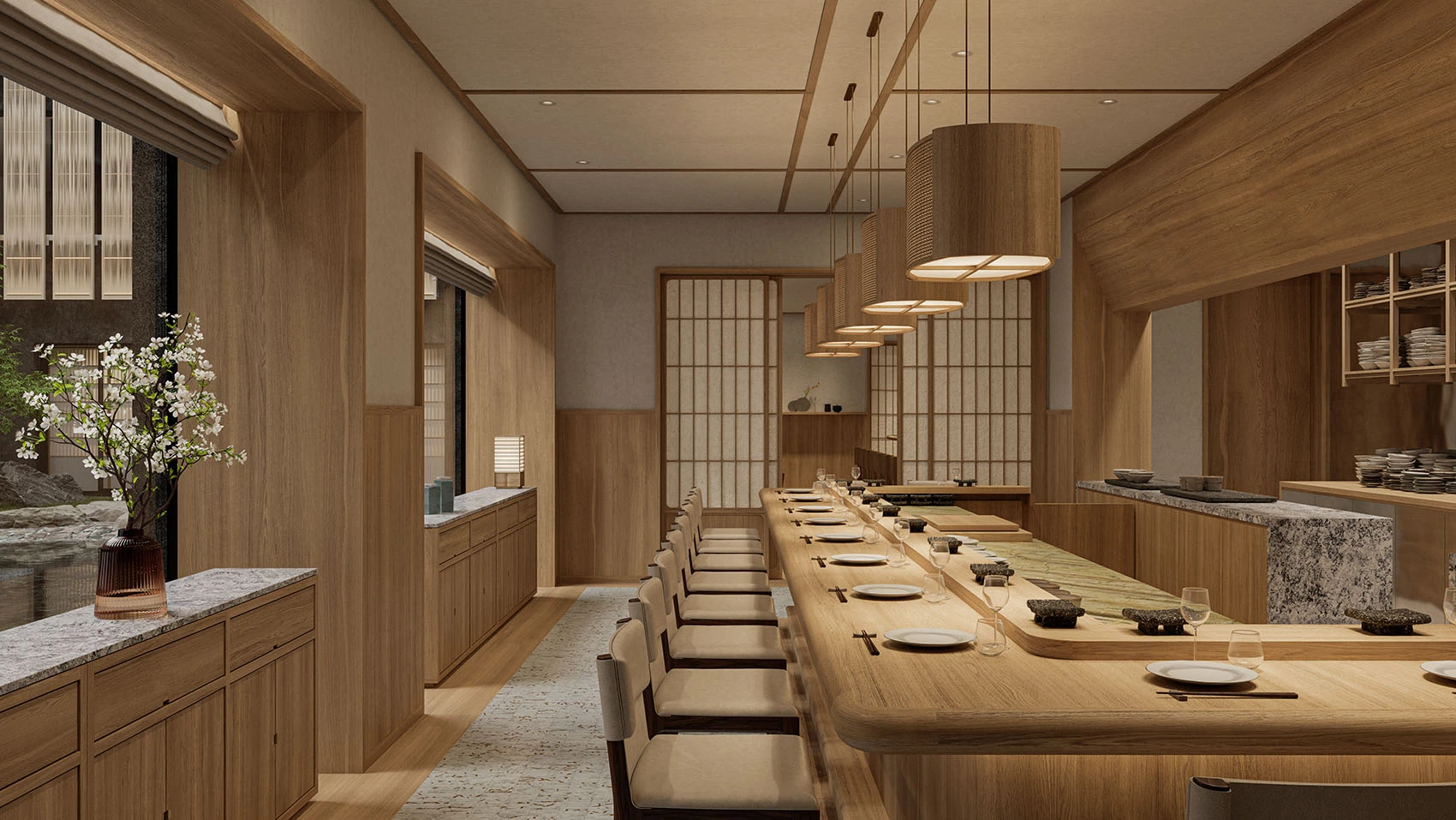
Kuma also avoids visual dominance from technology and luxury branding. Architectural detailing remains the primary focus. Furnishings, lighting fixtures, and art installations are integrated peacefully into the interiors.
Interior Design and Cultural Continuity

© Brewin Design Office
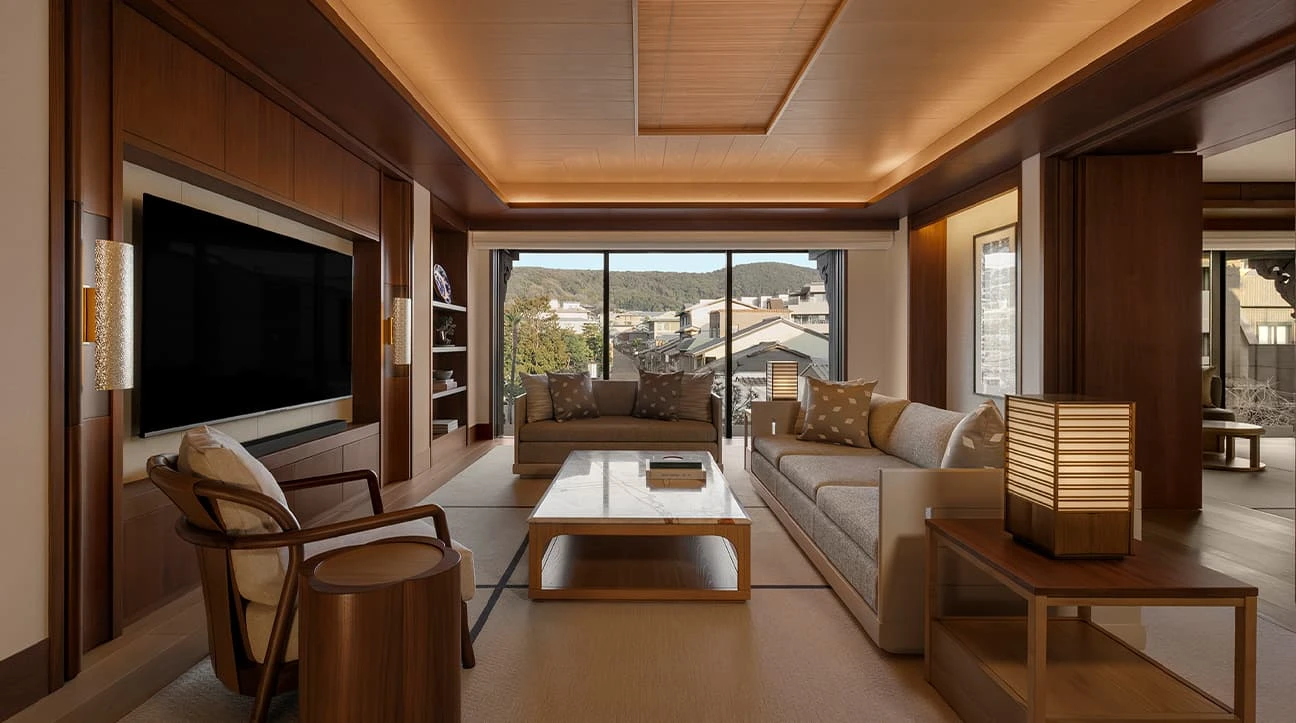
While the architecture was led by Kengo Kuma & Associates, the interiors by Brewin Design Office extend the same design philosophy. The guestrooms continue the restrained material language with textured textiles, warm wood tones, stone finishes, and handcrafted details rooted in Kyoto’s craft culture.
© Brewin Design Office
Several rooms incorporate woven Nishijin textiles and artworks inspired by Zen calligraphy and kare-sansui dry gardens. Traditional craftsmanship is embedded in the architectural experience, relatively displayed as isolated cultural artifacts.
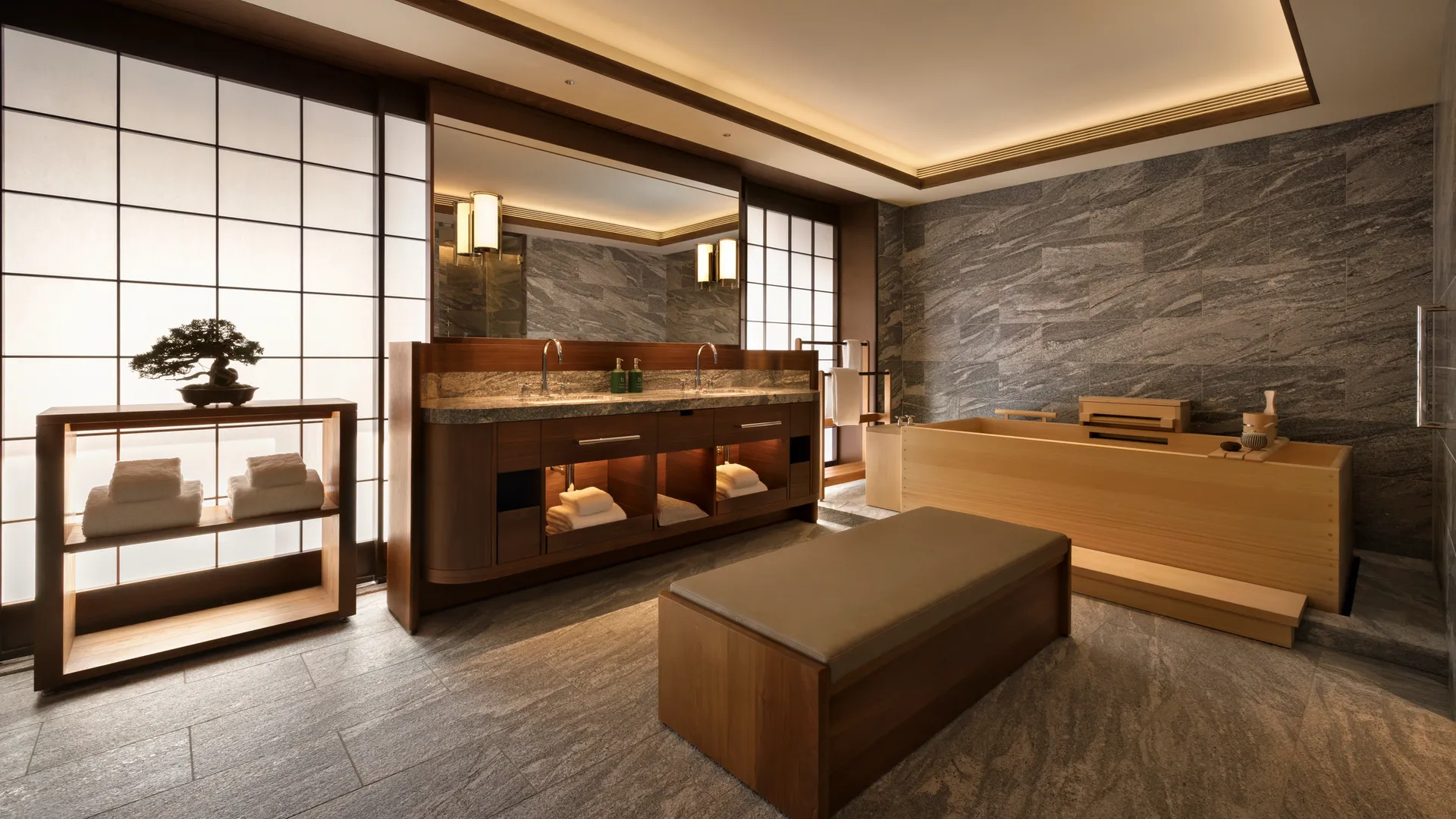
Bathrooms continue the emphasis on sensory calm with granite and cypresswood bathtubs, muted lighting, and natural materials. Views toward temples, streets, gardens, and distant mountains reinforce the project’s relationship with the surrounding cityscape.
Architecture Rooted in Kyoto’s Cultural Fabric
What distinguishes Capella Kyoto from many contemporary luxury hotels is its refusal to separate hospitality from urban and cultural context. The hotel was conceived alongside the restoration of the Kaburenjo Theatre, reinforcing the district’s historical identity.
This approach reflects a recurring theme in Kuma’s work: architecture as mediation. The building does not attempt to dominate Kyoto’s historic environment through iconic form. Its presence is more peaceful and more dependent on continuity, material sensitivity, and spatial nuance.
Capella Kyoto ultimately operates as an architectural interpretation of Kyoto itself. Through filtered light, layered materials, intimate scales, and sequenced movement, Kengo Kuma creates a hotel that immerses the atmosphere of the city.
Image credit: Capella Kyoto
AloJapan.com