
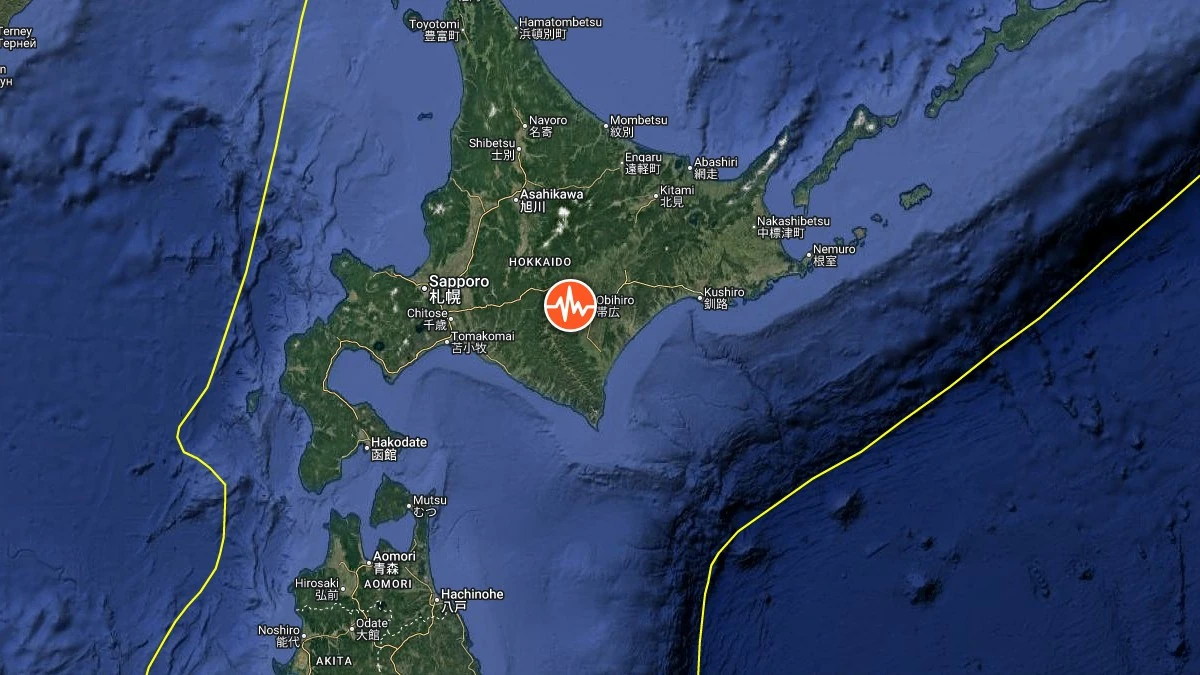
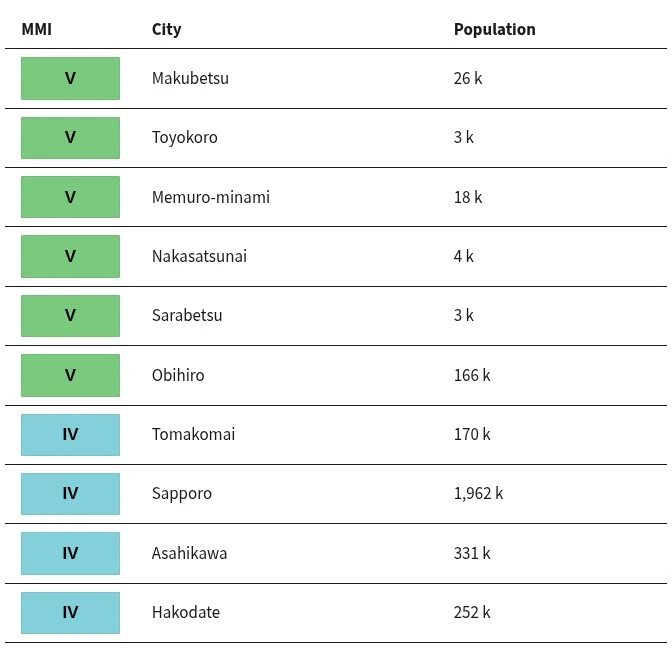
The epicenter was located 18 km (11 miles) W of Sarabetsu (population 3 275), 37 km (23 miles) SSW of Obihiro (population 165 851), 44 km (28 miles) SSW of Otofuke (population 44 235), 55 km (34 miles) NNE of Urakawa (population 12 800), and 140 km (87 miles) ESE of Sapporo (population 1 973 832), Hokkaido, Japan.
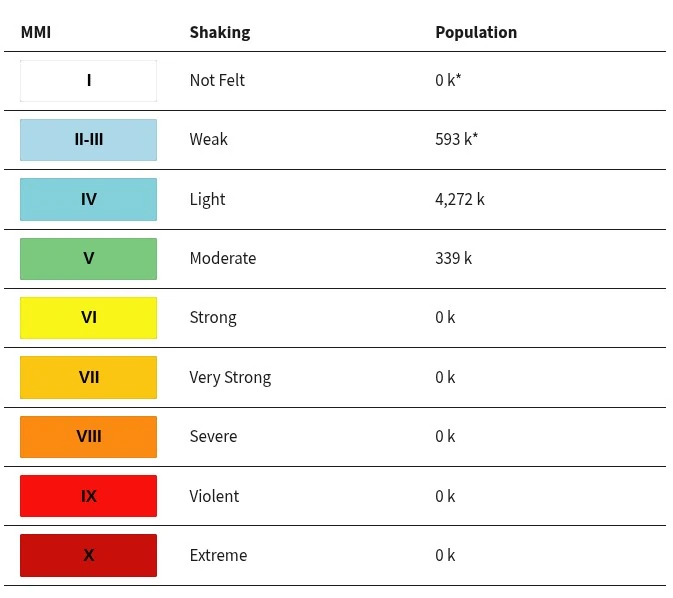
339 000 people are estimated to have felt moderate shaking, 4 272 000 light, and 593 000 weak.
There is no tsunami threat from this earthquake.
The USGS issued a Green alert for shaking-related fatalities and economic losses. There is a low likelihood of casualties and damage.
Overall, the population in this region resides in structures that are resistant to earthquake shaking, though vulnerable structures exist. The predominant vulnerable building types are adobe block and unreinforced brick with mud construction.
Recent earthquakes in this area have caused secondary hazards such as landslides and fires that might have contributed to losses.
Liquefaction triggered by this earthquake is estimated to be limited in extent. The number of people living in areas susceptible to liquefaction is relatively small. Landslides triggered by this event are not expected.
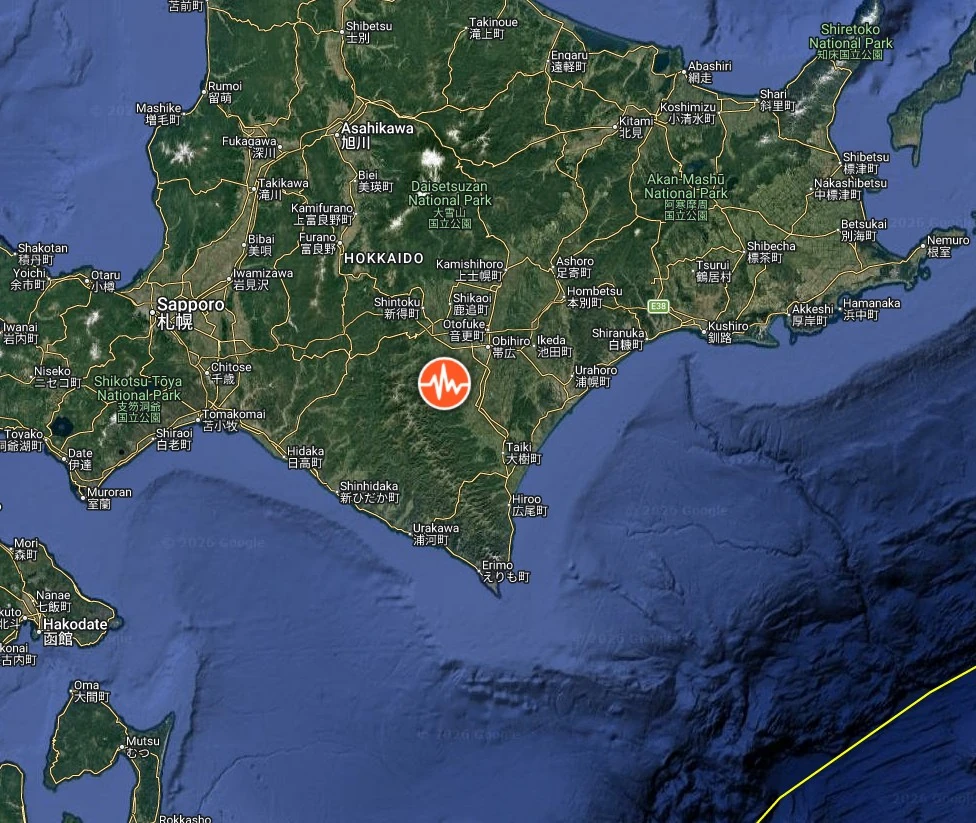 Epicenter of M6.1 earthquake in Hokkaido, Japan, on April 26, 2026. Credit: TW/SAM, Google
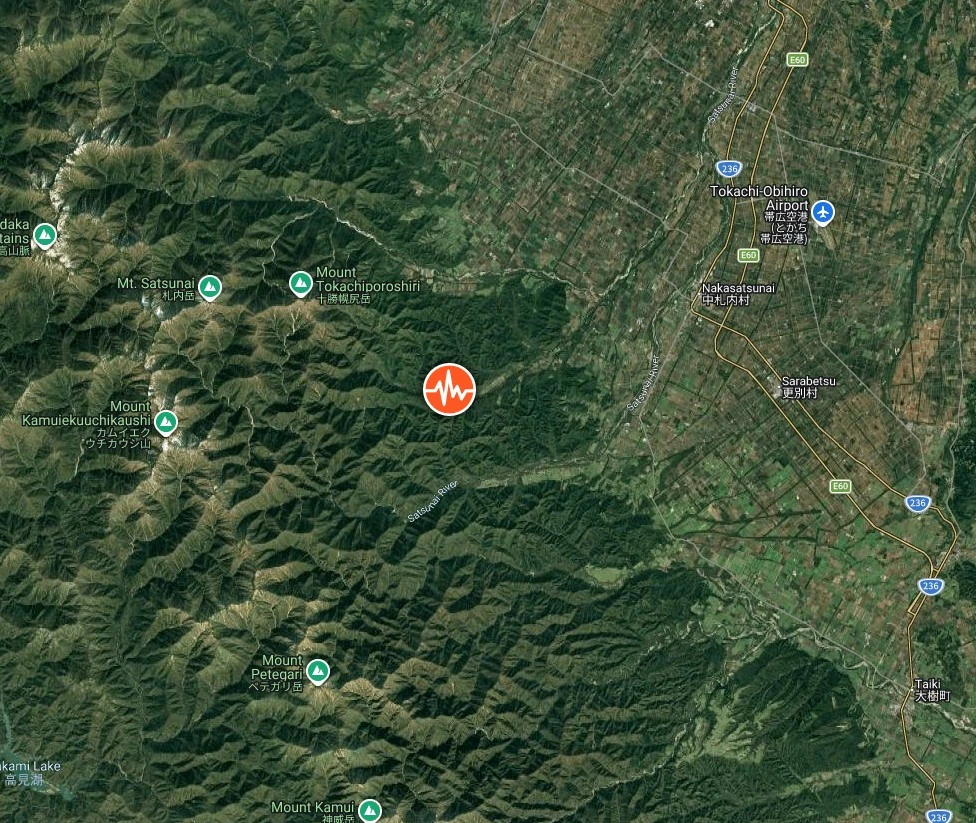 Epicenter of M6.1 earthquake in Hokkaido, Japan, on April 26, 2026. Credit: TW/SAM, Google
This quake struck roughly one week after a much stronger M7.4 earthquake off Iwate on April 20, which triggered a tsunami warning and produced an 80 cm (2.6 feet) wave at Kuji Port.
Estimated population exposure to earthquake shaking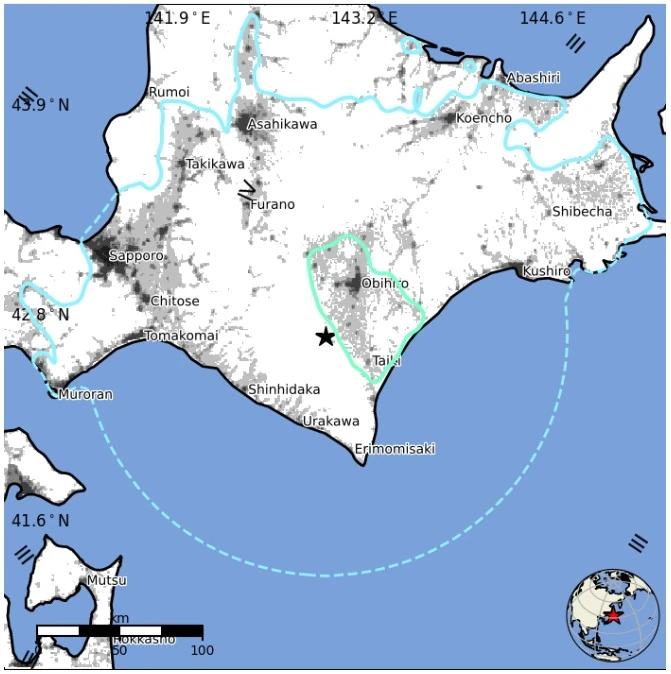 Image credit: USGS
 Selected cities exposed
 Regional seismicity
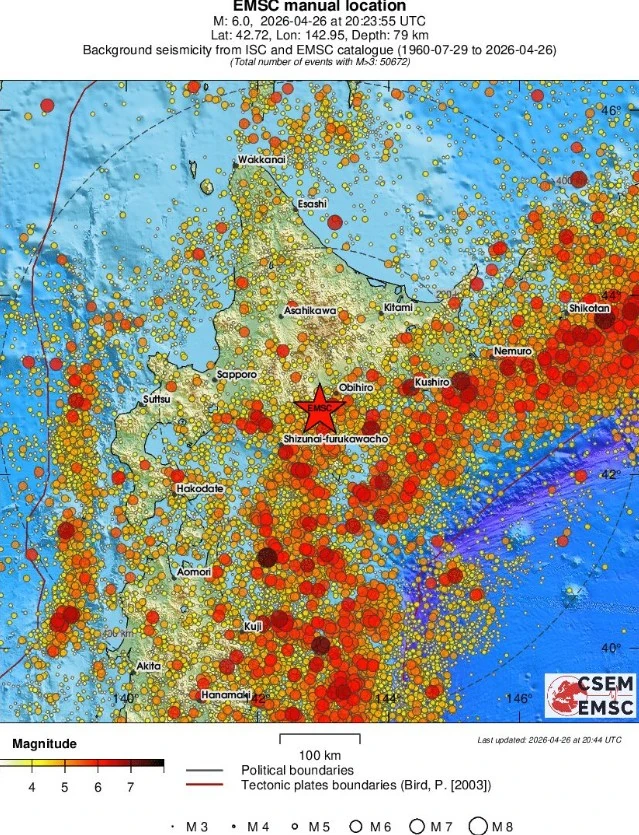 Image credit: EMSC
References:
1 M6.1 earthquake Hokkaido, Japan – USGS – April 26, 2026
2 M6.1 earthquake Hokkaido, Japan – EMSC – April 26, 2026
AloJapan.com