
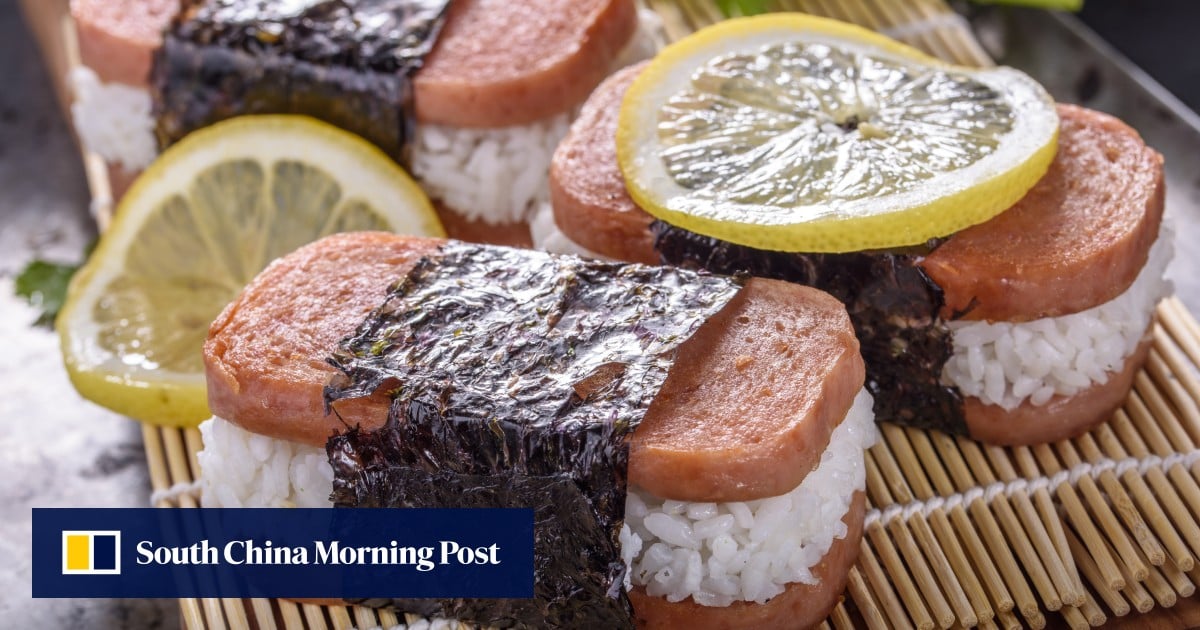
Blue Seal ice cream, Spam musubi and taco rice have one thing in common: they are uniquely Okinawan, and locals absolutely love them.
Tubarama is a popular Okinawan restaurant and izakaya in Naha. It is famous for its immersive experiences, in which traditional shima-uta, or folk music, is performed, in a setting resembling a pre-war Okinawan village, as local cuisine is served. There are live sanshin – a traditional lute – and other performances every evening on the restaurant’s second floor.
“I eat [taco rice] at least once a week,” says Tatsuyoshi Kubota, manager of Tubarama, who says the dish took hold across the prefecture after World War II, when tacos from Mexico brought over by Americans were adapted to Japanese tastes.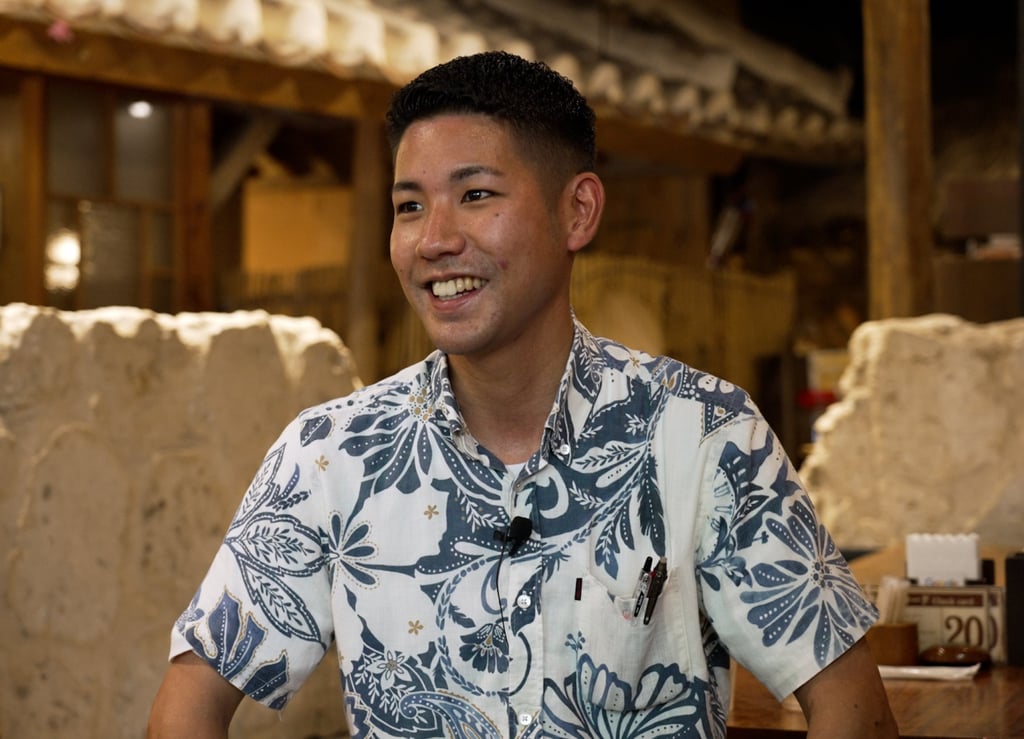 Tatsuyoshi Kubota is the manager of Tubarama, a popular Okinawan restaurant and izakaya in Naha. Photo: Llewellyn Cheung
On the surface, this is a simple story of culinary transition. But in Okinawa, American food did not just arrive – it came and occupied.
That occupation began in earnest after the second world war, and the US administered Okinawa from 1945 until 1972. To this day, the US maintains a massive military presence there, and around 70 per cent of US bases in Japan are squeezed onto just 0.6 per cent of the country’s land.
After World War II, many Okinawans resented the American military presence. Locals felt they were being treated as second-class citizens, and US soldiers often acted above local laws. Frequent incidents, such as hit-and-run accidents involving military vehicles, sparked outrage.
In a 1955 case, a young Okinawan girl was assaulted and murdered by a US soldier. The soldier was sentenced to death, which was later reduced to imprisonment without parole and the criminal was returned to the US. This incident and similar ones since have fuelled protests and deepened distrust.
AloJapan.com