
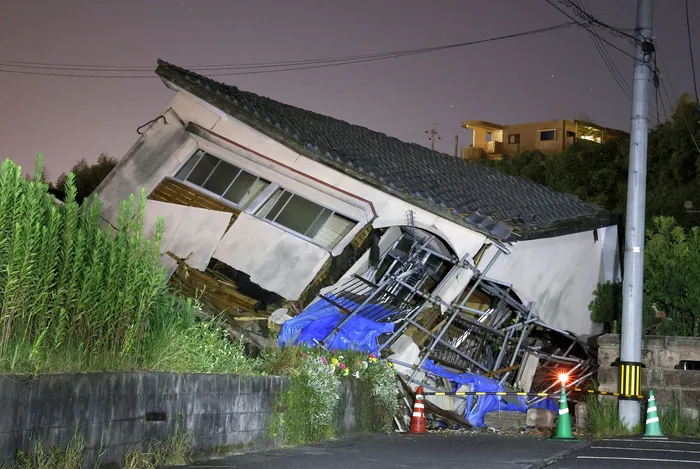
 A house damaged by an earthquake in Kagoshima, Japan, in 2024. Photo for illustrative purposes. Reuters-Yonhap
Japan’s largest holiday period, Golden Week, has begun, but tourist destinations in the northeastern region remain unexpectedly quiet. Tourism demand has sharply contracted amid lingering concerns over aftershocks following a recent major earthquake, combined with the burden of high prices.
According to local media including Sendai Broadcasting on Tuesday, the Matsushima area, a leading tourist destination in Miyagi Prefecture, has seen a noticeable decline in visitors since a magnitude 7.7 earthquake struck on April 20.
Analysts attribute the downturn to psychological anxiety heightened by the “Hokkaido and Sanriku Offshore Follow-up Earthquake Advisory” issued by Japanese authorities at the time. The Japan Meteorological Agency warned that “the second or third tsunami could be higher than the first,” urging 182 municipalities across seven prefectures—Hokkaido, Aomori, Iwate, Miyagi, Fukushima, Ibaraki, and Chiba—to prepare for the possibility of additional earthquakes. The advisory was lifted on April 27, but its effects continue to linger.
The local hospitality industry has taken a direct hit. One well-known accommodation in Matsushima saw approximately 100 reservations canceled within a week of the earthquake, resulting in a drop in revenue.
“Despite completing thorough preparations including seismic reinforcement work and installing emergency generators, we are worried about the decline in guests,” an official at the hotel said.
Compounding the pressure on the tourism industry are rising oil and consumer prices driven by instability in the Middle East. Raw material costs are climbing, but with fewer tourists, it is difficult to raise accommodation rates, creating a dual burden that is eroding profitability.
The situation is similar in coastal areas. The region hosting the “Kesennuma City Great East Japan Earthquake Memorial Museum,” which preserves a high school building damaged by the tsunami during the March 2011 Great East Japan Earthquake, has also seen a string of group reservation cancellations, with visitor numbers falling below previous years.
Local tourism officials and disaster prevention authorities are emphasizing safety and appealing for visitors. “We have thorough manuals and contingency measures in place, so please visit with peace of mind,” they said. “Rather, we hope this period can serve as an opportunity to see disaster sites firsthand and recognize once again the importance of disaster prevention.”
AloJapan.com