
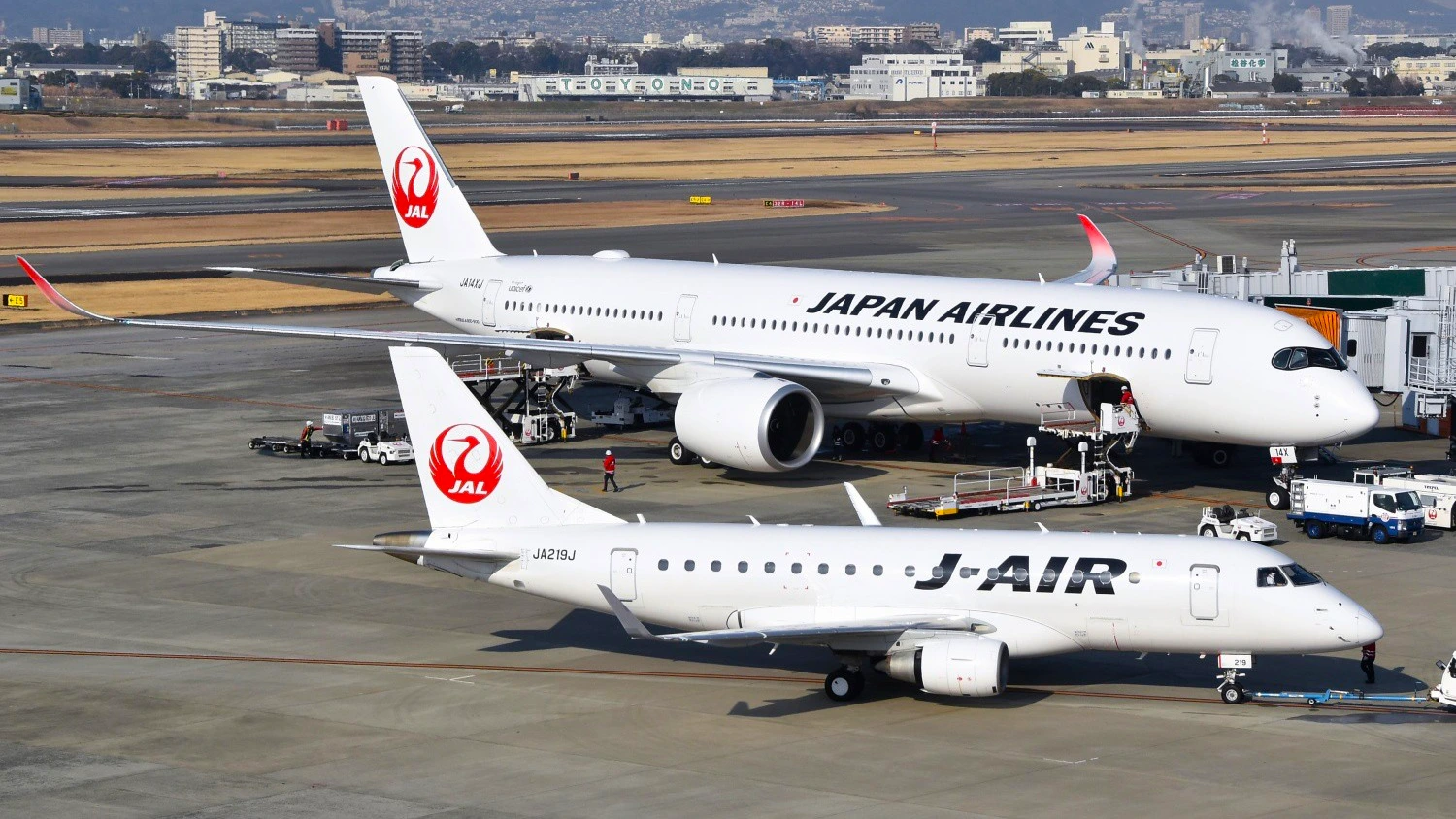
TOKYO— Japan Airlines (JL) has partnered with GMO Internet Group subsidiaries to launch a groundbreaking humanoid robot trial at Tokyo’s Haneda Airport (HND), marking Japan’s first such initiative in airport ground handling.
The demonstration, set to begin in May 2026, will test the use of human-shaped robots for labor-intensive airport tasks. The multi-year project reflects growing urgency within the aviation sector to address workforce shortages while maintaining operational efficiency.
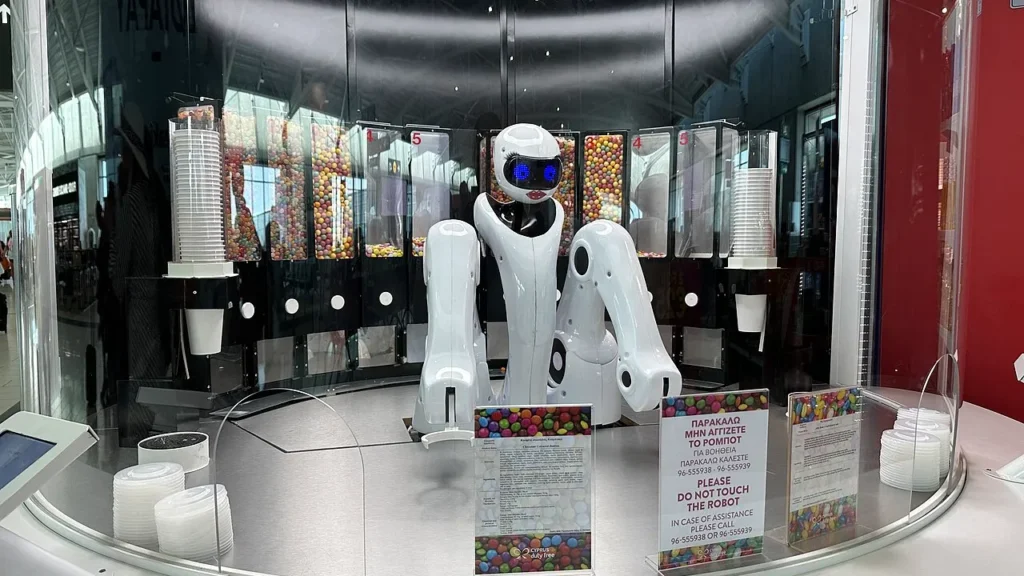 Representative Photo: Ssu | Wikimedia Commons
https://commons.wikimedia.org/wiki/File:Candy_robot_-_Larnaca_airport,_Cyprus.jpg
Japan Airlines Robot Trial Plan
The initiative will be led by JAL Ground Service Co., Ltd., in partnership with GMO AI & Robotics Trading Co., Ltd., combining aviation expertise with advanced robotics development.
The trial is expected to run for approximately three years, with phased evaluations and operational testing.
Initially, two humanoid robots will be deployed to perform basic ground handling functions. These include transporting cargo containers and operating the mechanical levers that secure them in place.
Over time, the project aims to expand the robots’ capabilities through AI integration.
Future phases will focus on enabling autonomous operations, allowing the machines to handle increasingly complex and varied tasks within airport environments.
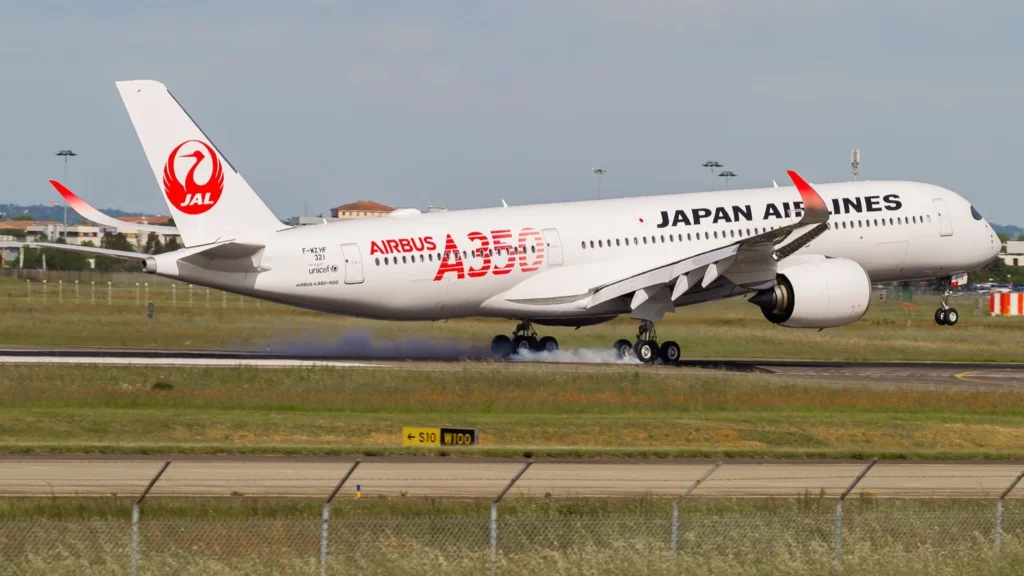 Photo: Clément Alloing
Japan’s Labor Shortage Focus
Japan’s aviation industry is facing a significant labor crunch, driven by rising travel demand and a shrinking working-age population.
Ground handling roles, which often require physical strength and precision, have been particularly affected.
JAL currently employs around 4,000 ground handling staff, many of whom work in confined and demanding conditions.
The introduction of humanoid robots is intended to ease these burdens while maintaining safety and efficiency standards.
Unlike traditional automation systems, humanoid robots are designed to replicate human movement. This allows them to operate within existing airport infrastructure without requiring major modifications to facilities or equipment.
 Photo: By Kentaro Iemoto from Tokyo, Japan – JAL B777-300ER(JA731J), CC BY-SA 2.0, https://commons.wikimedia.org/w/index.php?curid=23458469
Future Applications
The long-term vision for the project extends beyond basic cargo handling tasks. Developers aim to deploy humanoid robots across a broader range of airport operations, including baggage loading, cabin cleaning, and ground support equipment handling.
Before full deployment, the trial will include a detailed analysis of airport workflows to identify safe and practical use cases. Simulated and real-world testing will ensure compliance with strict aviation safety standards.
The collaboration also aligns with GMO Internet Group’s broader strategy to accelerate AI and robotics adoption. The company has designated 2026 as a key milestone year for humanoid technology development.
If successful, the initiative could redefine ground handling operations by creating a hybrid workforce where humans and robots work side by side.
Industry observers see this as a potential model for addressing labor shortages across global aviation markets.
Stay tuned with us. Further, follow us on social media for the latest updates.
Join us on Telegram Group for the Latest Aviation Updates. Subsequently, follow us on Google News
AloJapan.com