
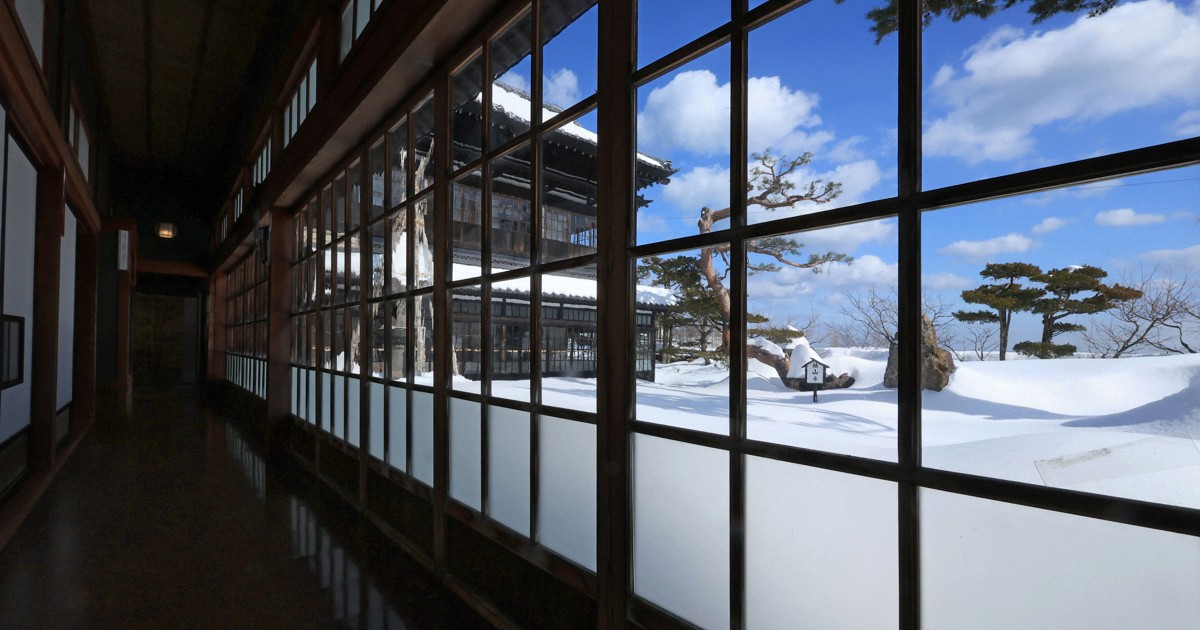
OTARU, Hokkaido — Perched on a hill in this northern Japan city overlooking the Sea of Japan, the Old Aoyama Villa stands as a testament to the prosperity brought by herring fishing from the Meiji era (1868-1912) through to the Taisho era (1912-1926). Built by Masakichi Aoyama and his daughter Masae to entertain guests, it is one of the “herring mansions” symbolizing the opulence of the time.
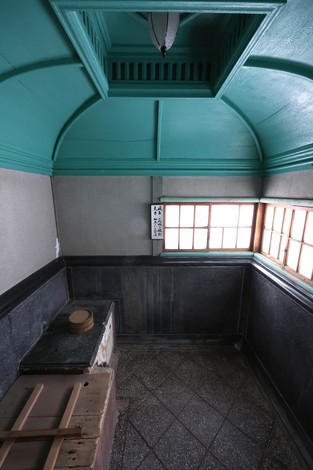
The bathroom is seen at the Old Aoyama Villa in Otaru, Hokkaido, Feb. 10, 2026. Bent boards are used for the ceiling to prevent drips. (Mainichi/Toshiki Miyama)
The villa’s construction involved gathering about 50 master carpenters and craftspeople from Yamagata Prefecture, where the main branch of the Aoyama family was located, and took six and a half years to complete in 1923. The villa consists of a main house, annex and document storehouse, showcasing fine woods from across Japan. The elegant space is enhanced by works from renowned artists, including Fusetsu Nakamura (1866-1943), known for the logo of the food manufacturer “Shinjuku Nakamuraya.”
Current owner Michio Sato, 80, purchased the vacant villa about 40 years ago and meticulously restored it to its original state. Open to the public since 1989, it was designated a national registered tangible cultural property in 2010. The villa also appeared in the popular manga “Golden Kamuy.”
Sato expressed his dedication, saying, “This cultural property tells the history of Hokkaido. I feel a sense of mission to preserve it here.” He diligently checks for damage by inspecting the interior and exterior daily, ensuring its preservation.
(Japanese original by Toshiki Miyama, Hokkaido Photo and Video Department)
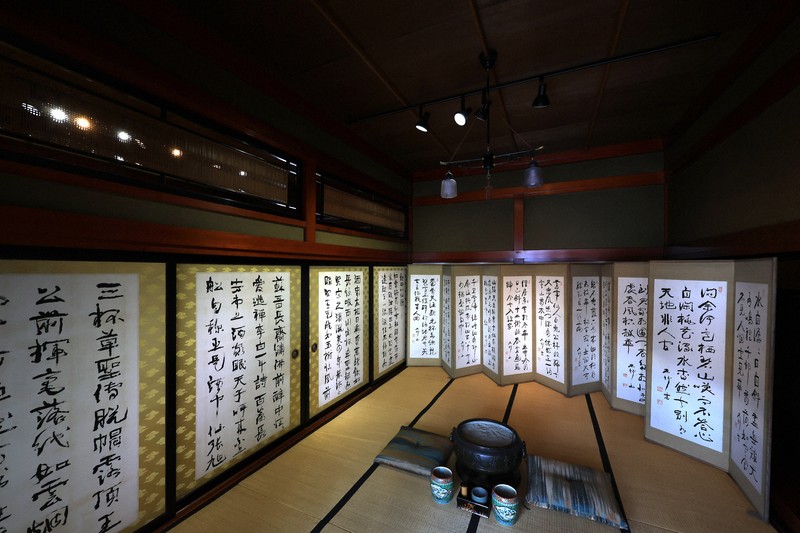
The Fusetsu Nakamura Room displays works by the artist who was a calligrapher as well as a painter, as seen in the Old Aoyama Villa in Otaru, Hokkaido, Feb. 10, 2026. (Mainichi/Toshiki Miyama)
* * *
The Japanese version of this article was originally published on March 15, 2026.
* * *
This series explores Japan’s architectural wonders and secrets of yesteryear. Read more Retro Japan articles here.
AloJapan.com