
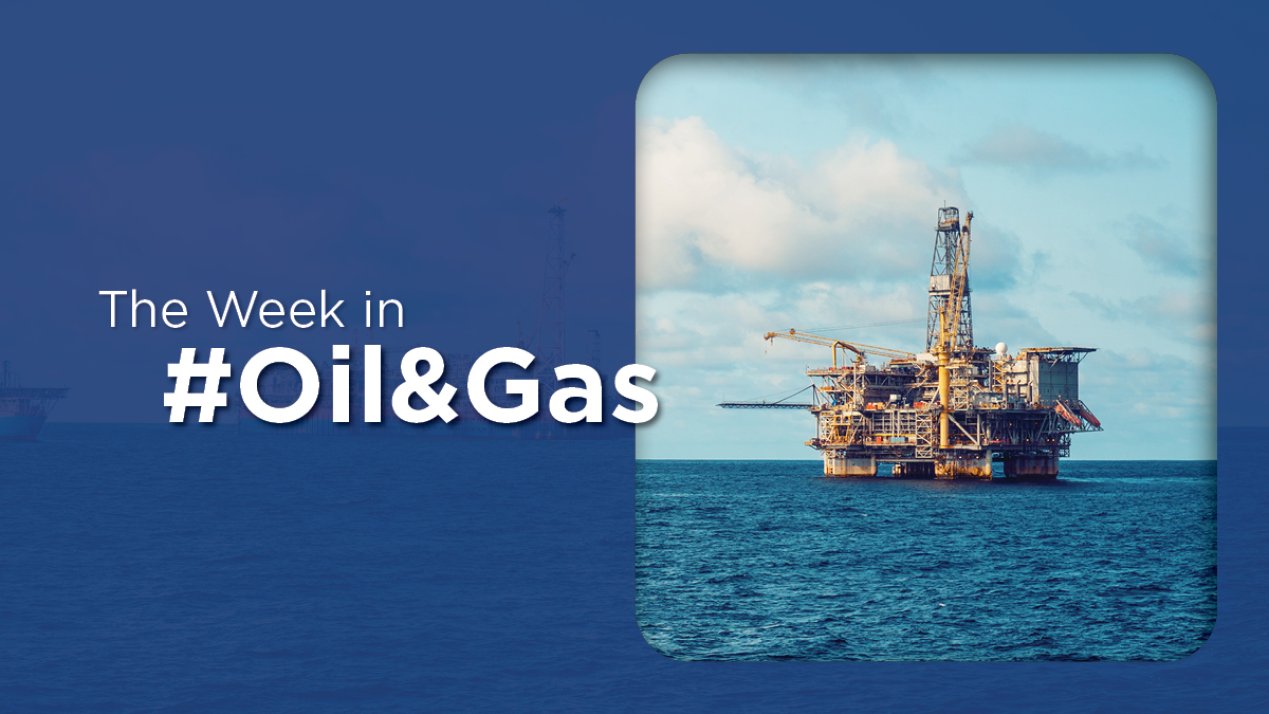
Japan has reached an agreement to import 1MMb of crude oil from Mexico, with delivery scheduled for July 2026, as part of Tokyo’s strategy to diversify energy sources following the near-closure of the Strait of Hormuz amid the US-Iran-Israel conflict.
Ready for more? Here is the weekly roundup!
Mexico and Japan Strike Crude Export Deal as Hormuz Crisis Reshapes Global Supply Chains
The deal was announced by President Sheinbaum following a telephone conversation with Japanese Prime Minister Sanae Takaichi, in which both leaders committed to strengthening bilateral energy security cooperation. Sheinbaum clarified that the oil to be exported constitutes surplus crude that does not get processed in Mexico’s domestic refineries, and noted that such arrangements are not unprecedented.
Japan’s extreme vulnerability underpins the urgency: domestic production covers only 0.3% of its crude needs, making it the third-largest oil consumer in the Asia-Pacific region and one of the most exposed nations to maritime supply disruptions. Tokyo is also reportedly allocating US$10 billion to help Asian nations stabilize oil procurement more broadly amid the ongoing geopolitical crisis.
Coahuila Eyes Shale Gas as Economic Lifeline After AHMSA’s Collapse
Coahuila Governor Manolo Jiménez has formally positioned “Gas Coahuila,” an unconventional gas extraction program targeting the state’s Sabinas and Burgos shale basins, as the most viable replacement economic engine for the regions devastated by AHMSA’s bankruptcy. At its peak, the steel company had 22,000 direct workers and anchored a supply chain employing approximately 70,000 people, accounting for roughly 8% of Coahuila’s GDP.
Jiménez argues that Gas Coahuila could generate more than 50,000 jobs over a decade, comparable to AHMSA’s employment footprint, and potentially deliver the economic equivalent of “two AHMSAs” in regional dynamism. The project stands at approximately 85% readiness, having reached significant technical progress in 2015 before being cancelled by the López Obrador administration. President Sheinbaum’s April 15 scientific committee announcement, which named Coahuila as the likely pilot zone, gives the governor meaningful federal alignment for the first time.
IMP Repositions Itself as Mexico’s Full-Spectrum Energy Transition Research Partner
The Instituto Mexicano del Petróleo (IMP) used its participation in SENER’s inaugural Energy and Innovation Fair at the MUNET museum to showcase six frontier research areas that now extend well beyond its original mandate as a PEMEX technical service center. Energy Minister Luz Elena González specifically highlighted two of the institute’s most novel initiatives: converting decommissioned offshore platforms in the Campeche Sound to generate marine wind energy,with an estimated potential of more than 2,500 million GWhours annually, and extracting lithium from petroleum brines in five southern oil fields where concentrations exceed 100 parts per million.
The remaining four research pillars cover clean hydrogen and ammonia production, underground gas storage in depleted reservoirs and salt caverns, carbon capture and storage, and biogas development. The lithium-in-brine and offshore wind programs both involve joint work with PEMEX, UNAM, INEEL, and LitioMX. The institute, which is financed primarily through PEMEX service contracts rather than direct federal appropriations, has spent 60 years building expertise in the hydrocarbons value chain that is now being actively redeployed across the full portfolio of technologies the energy transition demands.
Government and Retailers Tighten Fuel Price Pact as Brent Peaks at US$107/Barrel
The Sheinbaum administration and Mexico’s fuel retail sector formally renewed and tightened their voluntary price containment agreement on April 17, capping regular gasoline (Magna) below MX$24/L and reducing the diesel maximum to MX$28.30/L nationwide, down from regional peaks above MX$30. The renewal, announced jointly by SENER, the Ministry of Finance, and SEDENA, was triggered by Brent crude reaching US$107/b at its April peak following the effective closure of the Strait of Hormuz, a disruption the government estimated would have pushed unsubsidized diesel prices to MX$35/L without intervention.
The fiscal instrument sustaining the caps is the IEPS special tax, whose stimulus rate on diesel reached 81.2% at the height of the price spike before moderating to 43.17% the week of April 18 as international prices eased. Compliance has been imperfect: a PROFECO review found approximately 45% of diesel-selling stations still charging above the MX$28.30 cap, prompting Sheinbaum to warn of potential SAT audits and public blacklisting of non-compliant operators. IMEF analysts cautioned that the fiscal cost of maintaining the subsidy represents a structural budget trade-off that will need to be reconciled in future years.
PEMEX Engineers Visit Permian Basin and Vaca Muerta to Build Shale Expertise
PEMEX has dispatched teams of engineers and technical specialists to the United States, Canada, and Argentina to study unconventional gas operations first-hand, according to Octavio Barrera, the company’s Director of Exploration and Production, speaking at an AMEXHI forum. In the US, teams visited the Permian Basin, which in 2025 produced 6MMb/d of oil and 22.2Bcf/d of dry natural gas.
In South America, the focus was Argentina’s Vaca Muerta formation, where the work of YPF and Tecpetrol was specifically examined. The data gathering centers on horizontal drilling techniques, fracture design, completion costs, productivity rates, decline curves, and water recycling approaches, precisely the technical variables that would determine whether a Mexican unconventional program is commercially and environmentally viable. PEMEX holds 141.5Tcf in prospective unconventional resources but acknowledges it currently lacks the technology and operational experience to develop them independently, and that doing so will require private partners, new contract structures, and fiscal incentives comparable to those that enabled Vaca Muerta to scale. The missions are being conducted ahead of the June deadline for Sheinbaum’s scientific committee, which will deliver its verdict on fracking feasibility with Coahuila named as the likely pilot zone.
AloJapan.com