

The British & Irish Lions have taken a step towards changing their established touring schedule by exploring new destinations including France, the Americas and Japan — with their 2029 trip to New Zealand not yet finalised.
Australia, New Zealand and South Africa have hosted the 138-year-old invitational side on a quadrennial rotation since 1989 but the Lions have contacted third-party agencies to assess the viability of altering that pattern and bringing other locations into the mix.
According to correspondence seen by The Times, negotiations over the New Zealand tour are due to be concluded “in the first half of 2026”. Meanwhile, it is understood that the prospect of a full tour to France was raised officially among Lions decision-makers 18 months ago. One insider declared themselves to be “very supportive”.
However, it is understood that any move to visit the southern hemisphere giants once every 16, not 12, years would be met with “a pretty negative reaction” in Australia, South Africa and New Zealand. “The Lions couldn’t expect to throw a spanner in the works and expect New Zealand and South Africa to be fine with it. It would force a conversation,” a source said.
 Countries such as New Zealand could opt out of autumn Tests against the likes of England, if the Lions decide to widen their nettimes photographer marc aspland
It is likely that those Sanzaar unions, particularly New Zealand and South Africa, would threaten to pull out of November tours to the northern hemisphere. At present, the revenue generated by those autumn matches hosted by the Six Nations countries is not shared with their southern hemisphere counterparts — something that has long been a bone of contention.
There is a suggestion, therefore, that the All Blacks and Springboks could pivot to exploring further money-making Tests in the United States, such as their “Greatest Rivalry” fourth Test in Baltimore this year, if the Lions threatened their financial futures by extending the gaps between their touring visits, which provide huge cash injections.
As first reported by The Telegraph, the Lions have launched their “Beyond2029 project” by sending a “request for proposal” document to agencies, and they aim to explore the “preferred operating model and approach” off the back of a profitable tour to Australia last year.
 The Lions last faced France in a one-off match in Paris 37 years agoGerard FOUET/AFP
“Commercially, the 2025 Lions Men’s tour was the most successful ever, generating a record surplus for distribution to shareholders,” reads the document. “However, there are opportunities to grow commercial value even further and BIL [British & Irish Lions] is keen to explore this area in detail.
“Commercially, BIL might be coming close to maximising the return from the current model and there is an ambition to understand how the model could evolve to maximise future return, with some fundamental assumptions within the Lions Tour Framework potentially shifting.”
The Lions are eager for the agencies to help them with “analysis of which locations around the world could potentially host future tours (men and/or women), with a view to increasing commercial return and fan engagement (whilst not damaging the core DNA), from our preferred markets (existing Sanzaar nations, France, Americas and Japan)”.
They will also listen to advice on potential match schedules and alterations to the host allocation model, for instance whether it becomes a 16-year rotation with an additional destination — France, Japan or Argentina, perhaps — integrated alongside the existing three.
The overarching aim is to “evolve the current operating model to significantly increase revenue, margin and profit from each tour, to future-proof the business within the wider rugby union ecosystem”. Agencies are also asked to consider “corporate structure and financial architecture”, how to “mature revenue streams” and to examine any “new products”.
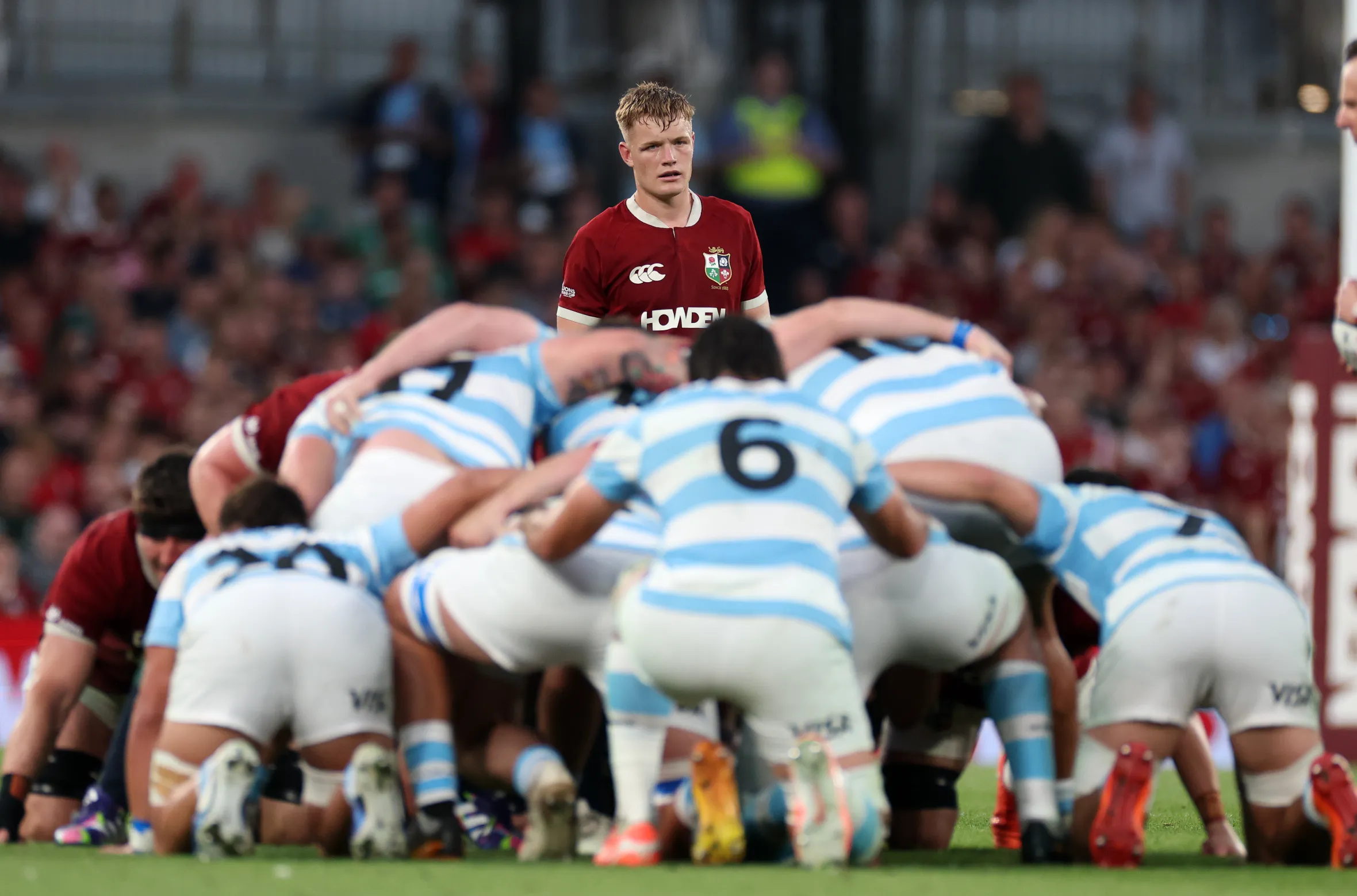 The Lions took on Argentina in Dublin before last year’s tourtimes photographer marc aspland
Argentina is the only other country to have held standalone Lions tours, in 1910, 1927 and 1936. However, the Lions have previously faced Canada, Ceylon (now Sri Lanka), Fiji, France, Japan and Rhodesia (now Zimbabwe) in one-off matches. They played against Argentina in Dublin last year before flying to Australia and it has previously been suggested that new opponents could be explored with that strategy.
“I could see us being interested in doing things with markets like France, like North America and you’ve mentioned Japan and Argentina already,” the Lions chief executive, Ben Calveley, said during last year’s tour to Australia.
“There is an opportunity in the tour matches, the non-Test matches, for us to bring in new, interesting opponents into that part of the tour — the likes of Fiji and so on. That would be really interesting.”
The Lions are expected to play France in a one-off match before the 2029 New Zealand tour, on their way south. Several ideas were pitched to the Lions to revamp the next tour, including playing a fourth Test in the United States or Japan, or staging a tour match in a city such as Las Vegas against a Super Rugby franchise team or the Maori All Blacks, but those plans were rejected.
Any potential change to the touring structure would appear to be at an extremely early stage, with the Lions focused on the inaugural women’s tour to New Zealand in 2027 and the men’s trip there in 2029. A match in the United States has been mooted as a curtain-raiser for the latter.
Nonetheless, this news is sure to cause a stir among the Sanzaar nations of Australia, New Zealand and South Africa given the importance of Lions tours to their financial security. This week, Rugby Australia posted a record annual profit of AUS $70.6million (£37.4million) from Lions year, which compared to a $36.8million loss for the previous year.
AloJapan.com