
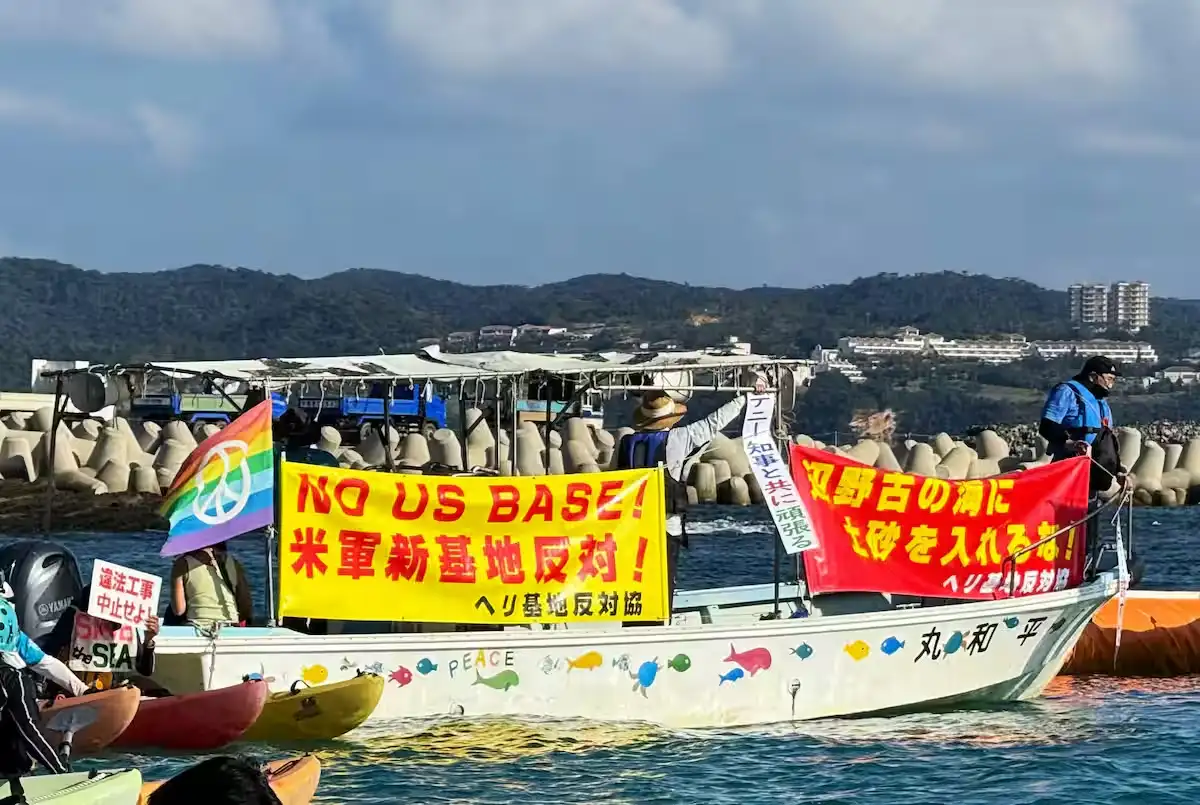
In March, two small boats operated by an anti–US base group capsized off Henoko, Okinawa, while carrying high school students on a “peace study” trip.
All 21 people on board were thrown into the sea and later rescued, but a student and one of the boat captains died. The incident occurred while a wave advisory was in effect. The student was a second-year girl at Doshisha International High School in Kyoto.
Interviews on April 23 revealed that the group operating the boats has been linked to at least 10 accidents and legal violations since 2014, and that the vessels were overloaded. The 11th Regional Coast Guard Headquarters in Naha is investigating the incident, including the group’s operational practices.
According to sources, the boats were operated by the Anti-Helicopter Base Council, a group opposing the planned relocation of US Marine Corps Air Station Futenma from Ginowan to Henoko, both in Okinawa.
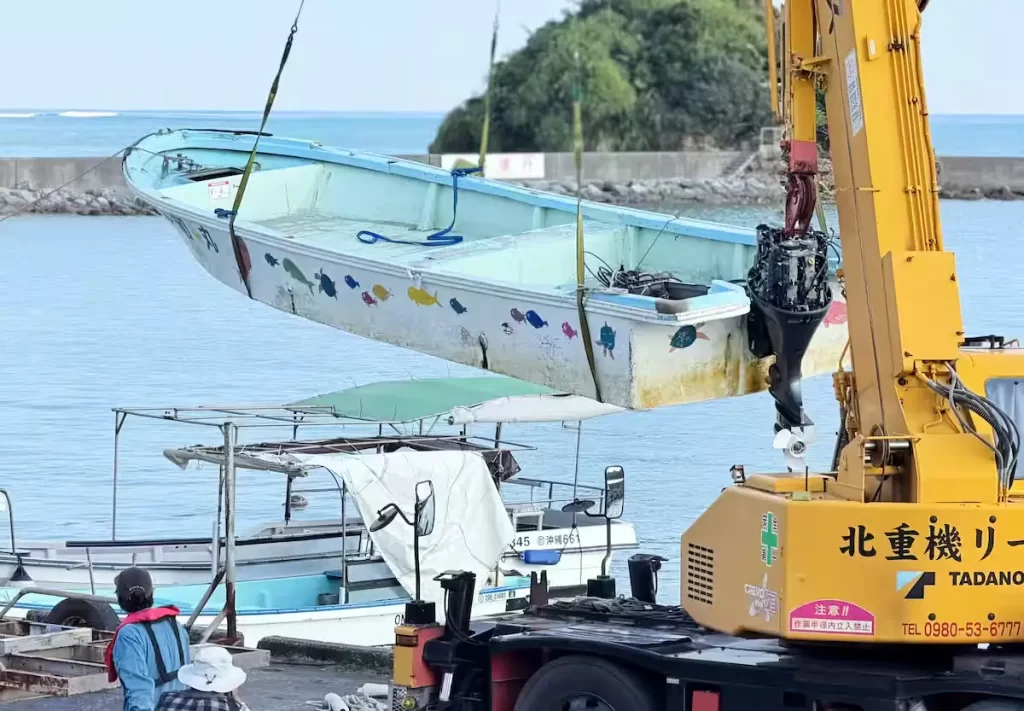 “Heiwamaru” being brought ashore at Henoko Fishing Port, on the afternoon of March 16, Nago, Okinawa Prefecture. (©Sankei/Naoki Otake)
Accidents and Violations
Since 2014, the group has been involved in more than 10 violations and accidents, including operating vessels over capacity, failing to conduct vessel inspections, and collisions. There have also been cases of unlawful entry into restricted zones in breach of laws governing areas surrounding US military bases.
According to the Nago Fisheries Cooperative and other sources, the group’s troubled history dates back to October 2014, when a mooring rope on one of their protest boats, the Rabuko, came loose at Teima Fishing Port near Henoko, resulting in one death. The same boat capsized off Teima the following April.
Furthermore, the protest boat Fukutsu, one of the boats that capsized in the March incident, had previously collided with a fishing vessel inside Henoko Fishing Port in March 2019 due to an operational error.
In January 2025, the glass-bottom boat Yugafuyu allegedly came too close to a diver fishing off Hirashima near Henoko, causing its propeller to catch the diver’s oxygen hose.
Locals Voice Concerns Over Safety
Citing a pattern of dangerous behavior, the Nago Fisheries Cooperative submitted a formal request to Nago City calling for fishing ports to be restricted to those directly involved in fishing.
The city has indicated that under the Nago City Fishing Port Management Ordinance, permits can be revoked if operators disrupt fishing activities or fail to comply with port rules.
Masatoshi Asato, head of the Nago Fisheries Cooperative, told The Sankei Shimbun: “People are free to protest, and we’re not trying to stop that. But the sea is dangerous. Protest on land all you want—but at sea, it puts lives at risk and should not happen.”
He emphasized, “A young girl has lost her life. You have to ask whether they can really justify continuing.”

RELATED:
(Read the article in Japanese.)
Author: Naoki Otake, The Sankei Shimbun
Continue Reading
AloJapan.com