
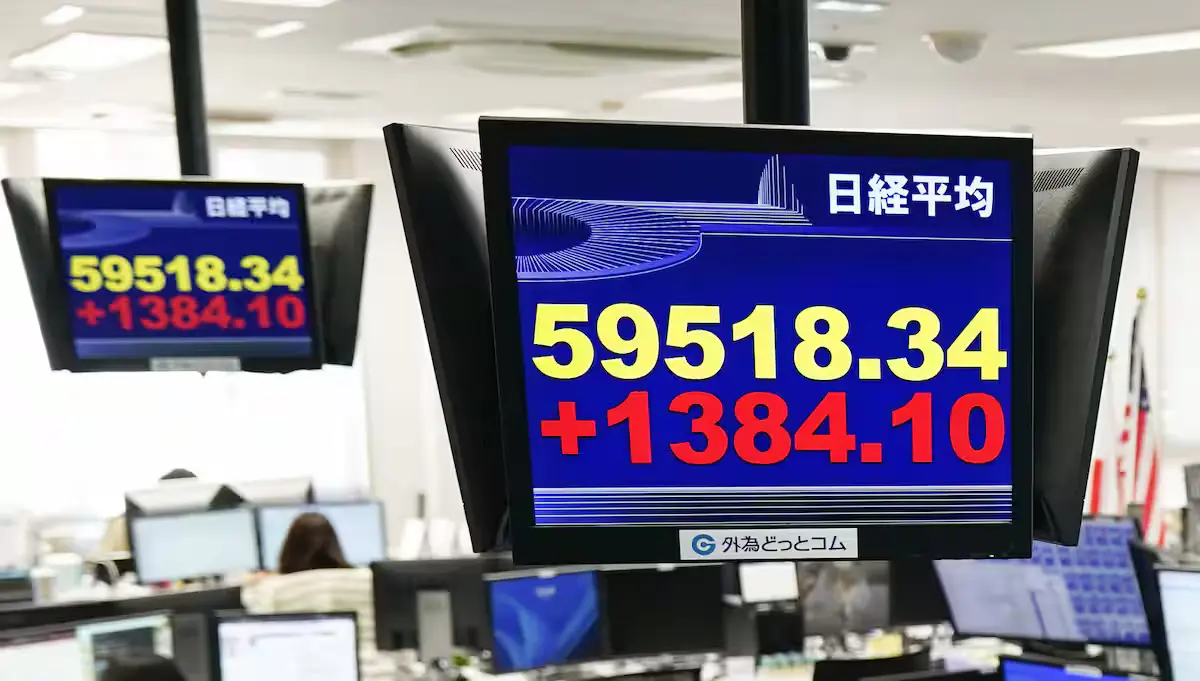
Japan’s economy is facing the Iran crisis from a position that is stable on paper but still fragile beneath the surface. Since late February, the war involving Iran and the disruption around the Strait of Hormuz have pushed oil markets back to the center of the global outlook. About a fifth of global oil and LNG flows normally pass through the strait, and Brent has been trading near $100 a barrel amid doubts over any permanent ceasefire.
For Japan, the economic implications are immediate. Real GDP grew 0.3% quarter on quarter in October-December 2025, and 1.2% for the full year, while the February 2026 Consumer Price Index was up 1.3%, and unemployment stood at 2.6%.
Yet household spending in February fell 1.8% in real terms, and consumer confidence in March dropped to 33.3, showing how little room there is for another energy-import shock.
But is the outlook really as bleak as those fears suggest? Mariko Mabuchi, an economic analyst, and Ryoji Musha, president of Musha Research and a veteran strategist formerly at Deutsche Securities, both suggest otherwise. Mabuchi looks beyond the noise to what markets are signaling, while Musha argues that investors are justified in not pricing in a full-scale oil shock.
Looking Past the Panic
Speaking on the April 15 internet news program Nippon Journal, Mabuchi boiled the issue down to a simple question: amid so much noise and alarm, “Where should people look, and what should we believe?”
 Mariko Mabuchi. January 19, Chiyoda Ward, Tokyo (©Sankei/Yoshifuru Ogino).
Her answer was to begin with the macro view rather than the panic of the moment. As she noted, “the stock market is rising,” with the Nikkei recovering into the 57,000 range and moving toward 58,000 even though Iran remained a major geopolitical risk.
She also pointed out that crude had slipped back below $100 a barrel, and that from around April 3, the old pattern—in which higher oil prices automatically meant lower Japanese stock prices—had started to weaken. “That,” she suggested, “is not something to just dismiss.”
Consumers Turn Cautious Even as Stocks Rise
What makes Japan notable is the widening gap between relatively calm markets and a much darker mood on the ground. The Bank of Japan said this month that regional economies were still “recovering at a moderate pace, though some areas remain weak.”
Still, the near-term outlook has deteriorated sharply, with the Cabinet Office’s economic survey, the Economy Watchers Outlook Index, falling 11.3 points in March to 38.7, its lowest level since the COVID-19 period. Mabuchi singled that out as “quite a meaningful deterioration,” saying it suggested consumers would likely cut back further, particularly on discretionary spending such as eating out.
Yet Mabuchi does not see these weaker sentiment indicators as telling the whole story. “The SOX index and the Nikkei have been moving in near lockstep,” she said, pointing to semiconductor shares as a key driver of the market’s rebound. “Chip and other technology stocks are highly sensitive to growth expectations,” she explained. “If investors really believed the Iran crisis was about to trigger a prolonged oil-driven downturn, those are not the shares they would be buying.” Instead, she suggested, markets were already beginning to look past the immediate fear and price in stabilization.

Limits to the Hormuz Shock
Musha, from a more overtly market-strategic perspective, pushes that argument further. In his April 16 bulletin, he says the gap between media pessimism and market behavior is too large to ignore.
He notes that after the February 28 airstrikes on Iran, the S&P 500 recovered all of its losses by April 13 and was back within 1% of a record high. Musha also points out that while oil prices for near-term delivery remain elevated at $90 to $110 a barrel, contracts six months out have settled back into the $70 range. His conclusion is blunt: “The market is not assuming a long-term closure of the Strait of Hormuz or a third oil shock.”
How much of a threat, then, does Hormuz really pose to Japan? Musha acknowledges the importance of Hormuz, but argues that the world economy is less dependent on crude oil than it was in the 1970s. He notes that oil’s share of Japan’s energy mix fell from 76% in 1973, at the time of the first oil shock, to 35% in 2024.
He also stresses that bypass routes now exist, including pipelines in Saudi Arabia and the UAE. His argument is not that Japan is safe, but that a Hormuz crisis today is less likely to trigger the kind of global collapse that many people instinctively imagine.
Not Bracing for Collapse
Musha argues that a prolonged closure of Hormuz would be against Iran’s own interests, because the strait is also a lifeline for Iran’s trade, especially with China. That is why he calls Iran’s attempt to use Hormuz as leverage “the kind of desperate move a cornered animal makes.”
Japan remains vulnerable to any renewed rise in imported energy and transport costs, especially with consumer spending already under pressure. But markets are no longer trading as though this will become a full-blown oil shock. They are beginning to price in limits. As Mabuchi put it, “If you look at financial markets, you can catch a glimpse of the future.” At the moment, that future looks tense and uncertain, but not yet catastrophic.
RELATED:
Author: Daniel Manning
Continue Reading
AloJapan.com