
Regulations That Affect Timing
Modern regulations now directly influence when you can climb Mount Fuji. To manage overcrowding and improve safety, authorities have introduced several controls.
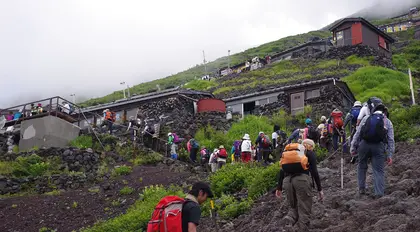
Climbers are required to pay a mandatory entry fee and, on many routes, complete advance registration before arriving. In addition, access restrictions are in place on some trails during certain hours—typically in the afternoon and overnight—unless climbers have confirmed mountain hut reservations.
These rules are designed to prevent unsafe climbing patterns and ensure that hikers are properly prepared and spaced throughout the day. Some routes also enforce daily climber limits, especially during peak season.
The Fuji Mountain Race: A Different Perspective on Timing
While most visitors experience Mount Fuji at a steady hiking pace, the mountain is also home to one of Japan’s most extreme endurance events: the Fuji Mountain Race.
This race takes place during the climbing season and transforms the ascent into a high-intensity athletic challenge. Participants race from the base area to the 5th station or higher, covering thousands of meters of elevation gain in just a few hours. Conditions are still harsh even in summer, and only experienced athletes can complete the full course.
The race highlights how timing alone does not make Mount Fuji easy—the mountain remains physically demanding even in ideal conditions.
Why the Timing Window Is So Strict
Unlike many hiking destinations, Mount Fuji is completely dependent on its short summer window. The combination of high altitude, volcanic terrain, and severe winter weather makes year-round access unsafe.
The official climbing season is established to ensure the following conditions:
Stable (relatively speaking) weatherOpen and staffed mountain infrastructureEmergency support and trail maintenanceControlled visitor numbers
Without this system, climbing Mount Fuji would be significantly more dangerous and environmentally damaging.
AloJapan.com