

Booming fandom culture—known in Japan as “oshikatsu”—is growing rapidly, and its effects are being felt in domestic tourism. Fans travel long distances to see their favorite “oshi” (an idol, artist, or other figure they support), with trips typically centered on concerts, stage performances, games, and similar events.
A survey by Oshicoco Inc., a company that analyzes data on oshikatsu culture, explored this trend among 664 followers of its Instagram account. Nearly two-thirds of respondents (63.6%) said they had traveled for this purpose, suggesting fan travel has become a common part of enthusiast culture. Many of these fans also take time to sightsee and sample local cuisine, pointing to a broader positive impact on local economies.
Travel Frequency and Spending
Among those who travel for fandom purposes, the most common frequency was 2–3 trips per year (34.7%), followed by once a year (22.1%) and 4–5 times (21.1%). Notably, around 19% reported traveling ten or more times annually.
Spending varied widely. Most fans spent ¥30,000–50,000 per trip (33.7%), though 12.6% reported spending over ¥100,000. Transportation was the single largest expense at 53.6%, outpacing even event ticket prices.
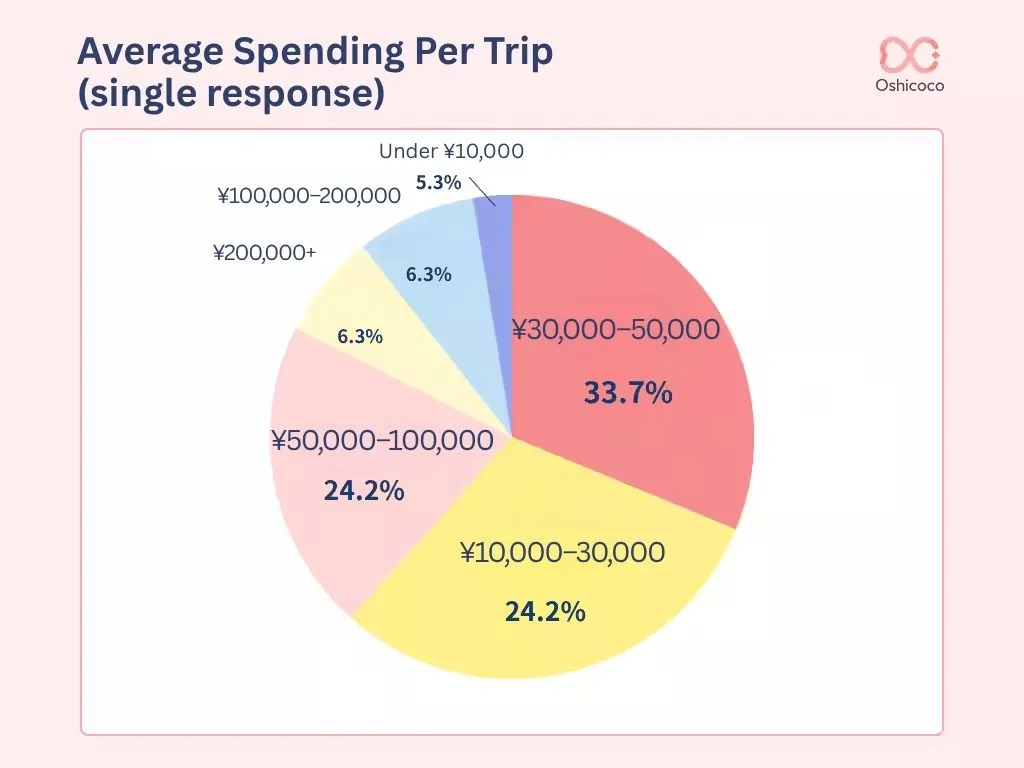 Translation of graphic provided by Oshicoco.
Activities and Destinations
During their trips, the most popular activities were enjoying local food and dining (60.0%), visiting tourist attractions (37.9%), and shopping (37.9%). This shows that oshikatsu travel contributes to regional economic activity.
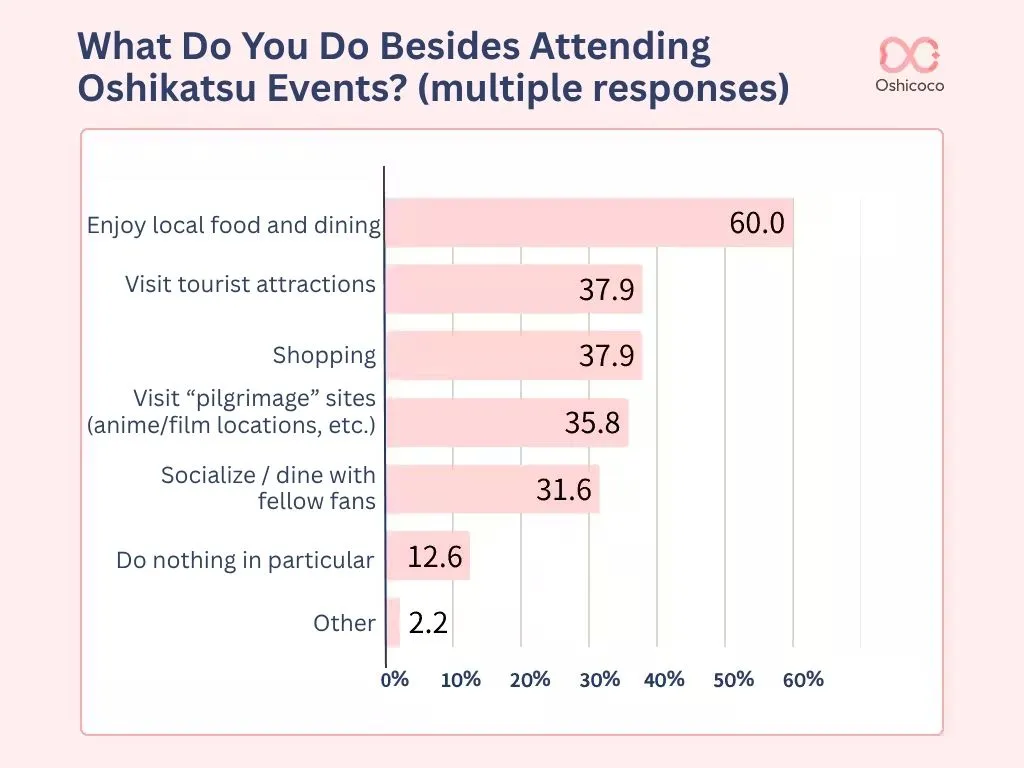 Translation of graphic provided by Oshicoco.
In terms of destinations, Tokyo was the most visited (61.1%), followed by other major metropolitan areas with frequent events, such as Kanagawa and Osaka (both 46.3%), and Aichi (45.3%). Regions with large-capacity venues, including Fukuoka, Chiba, and Saitama, also ranked highly.
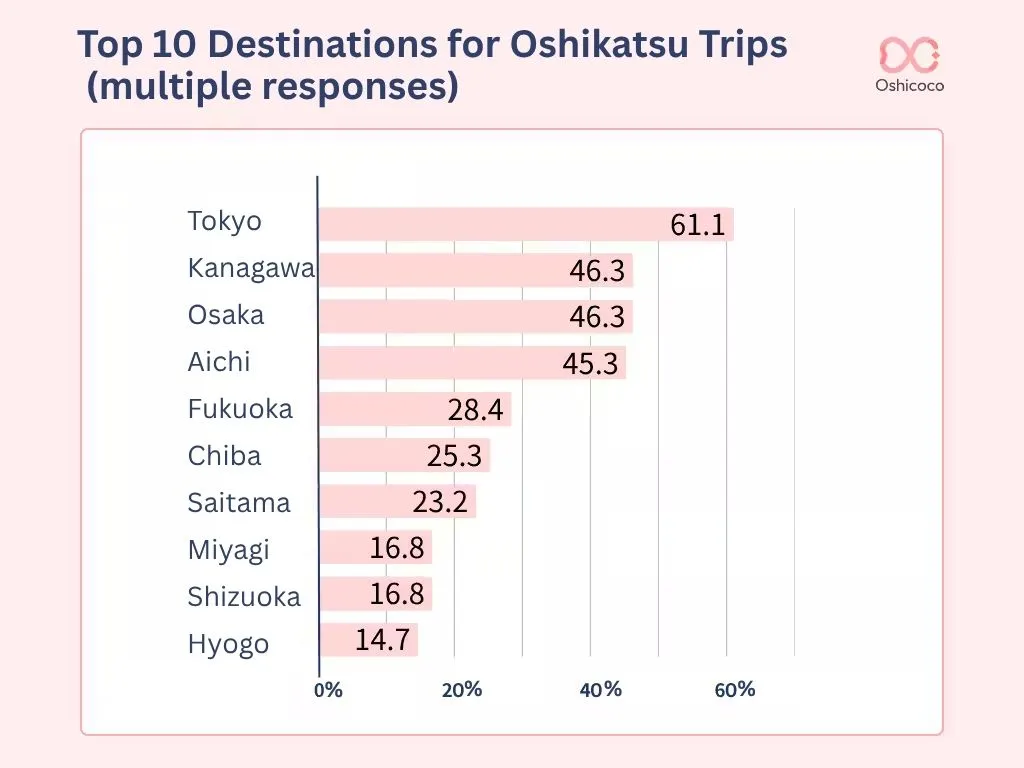 Translation of graphic provided by Oshicoco.
When asked why they travel for their oshi, respondents gave answers such as wanting to see their idols directly in person, no matter how far. revealing a level of devotion that outweighs the cost and effort involved. Oshicoco concluded that such trips are not merely about travel, but rather an “investment in experiences” to create lasting memories with their oshi.
RELATED:
(Read the article in Japanese.)
Author: The Sankei Shimbun
Continue Reading
AloJapan.com