
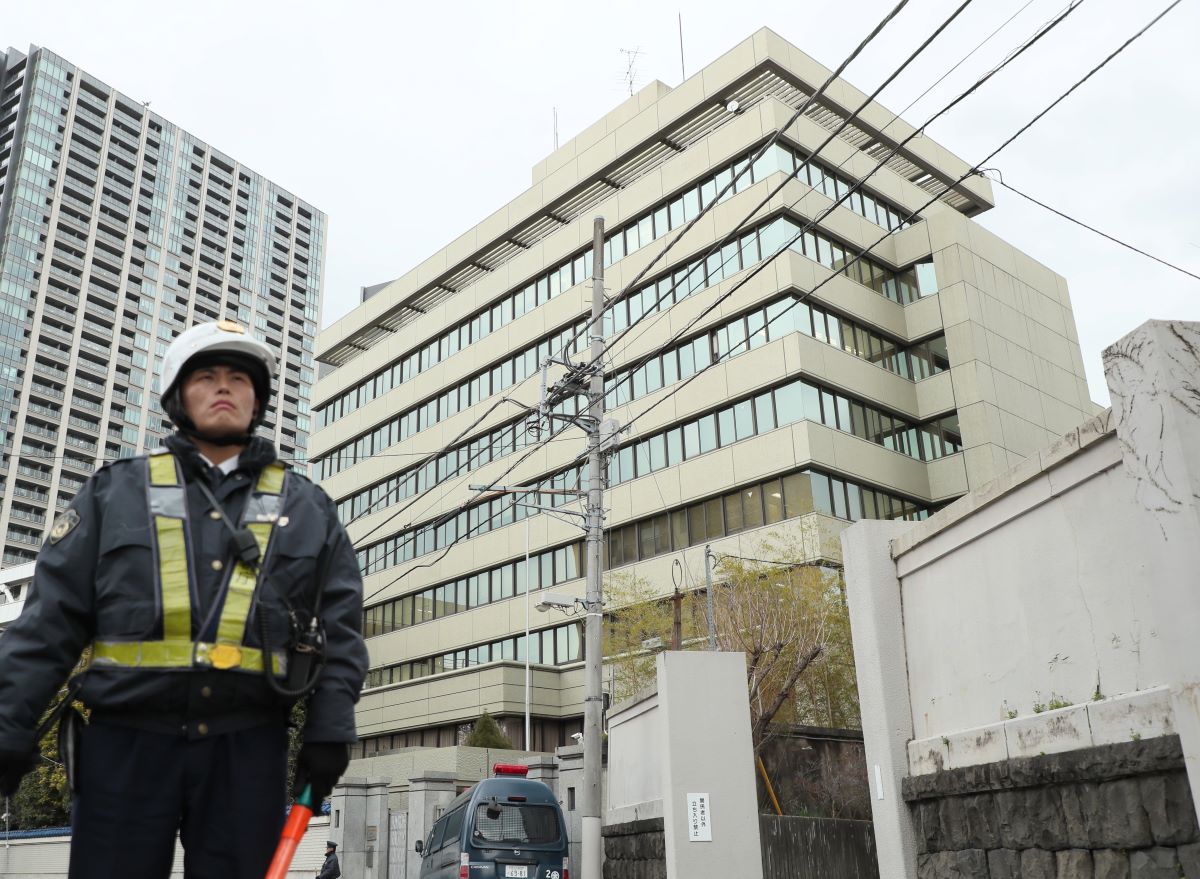
The Sankei Shimbun learned on April 14 that around 100 self-employed business owners affiliated with a chamber of commerce under the pro-Pyongyang General Association of Korean Residents in Japan, known as Chosen Soren, will visit North Korea from April 20.
The trip is expected to be the largest such exchange since the summer of 2024, when students from the Chosen Soren-affiliated Korea University in Tokyo visited North Korea under the guise of a school excursion.
The acquired information also suggests that funds raised in Japan may be brought into North Korea.
Authorities in Japan and South Korea are raising vigilance amid concerns that large delegations traveling to the North could be used as a loophole to funnel money into the country, circumventing sanctions that prohibit remittances to Pyongyang.
Cash and Loopholes
According to intelligence sources in Japan and South Korea, the delegation is set to leave Japan on the 20th and enter Pyongyang via Beijing, with plans to stay for up to about two weeks.
The trip is said to include courtesy calls on senior officials, family visits, and tours of businesses, with the total cost reportedly around ¥500,000 (about $3200).
It also appears to be the first trip by a Chosen Soren-affiliated business group since North Korea reopened its borders after the COVID-19 pandemic.
In response to North Korea’s continued development of nuclear weapons and missiles, Japan has imposed its own sanctions in addition to those based on UN Security Council resolutions.
Remittances to North Korea are, in principle, prohibited. Cash can still be taken out of Japan, but any amount exceeding ¥100,000 (about $630) must be declared to customs before departure.
In practice, however, there is little way to detect such transfers if they are not reported.
Limited Oversight
During the 2024 visit to North Korea by students from the Tokyo-based Korea University, Chosen Soren reportedly instructed each student to carry up to ¥5 million, or about $30,000, in cash.
The delegation visiting this time is said to include a significant number of ethnic Koreans who acquired South Korean nationality, in addition to those registered in Japan under Chosen-seki status.
When visiting North Korea, South Korean nationals must first obtain approval from Seoul’s Ministry of Unification and carry the necessary certificate. The same requirement applies to South Koreans living abroad.
But Seoul has little ability to track such travel when individuals depart from a third country like Japan and enter North Korea from there.

Seoul on Alert
North Korean leader Kim Jong Un has adopted an increasingly hostile stance toward South Korea in recent years. In speeches delivered at party meetings and the Supreme People’s Assembly, held in February and March, he denounced the South as “the most hostile enemy state.”
With inter-Korean ties continuing to worsen, authorities are also closely watching the movements of delegation members holding South Korean nationality.
RELATED:
Author: Yuki Ishikawa, The Sankei Shimbun
(Read the article in Japanese)
Continue Reading
AloJapan.com