
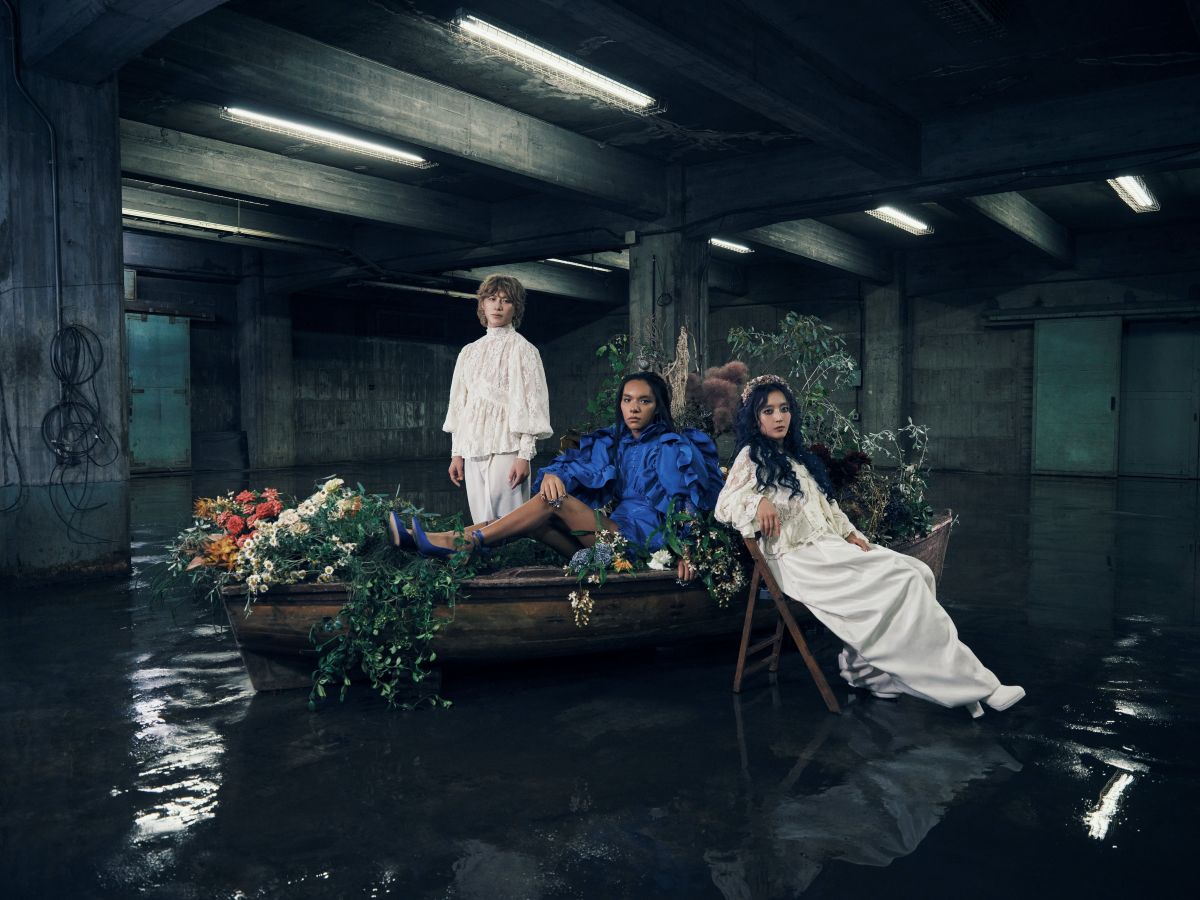
Since their formation in 2009, Japanese band QUEEN BEE have been making noise in Japan’s music industry. Known in Japan as Ziyoou-vachi (which means “queen bee”) and making fierce, rock music with a forceful theatrical edge and a sting in the tail, they inhabit the spirit of their name: a larger-than-life dramatic force that others must bow down to and serve.
In 2023, QUEEN BEE provided the ending theme for the mega-hit anime Oshi no Ko; their song ‘Mephisto’ was four minutes of catchy, dramatic rock, with singer Avu-chan’s voice scaling from a deep growl to a piercing falsetto, capturing the imagination of fans around the world. (You might say it caused a “buzz.”)
Meanwhile, their latest single ‘PERSONAL’ – the ending theme to the anime Hell’s Paradise – is a tender, moving ballad rooted in kayoukyoku pop music of the 1960s and ’70s.
Having toured North America and Asia over the past couple of years, QUEEN BEE now set their sights on Europe, with a performance at London’s Hyper Japan festival in July supplemented by headline shows in London and Paris – as well as ongoing tour dates across Japan through the summer. I sat down with Avu-chan during a brief break in Tokyo to discuss QUEEN BEE’s music and their upcoming performances.
From Tokyo Clubs to Global Stages
I first saw QUEEN BEE play in 2011 at a small venue in Tokyo, but now you perform in large halls across Japan and even overseas. Looking back, how do you feel about your early days and your career up till now?
I feel extremely grateful. We’ve leveled up again and again, but the core of what we do hasn’t changed. We play with full power and burning passion, as we always have. The venues have gotten bigger, and the audiences have grown, which makes me very happy.
In what ways have you leveled up?
My singing voice, our performance – we’ve become more professional in our approach and grown bit by bit, which has led to where we are now.
We were such troublemakers back then […] When I listen back to the music we made then, it has so much energy and was so raw. I still feel proud of those early recordings; they sound fresh and urgent. But now I feel like our vocabulary has grown, and we’ve become more nuanced, and I love that as well.
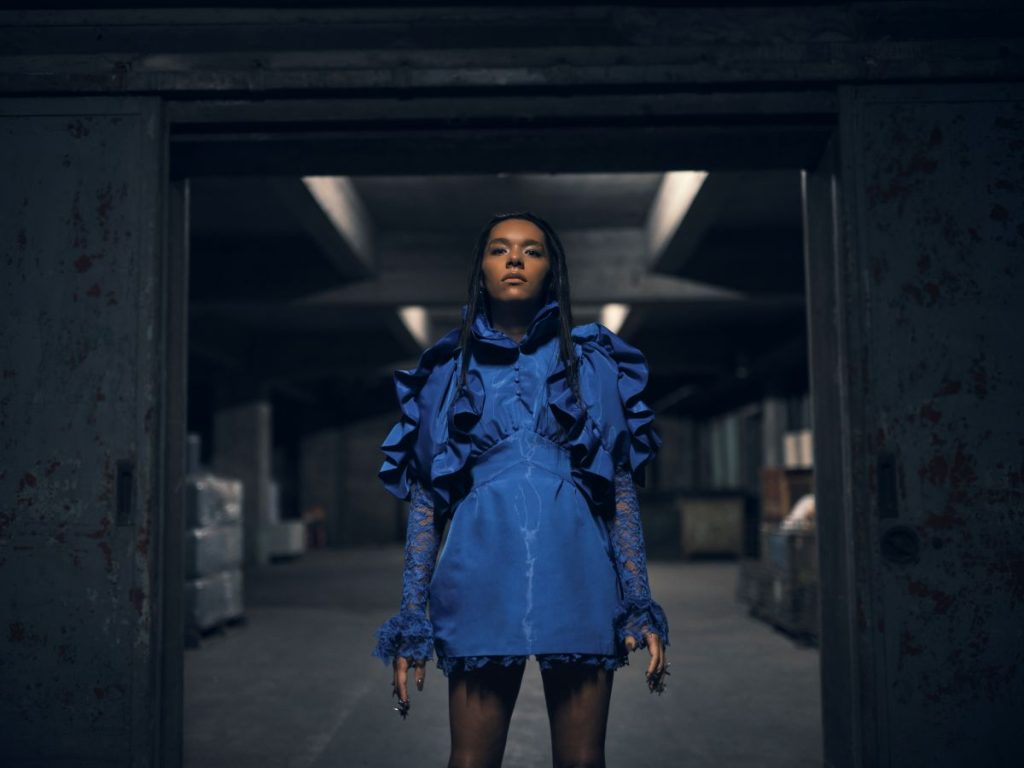 Band leader Avu-chan sings with an extreme range, from deep growls to high screams.
Rage, Vitality, and the QUEEN BEE Sound
Your singing voice has incredible range, from very deep to very high, and you sing with a lot of power. How did you find your singing voice?
When we used to play at small venues, the monitors weren’t very good, so I couldn’t hear my own voice. So I compensated by singing with as much power as possible, and that helped me to develop the voice I have today. Even before we started playing live, I could sing high notes and low notes, but that’s when I started to combine them.
Did you like to sing as a kid?
Yes. I was an intense Perfume fan; I loved them. Even though their music relied heavily on computers and I had no idea how it was made, they pierced my heart deeply, and I used to copy their dances and sing like them. That was probably the start for me.
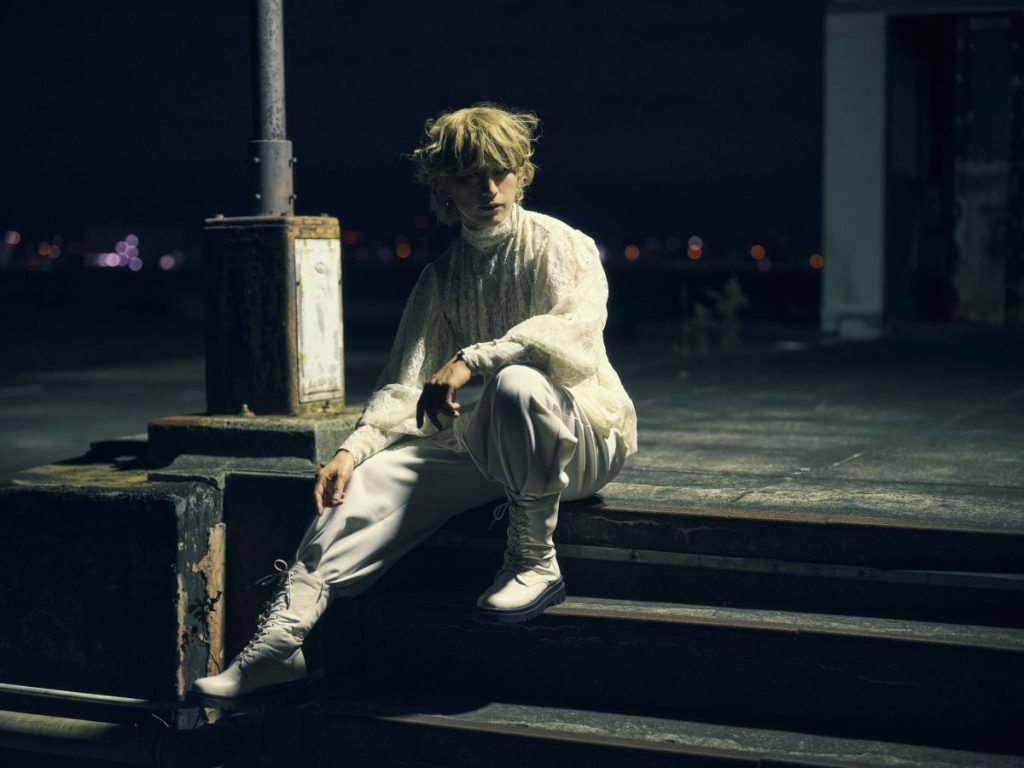 Guitarist Hibari-kun fills QUEEN BEE’s songs with cinematic rock riffs.
Your singing style is very emotive and passionate.
It really hit me when we started to perform live. I felt like I hadn’t been fully alive until that point. I felt like I had found the thing that would sustain me – like I’d finally got my hands on the entry ticket. That became a strong motivation.
To keep that raw emotional expression every night must be tough – what do you draw on?
Rage. The feeling of not wanting to accept something terrible. I still feel that today, and it’s something I don’t want to lose.
What makes you angry?
For example, I can’t believe we still have wars. I can’t believe wars are motivated not by rage, but by greed.”
Your music is rock, but with a taste of Showa kayoukyoku that is a little nostalgic. Was that an influence for you?
Yes, Showa kayou was a big influence when we formed the band. The music is cute, but each song has so much soul, and there was a period where I listened a lot to artists like The Peanuts, Mieko Hirota, and Naomi Chiaki. Their songs often tell a story, which felt so fresh to me.
Your songs often have a dramatic sound that feels epic. What kind of atmosphere, message, or worldview do you aim to build with your songs?
Vitality. I want the songs to exude vitality. People sometimes listen to music when they’re feeling down. Music was what I turned to when I was down, and it helped raise me up. I would listen to Miyuki Nakajima and some others, and even QUEEN BEE’s music. If people would choose to listen to Queen Bee when they’re down, that would make me happy.

Anime, Fashion, and the Road to Europe
Your most recent single, ‘PERSONAL,’ is a sensitive and emotional song. What’s it about?
It’s a song about finding a way to face a feeling of intense sadness; a song born of heartbreaking loneliness, but also the need to keep on living. It’s about how to overcome those feelings and keep moving forward. The feeling of being overwhelmed by the insurmountable size of the ocean, but finding the motivation to launch a boat on its surface anyway. That’s what I wanted to express.
‘PERSONAL’ is the ending theme to the anime Hell’s Paradise, and is one of many anime theme songs you’ve written. Do you find it different to write a song for an anime?
Usually, the anime is based on a manga, so I’ll read that first. But the things I want to say in my songs come from inside me, so it’s not a big difference from the way I usually write. There can be a certain synergy to writing a song that is created purely for an anime, but if I rely too much on referencing the anime, then it might not sound like QUEEN BEE.
Anime has found a huge global audience over the past few years, and writing a theme song means bands can reach that audience, too. Do you see any affinities between music and anime?
Anime is often based on a manga, and takes the world that a manga artist created and brings it to life with animation. In Japan, anime is watched by people of all ages, and I’ve heard that the same is beginning to happen overseas. In the West, comics appeal to a more select nerd audience, but manga in Japan is read by salarymen and grandparents alike, so the idea of that spreading even wider is great. It’s truly something for all ages.
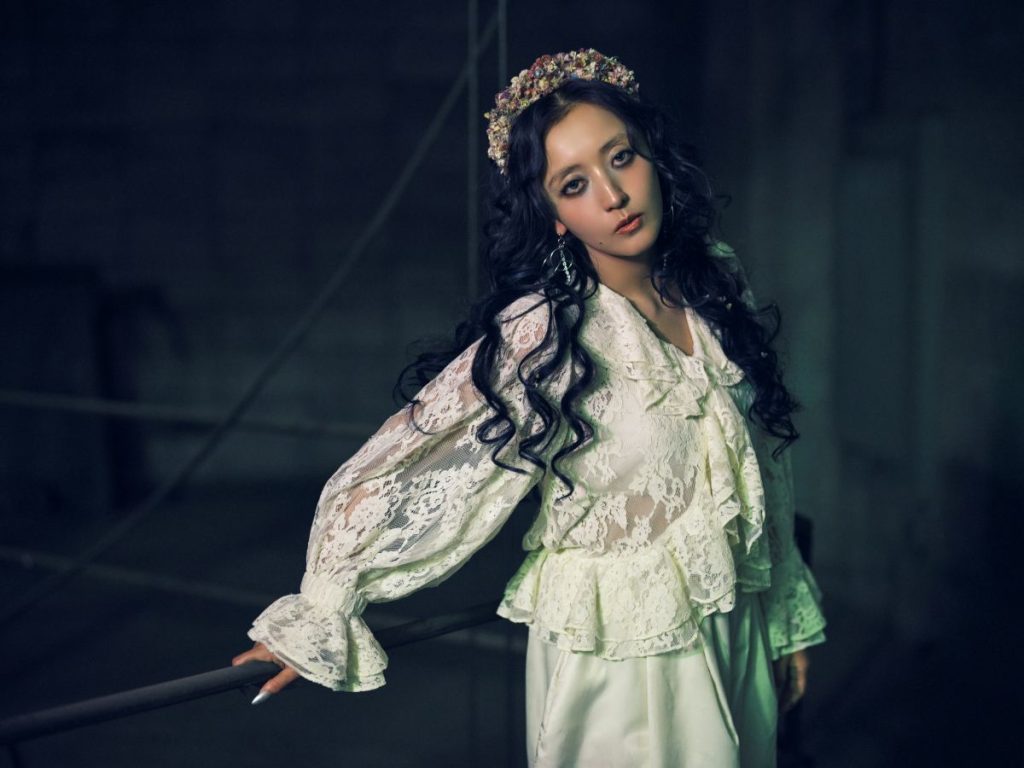 Yashi-chan’s thundering basslines underpin QUEEN BEE’s dramatic sound.
You have a strong sense of fashion, but how does that connect with the music you make?
Fashion is very closely linked to music. I’d like to make a music video for every song, and express the power of each song through the clothes we wear. Outfits are extremely important to me.
Do you have certain outfits you like to wear for certain performances?
I do. I like fashion that shows off my legs. I want to wear outfits that make people interested in looking at us, and outfits that are a little unusual – it’s really important.
Both London and Paris are big fashion centers. Have you decided what to wear to those shows yet?
They are! I’m not sure what we’ll wear yet, as it’s a little way off, but I want to wear something cool.
You often perform in North America and around Asia, but in July, you will play your first European shows in a very long time. Why did it take so long to go back?
We wanted to go sooner, but the timing just didn’t work out. This time, we were able to schedule a festival appearance and some standalone shows together, so the stars had aligned.
What should fans in London and Paris expect from your shows there?
I think they’ll expect to see a powerful show, and they’ll have certain songs they want to hear us play. A setlist is like a story. The order of the songs can tell you something about their meaning, or make them sound better. I’d like to work out a setlist that tells a good story, and we might change it from show to show. We’re thinking about it now.
Any hints?
A hint?! Expect it to be loud (laughs). A powerful concert that will throw you around.
QUEEN BEE will perform at Hyper Japan Festival 2026 in London on July 24, along with headline shows at the Electric Ballroom in London on July 23 and Bataclan in Paris on July 26. They also have ongoing dates in Japan through the summer. For more information, visit www.ziyoou-vachi.com.
RELATED:
Author: Daniel Robson
Continue Reading
AloJapan.com