
Tokyo / Kagawa Pref. –
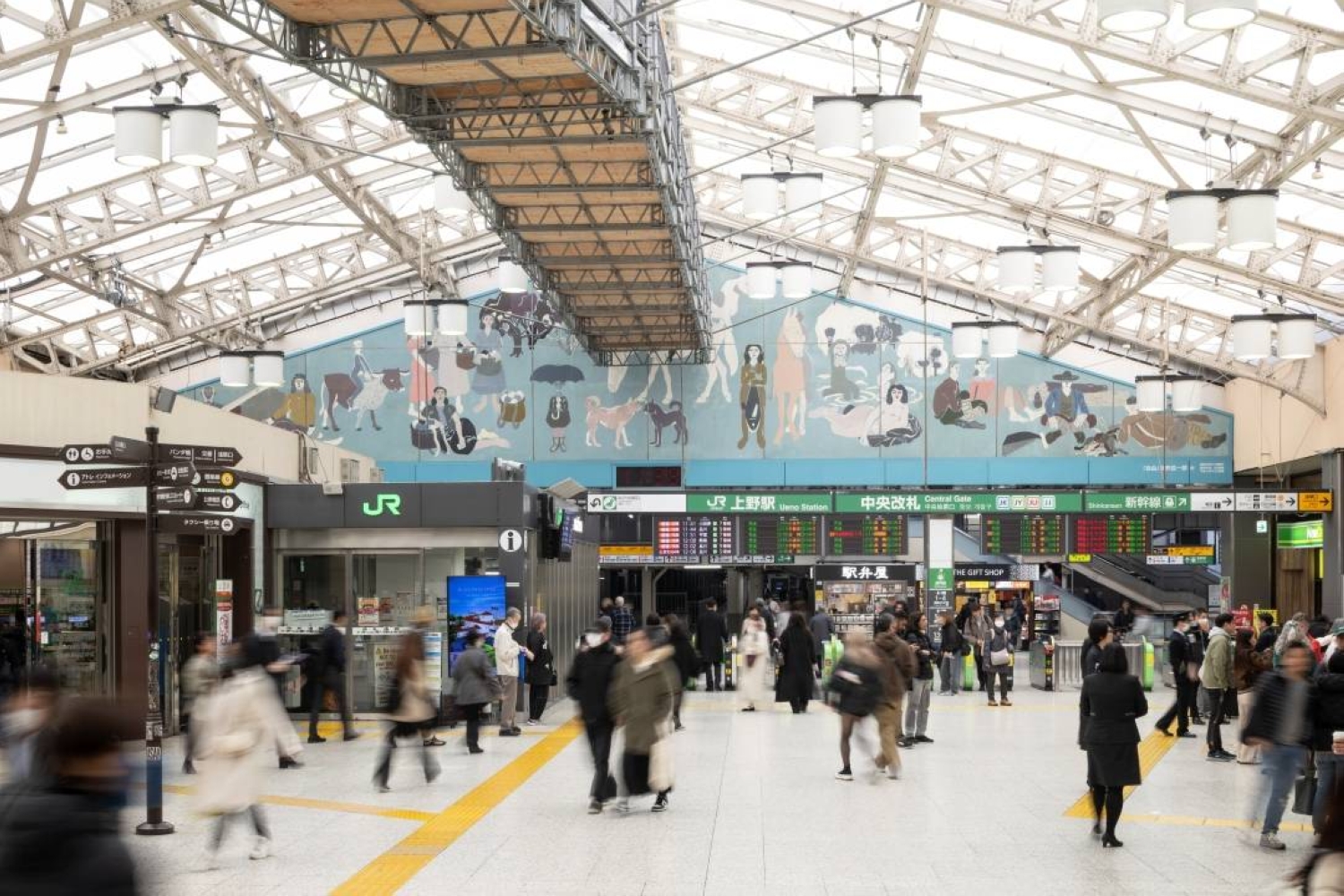
When a sign reading “‘Freedom’ under restoration appeared in Ueno Station last year, it struck a chord online, drawing millions of views. The phrase’s layered meaning helped propel its spread, but it also drew renewed attention to an easily overlooked postwar mural that has watched over the station for more than 70 years.
“Freedom” is a nearly 27-meter-long, 5-meter-high pentagonal wall painting above the station’s Central Gate, known as the “Doorway to the North” for its trains bound for the Tohoku, Hokuriku and Joetsu regions. It was created in 1951 by Genichiro Inokuma (1902-93), an internationally trained former war painter, during a turbulent time when Japan was finding its postwar footing.
After World War II, Ueno Station served as a thoroughfare for returning soldiers — many injured or disabled — and as a shelter for people made homeless by the war. In a bid to brighten the station’s image and instill a sense of hope in a defeated nation, the artwork was installed at the suggestion of Toshio Kobayashi, director of the advertising firm Senkosha. Today, it is one of the few of Inokuma’s murals that remain in their original locations.
AloJapan.com