
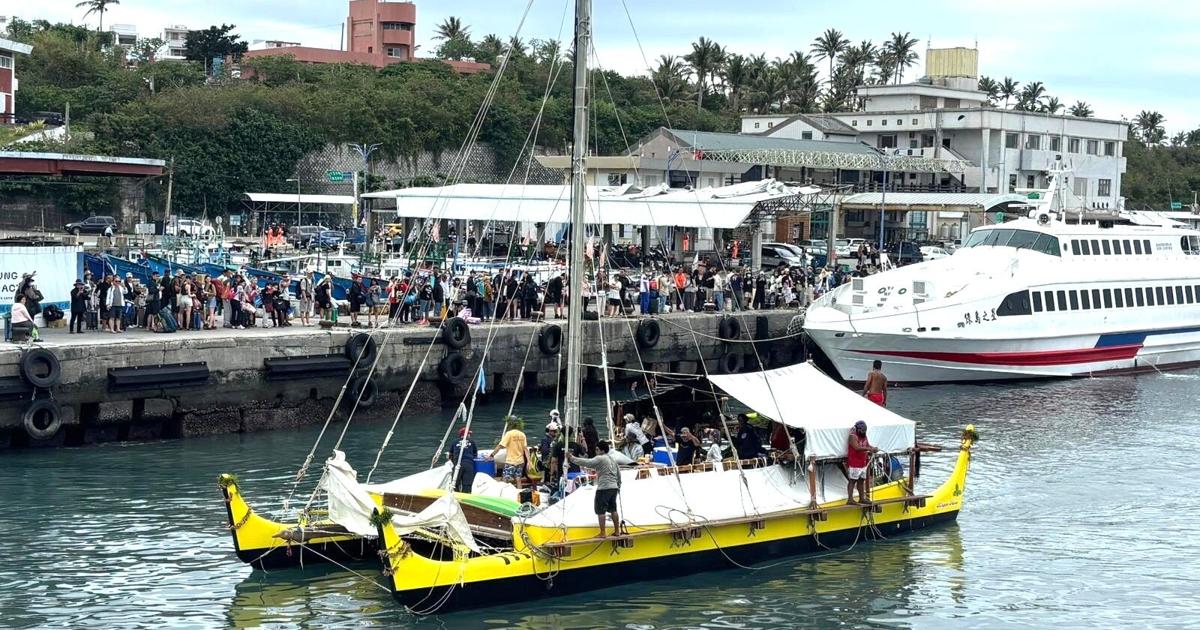
The Alingao Maisu covered about 100 miles in the first 24 hours since leaving Hualien, Taiwan, en route to Okinawa, Japan.
The Maisu is a traditional double-hulled voyaging canoe that is in the middle of a 6,200 nautical mile voyage that started in Palau on Feb. 16. It made history when it arrived in Taiwan on March 4 with its crew of 13 Micronesian traditional seafarers.
The Maisu is captained by Grandmaster Navigator Sesario Sewralur, son of legendary Micronesian navigator Pius “Mau” Piailug. It was Piailug’s teachings over the last two decades that helped revive traditional Polynesian and Micronesian wayfinding.
The boat sails without engines and no modern GPS. Sewralur is teaching a new generation of navigators how to continue that legacy as he trains 13 younger sailors in celestial navigation, weather reading, sail handling, and decision-making at sea.
Zea Nauta from Guam is part of the crew that also includes people from Taiwan, Palau, Yap, Japan, Saipan, and Hawai’i.
Since arriving in Taiwan, the boat reached a second Taiwanese port, Taitung. It was supposed to sail to Hualien, further north in Taiwan, but bad weather canceled that leg. The crew instead took a train to Hualien, participated in the festival there held in their honor, and then returned to Taitung.
The Maisu departed Taiwan on Friday and is expected to arrive in Okinawa soon.
From there, the Maisu will travel to Saipan, then Guam, then Yap before concluding its voyage in Palau.
The voyage schedule includes extended cultural exchange visits along the way.
At each stop, the crew plans to engage with schools, universities, and community leaders, sharing knowledge about traditional navigation, ocean stewardship, and cultural heritage.
The expedition vessel doubles as a floating classroom. In partnership with Palau Community College and supported by the Micronesian Voyaging Society, the canoe serves as a platform for education programs, youth mentorship, and marine science activities, including environmental observation and data collection along the route.
In total, the expedition is expected to include up to 58 sailing days, with another 50 days devoted to cultural programs and educational exchanges in ports across Taiwan, Japan, and Micronesia.
AloJapan.com