
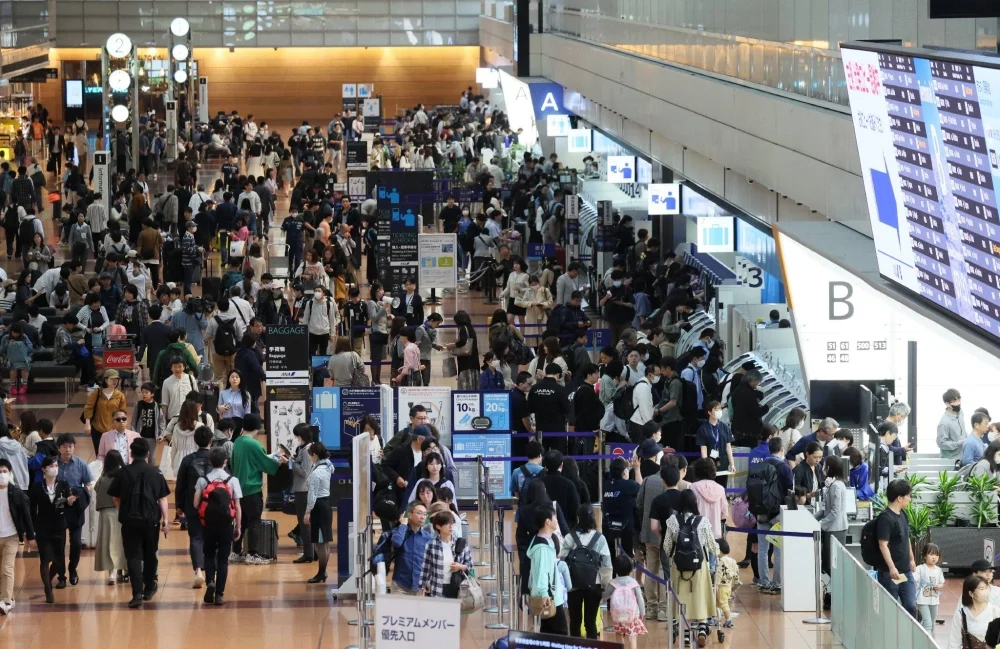
On Friday, 3rd April, The Japan Times reported that the country stands to see an 8.5 percent increase in outbound trips for the observance of Golden Week which will run from 29th April to 6th May this year.
This pretty much means that 570,000 individuals will be heading out of the country during the period, spending an average of US$2,061.73 (per rates on 5th April) per person during their trips.
This is quite a contrast from the forecast made by the JTB Corporation on 7th April last year as they saw a 6.9 percent year-on-year decrease in the total number of people travelling for the holiday.
In total, JTB predicts that a total of 24.47 million Japanese will be travelling both locally and internationally for Golden Week.
Trends coming into play
As with every other country in the world currently on the verge of their annual vacation surge periods, the biggest challenge that Japan’s outbound tourism sector will be facing this year is rapidly increasing fuel prices caused by the ongoing West Asia crisis.
Surprisingly, this has not deterred Japanese travellers from booking long-haul trips to Europe, and these trips run a minimum of a week to a full two weeks.
According to the JTB’s Q1-2026 survey, around 26,000 Japanese will be making their way to Europe for the season, and the numbers are up 23.8 percent from last year.
For the most part, however, those travelling overseas for Golden Week are planning to make their way to neighbouring South Korea or to various destinations within Southeast Asia.
It is interesting to note that the Japanese are travelling now, anticipating a lower drop in the yen’s value in the coming weeks, as well as a surge in fare and fuel prices.
On Thursday, 2nd April, Nikkei Asia reported that both Japan Airlines (JAL) and All Nippon Airways (ANA) are doubling surcharges in the face of the still unresolved conflict in Iran.
JAL president Mitsuko Tottori issued a statement on Thursday, 2nd April, declaring that the airline is set to apply for an overall price increase to cover the higher fuel surcharge for international flight fares.
At the same time, ANA is set to increase its surcharges to maximum levels whilst applying the fuel levy on domestic flights.
It is worth noting at this point that the Petroleum Association of Japan recently reported that aviation fuel accounts for nine percent of the products refined from imported crude oil.
The domestic scene
In the meantime, JTB also reports that domestic travel will be up 1.7 percent for Golden Week 2026, and domestic airports and train stations will see an exodus of up to 23.9 Japanese heading out of urban areas and into prefectures known for onsen retreats, as well as provincial hometowns.
However, those travelling locally are only planning for very short trips, specifically two days away from home for most.
Likewise, 76.6 percent of those surveyed by the JTB for their quarterly study will simply spend Golden Week at home in order to save money, a trend that could fuel treks to local attractions and boost local tourism economies, particularly in attraction-heavy cities like Tokyo, Kyoto, and Osaka.
However, as there are still around three weeks before the Golden Week exodus begins, tourism authorities both in Japan and overseas are keeping their eye on the crowds and the current situation in West Asia as any changes can significantly shift travel trends within this month.
AloJapan.com