

A group of Japanese people held a rally in Tokyo’s Shinjuku district on Saturday evening to express their opposition to the Japanese government’s push toward military expansion.
Protesters criticized the dangerous policies pursued by the government of Prime Minister Sanae Takaichi, including attempts to revise the country’s pacifist Constitution and deployment of long-range missiles.
Japan’s Constitution, which took effect in 1947, is often referred to as the pacifist Constitution because Article 9 states that the Japanese people forever renounce war as a sovereign right of the nation and the threat or use of force as means of settling international disputes.
Takaichi and other right-wing politicians have long sought to amend Article 9. The prime minister’s recent remarks reaffirming her commitment to constitutional revision have raised widespread concerns in the country.
“If a real war breaks out, I can only say that [Japan] would lose in an instant. Even if it has missiles and tanks, there’s probably no energy to power them, right? Even an amateur can see that clearly, so all I can say is, please stop [inciting war],” said a protester.
“Japan already has a pacifist Constitution, which means it has renounced war and the use of force. Even if the ‘exclusively defense-oriented policy’ is acknowledged, it is clearly a violation of the Constitution. This is absolutely unacceptable, and I oppose it,” said another protester.
“Constitutional revision has now become possible, and the defense budget has already been passed. But I still want to emphasize that this is not the right way to go. We still hope not to head toward war. I hope that [Takaichi], as prime minister, will speak from the standpoint of truly protecting the safety of the people,” said a protester.
The Takaichi administration has shifted its priority from people’s livelihood to military expansion, a dangerous move which protesters have expressed strong dissatisfaction with and firm opposition to. “[Takaichi] lacks integrity and also does not have an attitude of listening to the opinions of those around her,” said a protester. “Takaichi’s political line makes people feel anxious and afraid. She constantly makes provocative and troublesome remarks to other countries, which also creates instability in the daily lives of the public. This is extremely problematic. I hope [Takaichi] resigns now,” said another protester.
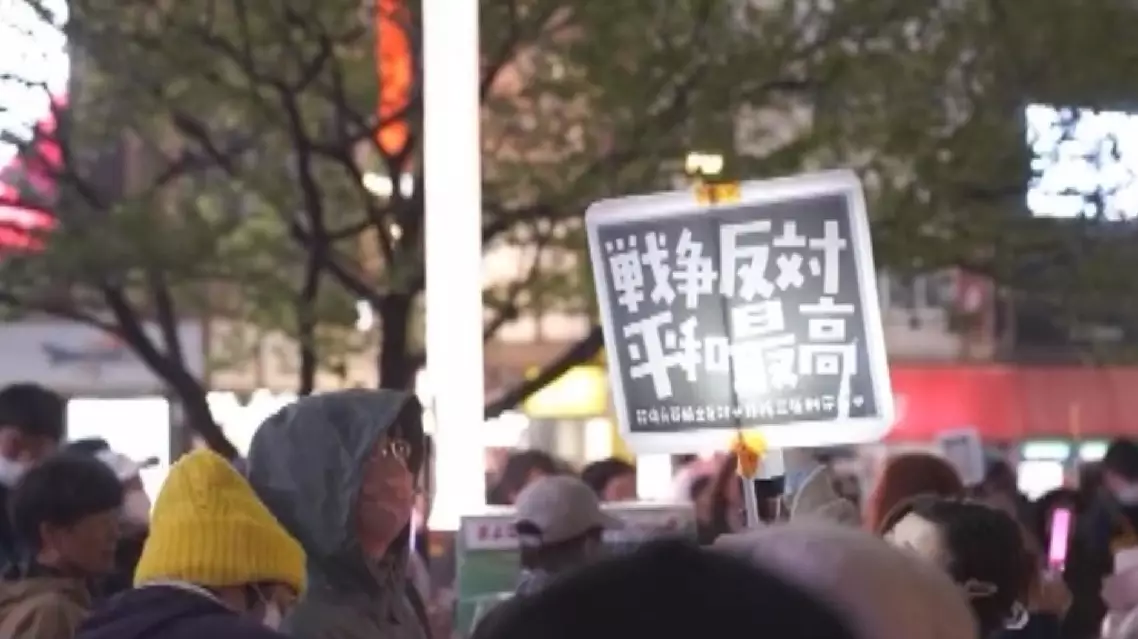
Japanese rally in Tokyo to protest against govt’s push for military expansion
The spillover effects of the ongoing Middle East conflict have driven up commodity prices in Ethiopia, taking a heavy toll on people’s daily life, especially for the low-income population.
With U.S.-Israeli joint military strikes on Iran now exceeding one month and no clear resolution in sight, the economic aftershocks are spreading far beyond the Middle East.
As part of its response to U.S. and Israeli operations, Iran has restricted navigation through the Strait of Hormuz, targeting ships associated with the United States and Israel. The blockade of this vital global energy route has driven up oil and gas prices worldwide.
In Addis Ababa, the Ethiopian capital, long queues of vehicles could be seen at gas stations waiting for fuel. Prices of other goods are also on the rise.
“The prices of goods are going up every day. If the conflict continues, life will become very hard, especially for people with low incomes,” said Zeynu Yelma, a shop owner.
Beyond rising living costs, the surge in prices has also hit the local construction industry.
“Over the past two weeks, the prices of building materials have risen sharply, severely affecting our work. The price of cement has nearly doubled. Sand and gravel costs continue to rise. The price of steel has also surged. If this trend continues, I’m afraid our work may have to stop,” said Yetbarek Workenhe, manager of a construction site.
Although local authorities have been working to secure supplies, provide subsidies, and prioritize public services, the severe international situation continues to widen the supply gap.
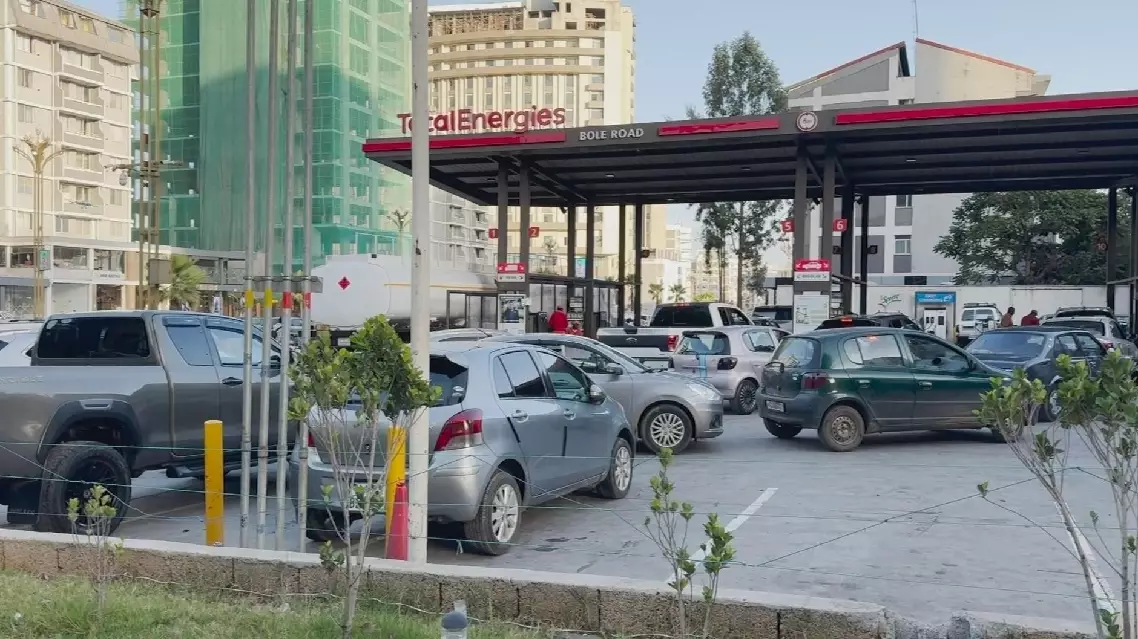
Spillover effects of Middle East conflict push up prices in Ethiopia
AloJapan.com