
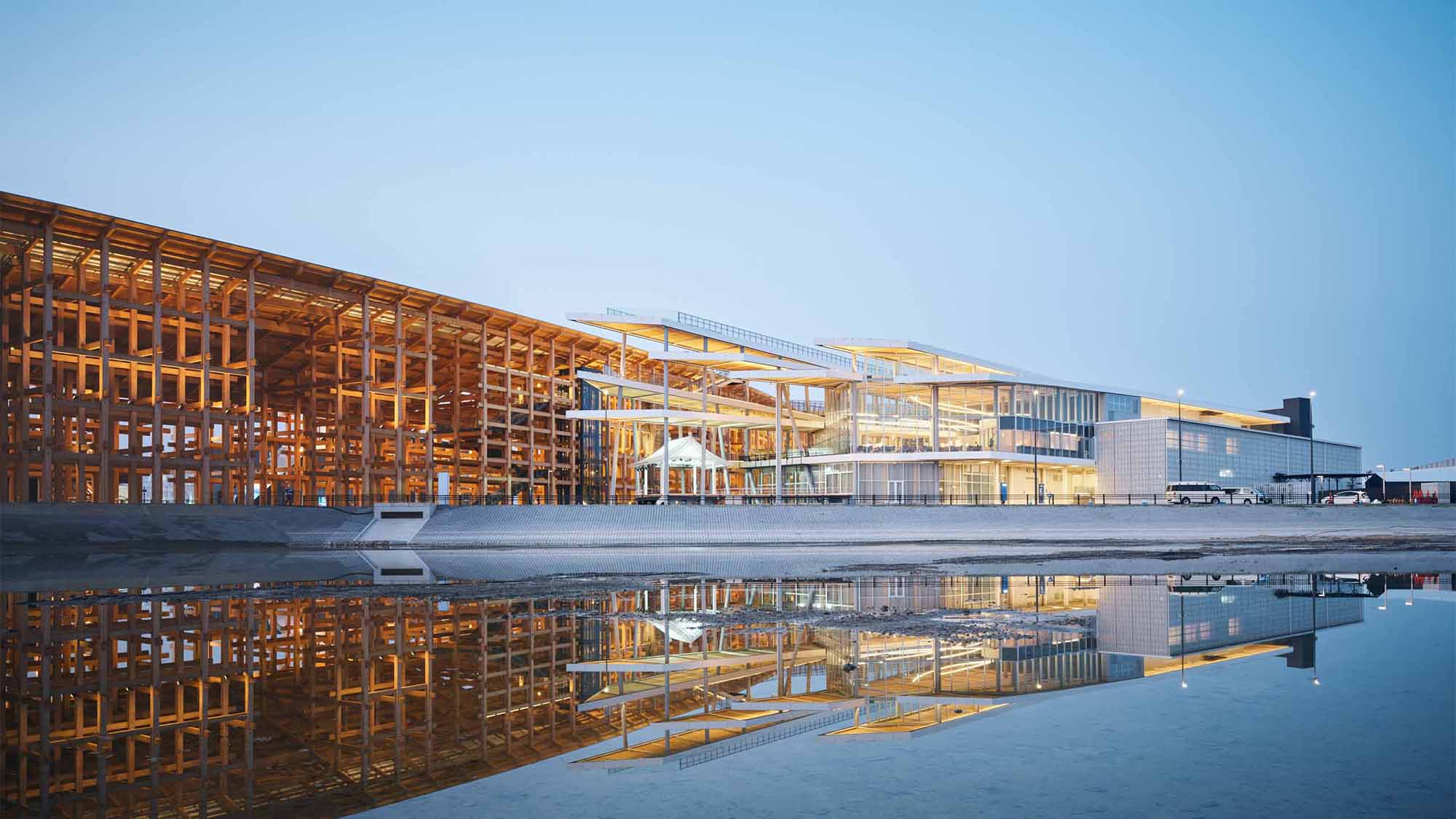
Organic spatial design connecting inside and outside
The diagonally inclined, ribbon‑like slabs – whose layered form evokes the stratified geology of the Kansai region – are oriented along the prevailing winds from the Yodo River, promoting natural ventilation and creating a connection with the surrounding environment and cultural context. Each space is unified through fluid circulation and an inclusive design approach that encourages active visitor engagement.
The spatial composition intentionally blurs the boundaries between interior and exterior, as terraces, shaded areas, and indoor spaces intersect organically to create openness and varied experiences.
Structural innovation for spatial freedom
This building aspires to be a ‘topographic living organism’ – an architecture shaped by the flows of wind, water, and people – offering a new vision for harmonious coexistence with nature. Our role was to transform this vision into a robust and sustainable reality.
To support the distinctive ribbon-like roof, we designed a steel moment-frame structure incorporating braces and inclined columns. Above the event space, the gaps between overlapping floor plates were used to form a truss system, achieving a maximum span of 34m and enabling a spacious, flexible interior.
AloJapan.com