
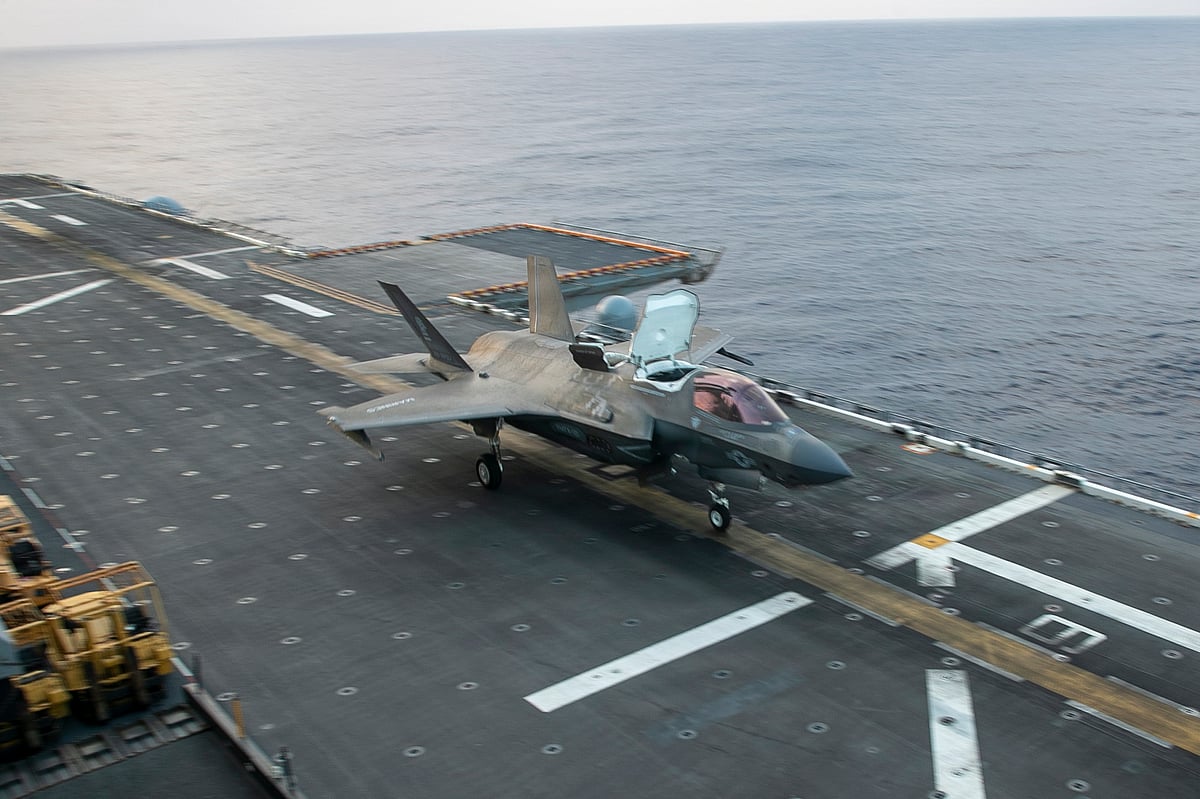
Ground and coast operations
The risk-laden ground and coast operations will most likely fall on the shoulders of the US Marine Corps.
A US Navy warship carrying Marines is reportedly now off to the Hormuz Strait, after crossing the Malacca Strait off Singapore, CNN reported, citing maritime tracking data.
The Okinawa-based 31st US Marine Expeditionary Unit (MEU) — a rapid-response force of 2,200 personnel, is reported off to Gulf of Oman theater, following a reported deployment order from the Pentagon.
Possible role of the Marines in Hormuz
Their key role: controlling key terrain, neutralising coastal threats, and enabling naval forces to safely clear and secure the waterway.
Realistically, here’s how the US Marines would realistically contribute:
#1. Seizing, securing key coastal terrain
The narrow geography of Hormuz means whoever controls the coastline controls the fight. Marines — especially expeditionary units — could:
Conduct amphibious or heliborne assaults to seize Iranian missile and radar sites along the coast
Capture small but strategic islands used for surveillance or anti-ship weapons
Establish forward positions to deny Iran the ability to target shipping lanes
These operations would likely involve units like Marine Expeditionary Units (MEUs), trained for rapid deployment and coastal warfare.
#2. Destroying anti-ship missile threats
Iran’s primary leverage in Hormuz comes from land-based IRGC anti-ship missiles.
Deploy long-range precision fires (e.g., HIMARS) from captured or allied territory
Conduct raids to destroy mobile missile launchers
Use drones and forward observers to locate and target hidden systems
This reduces the threat envelope so Navy ships and commercial vessels can pass safely.
#3. Supporting Mine Countermeasure (MCM) operations
One of the biggest threats in Hormuz is naval mining.
While the US Navy handles mine-clearing, Marines help by:
Securing nearby coastlines to prevent further mine-laying
Establishing staging areas for mine countermeasure ships and helicopters
Providing force protection for vulnerable clearing operations
Without Marines locking down the shore, mine-clearing becomes far more dangerous.
#4. Expeditionary Advanced Base Operations (EABO)
This is where Marines are evolving the most.
Under EABO doctrine, they would:
Set up small, mobile bases across islands and coastlines
Deploy anti-ship missiles to create “counter-denial zones”
Use sensors to track Iranian naval and drone movements
In effect, Marines would flip the script — denying Iran the ability to deny the strait.
#5. Special operations and raids
Marine Raiders (MARSOC) could:
Conduct covert raids on high-value targets (missile depots, drone hubs)
Disrupt command-and-control networks
Coordinate with allied and proxy forces in the region
These actions would degrade Iran’s ability to sustain a blockade.
#6. Protecting Commercial Shipping
Once the immediate threat is reduced, Marines may:
Deploy aboard vessels or escort ships for security
Secure critical ports and oil terminals in nearby allied states
Assist in humanitarian or evacuation missions if the conflict spills over
AloJapan.com