

To begin, the pandemic effectively halted global travel, and Japan was no exception. Yet since reopening, Japan has experienced a remarkable rebound—40 million visitors are expected this year, with projections heading toward 60 million. From your vantage point on the front lines, what makes Japan such a powerful draw for travelers right now?
A few forces converged. First, Japan was one of the last major destinations to reopen after COVID. While people elsewhere started traveling again, Japan remained tantalizingly out of reach. That “forbidden fruit” effect created pent-up demand. In 2023, for example, many travelers desperately wanted to see the cherry blossoms after three or four missed seasons, but Japan reopened in May, just after peak bloom. That only intensified the desire to come in 2024.
Second, the internet has dramatically amplified access to Japanese culture. Anime, gaming, food, and design aren’t niche interests anymore. We’ve even hosted NFL players whose number one request was to dive into anime culture. Social media and streaming have made Japan familiar and aspirational at the same time.
And then there’s the timeless appeal. Japan has long been a “bucket list” country. What’s changed is that people visit once and immediately plan a second trip. It’s not a place you can “do” in one go; you can come three, four, five times and still discover entirely new worlds. That depth and the contrast between tradition and innovation is what keeps travelers coming back.
With that boom has come real pressure on certain destinations—Kyoto in particular. Over-tourism there is widely discussed. How do you view the issue, and what could help alleviate it?
Kyoto is magical and on a first trip, most guests feel they must see it. But the on-the-ground experience can be challenging. You step off the Shinkansen and face a 45-minute taxi queue. At Kiyomizu-dera and other marquee sites, you can barely move. That’s not enjoyable for visitors or residents.
Interestingly, many locals are quite accepting; they know the high-traffic areas will be busy. What surprises most people is that 15 minutes away from those hotspots are exquisite temples, gardens, and neighborhoods that remain almost empty. That’s where we lead our clients.
The biggest accelerant of crowding is Instagram. There’s a perceived need to capture iconic shots otherwise it feels as if you haven’t “really” been there. That mindset funnels everyone into the same few places at the same time. A more curated approach, highlighting alternatives and designing itineraries that avoid peak moments, can make a huge difference without sacrificing the essence of Kyoto.
The classic “Golden Route”—Tokyo, Kyoto, Hakone, Mount Fuji—still dominates most itineraries. As travelers return for second and third visits, what role do companies like yours play in shifting attention beyond that circuit?
Our model is fully bespoke. We work directly with each client, in a B2C model, without intermediaries and create the trip from scratch based around their interests. For first-timers, we accept that Tokyo and Kyoto are essential. But we’ll often advise against Hakone and Mount Fuji because of congestion, and instead propose one carefully chosen alternative, perhaps rooted in nature, history, craft, or contemporary culture.
What happens nine times out of ten is that our “wild card” becomes their favorite part of the journey. Clients finish the trip saying, “I wish I’d trusted you more from the start,” and then they plan a return. Despite being only two and a half years old, we’ve already had at least ten clients repeat with us, which is remarkable.
Behind that is constant research. Half my job is being on the road meeting communities, testing experiences, and evaluating new hotels. I’ve lived in Japan for 15 years, and in the last two and a half I’ve discovered extraordinary places I didn’t know existed. That’s why being based in Japan matters. If you’re planning from overseas, you simply don’t have the same depth of information or relationships to deliver these “untold” experiences.
When some guests visit Japan, they may expect their guide to be a Japanese person who has lived in the country all their life, as there is a perception that such guides can provide the best information based on personal experience. What do you see as the benefits of having a non-native guide, and what challenges have you encountered in this regard?
On the Japanese side, the initial meeting can be delicate. I speak fluent Japanese on the phone, and sometimes people are surprised when I arrive. But once that first barrier is down, relationships become much easier; people are incredibly welcoming.
On the client side, we occasionally hear, “Why is my guide American?” My answer is that you’re seeing Japan through the eyes of a long-term resident who has been welcomed into the culture and can interpret it clearly and candidly. Japanese guides are wonderful, but cultural norms sometimes make it harder to address sensitive questions directly. Our international guides can bridge that gap, offering local knowledge plus an accessible perspective for global travelers.
We also invest heavily in matching personalities. Over two weeks together, the guide–client relationship is everything. We pair young, dynamic guides with families because they connect brilliantly with children. We have a thoughtful conversationalist who is a great fit for a solo traveler that wants depth and debate. Chemistry matters as much as expertise.
Your company is young—just two and a half years old—yet you’re already winning awards and earning strong word-of-mouth. Can you tell us the background of how Untold Japan was founded?
Personally, I lost three jobs during COVID. My now-COO, Christian, is German and had been guiding in Japan for a decade; my background is marketing. During the pandemic we crisscrossed the country thanks to the domestic travel campaigns, visiting phenomenal places with no tourists. We kept saying, “When this ends, we should bring people here.”
Our parent company is Tangle. I’ve known Tangle’s CEO for 20 years; we met in London, so when I pitched him the concept in 2022, he said, “Let’s do it.” and by November of that year we had a plan; we rushed a website live by April 1st, 2023 to be ready for opening. The site was basic with no polish but within weeks we had hundreds of inquiries, with our first guests arriving in May. We delivered an exceptional tour, hired quickly, trained guides, and it’s been a sprint ever since, from two people to a team of 23. We haven’t done formal PR in Japan; relationships, results, and referrals have driven our growth.
How do you actually design a tour? Many travelers arrive with a fixed list—sometimes influenced by Instagram or now even AI. How do you balance your expertise with their expectations?
We’re really collaborative but we set expectations. Because we work B2C, there’s a great deal of back-and-forth. Every itinerary is built from the ground up around the guest, such as what’s available, how things fit together realistically, and where we see opportunities to elevate the experience.
The ideal is a six-month to a year lead time; with that runway, we can craft something extraordinary. Since we are B2C, we are able to work closely with the guest through the whole process of designing their dream trip. That said, we can also handle requests with shorter lead times.
Without giving away proprietary secrets, could you share a favorite “untold” place that consistently delights guests?
One we love is a property in the southern islands of Ise-Shima called Cova Kakuda, originally a pearl farm set in a secluded cove. The owners transformed it into an intimate retreat with four villas and a dining house while reviving pearl cultivation on-site. They’ve hired young pearl farmers and invite guests to learn and participate. It’s gorgeous, with water all around; you can literally step from your villa into the sea (with a life jacket, to keep their team happy!).
Luxury matters here because it funds revitalization. Large budget coach tours often pass through without leaving much behind. Our guests, by contrast, engage deeply: they support the pearl farm, purchase local crafts, and bring resources into the community. That’s “sustainability” made tangible.
You also work with artisans—often very private people. How do you find them and build trust?
Patiently. Many artisans prefer not to host groups. We lean on introductions where possible, and then invest time with multiple visits, small gifts, and honest conversations about goals and boundaries. We might begin with a single guest who has a genuine passion, say, for traditional woodworking, and design a thoughtful studio visit around learning rather than spectacle.
One master woodworker we collaborate with is deep in the mountains, over an hour by car, surrounded by forests and a sweeping valley. His “studio” is a barn with a breathtaking view. The first time we brought a guest, he said, “I never imagined people would travel here to learn what I do.” His excitement was infectious. That kind of connection is what we aim for.
Your approach sounds more “slow travel” than box-ticking. Is that intentional?
I’d call it immersive rather than slow. We curate a cadence that suits the guest: a hands-on samurai training session might be an hour; a guided hike has a defined duration; but a day with an artisan can flow organically. When the conversation is rich and meaningful, dinner can slip by unnoticed, and that’s wonderful.
We also run internal research meetings every week. Guides share new finds, historical context, and best practices. The passion of the team is crucial because guests can feel it, and it elevates every experience.
You offer “Untold Exclusives”—signature experiences within broader itineraries. What distinguishes an exclusive from a standard activity?
Exclusives are partnerships we’ve painstakingly developed. They’re not standalone products; they’re elements we weave into a holistic, two-week journey. A good example is an exclusive denim experience for enthusiasts.
Another is an experience we have developed within the early days of Untold Japan; a private sushi making experience with Anthony Bourdain’s favourite sushi chef. Specifically, it’s a style called “Edo-Mae”, which is a little different from regular sushi. It’s an intimate experience where the master explains the history of sushi before showing you his own unique techniques in making it. Afterwards, you can eat what you have made and enjoy it with some exquisite wine pairings. It’s as authentic as it can get.
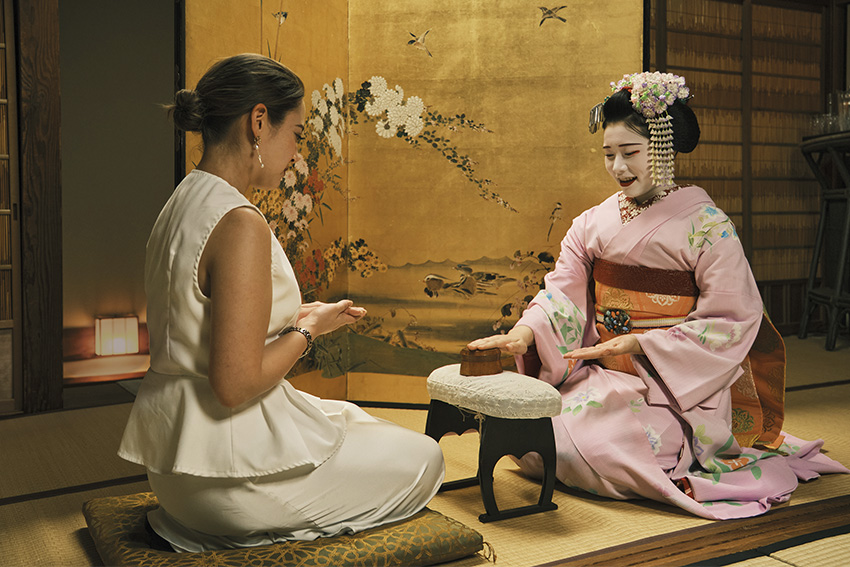
Because these experiences are intimate and fragile, we include them only as part of a full tour. The same goes for geisha encounters: when clients ask why our experience costs more than something they found online, we explain the details of the authenticity, and they understand as soon as they experience it for themselves.
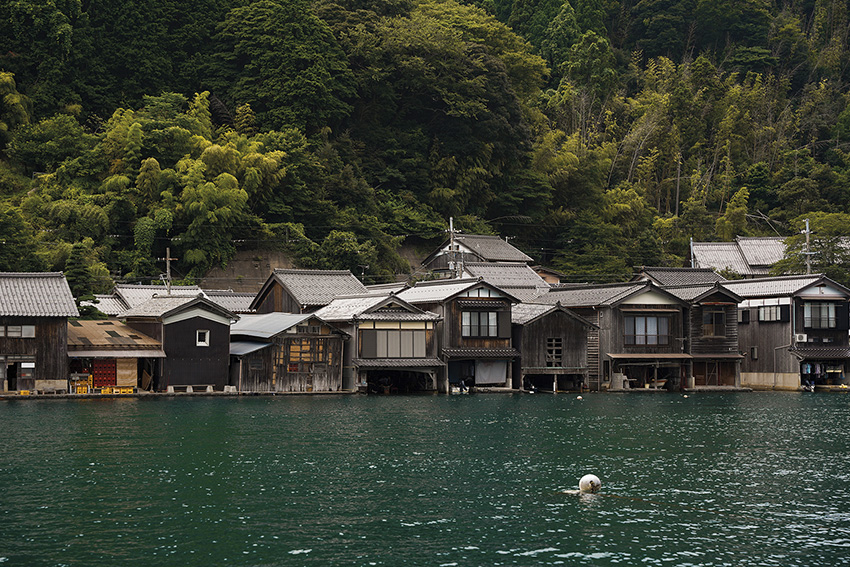
Traditional boat houses in Ine, Kyoto
Why do such closed communities open their doors to you, rather than to other providers?
We don’t knock once and demand access. We show up consistently, explain our purpose, and demonstrate that we’re not trying to shuttle masses through for a quick margin. Our mission is to celebrate and help preserve remarkable strands of Japanese culture that risk being overlooked. That resonates.
A case in point: a 13th-generation karakuri doll maker in Nagoya. He has no apprentice and could be the last of his line. Our conversation wasn’t “Can we bring tourists?” It was “How can we help you find an apprentice?” He even said he’d welcome a foreign apprentice, recognizing that traditional Japanese apprenticeships can be extremely strict and unpaid for years. We can’t solve succession alone, but we can connect people and resources.
How do you gather and incorporate guest feedback, especially when you’re piloting new experiences?
We ask every client for feedback, and guides compile detailed reports after each tour. Realistically, only about a quarter of guests complete formal reviews (very common in travel), but we stay in close contact throughout. A guest currently on tour messaged after a Zen meditation at a mountain temple near Kyoto to say it was “the most incredible experience I’ve ever had.” Those real-time insights are gold. They help us refine quickly, even when surveys are scarce.
How hands-on is your concierge and guiding team once a tour begins?
Very. For a two-week itinerary, the guide is with the guests throughout and even though we encourage free days, the guide stays nearby in case of language or logistics issues. We also run a 24-hour concierge. I personally take the late-night calls. Often, it’s about reassurance and knowing someone experienced is there to help.
How do you recruit and train guides to meet that level of service?
We currently have eight full-time guides and are hiring selectively. The process has two stages. First, Christian conducts a rigorous interview on knowledge, motivation, and guiding fundamentals. Once candidates pass that, I focus on interpersonal dynamics—how they communicate, whether they can build rapport with high-profile, intellectually curious clients, and how they handle sensitive topics. Most pass, but not all; the standard is high.
New guides then undertake a two-to-three-week training tour with Christian along with intensive fieldwork on pacing, narration, etiquette, and problem-solving. I’ve done the training myself; Christian was merciless! But that rigor is what ensures consistency.
Are there particular experiences that are consistently popular or that spark the most enthusiasm when guests see them on your site?
The classics always draw interest: geisha evenings and observing sumo practice. Recently, the global success of “Shōgun” has fueled fascination with samurai history. We will soon be taking guests to a swordsmith in Okayama, where they witness the forging process. It’s mesmerizing. People will inevitably ask to buy the blade they’ve just seen but a proper sword takes at least two years to complete. If someone truly wants to purchase a sword, we can facilitate it, but it won’t be the one cooling in the forge that day. There’s also a market for historical blades; not long ago someone offered me an authentic Edo-period sword for around a million dollars. Serious collectors exist.
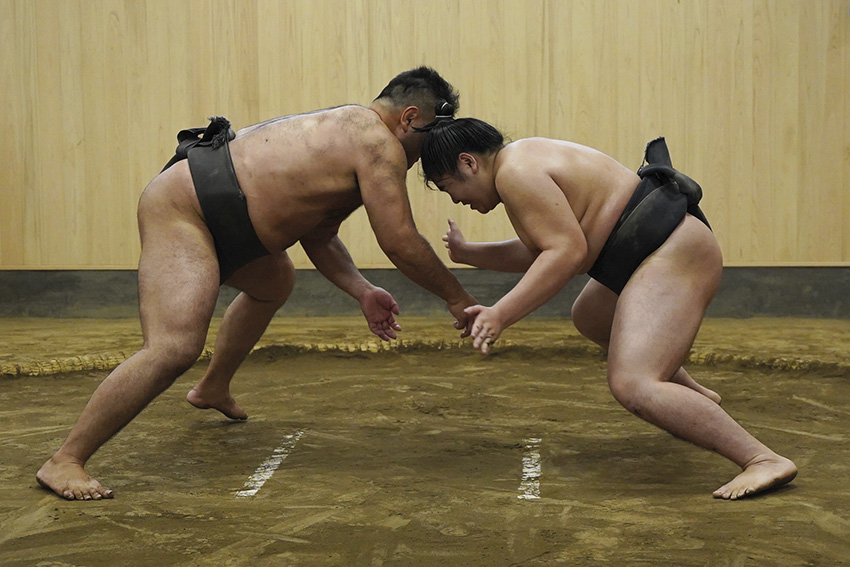
Private sumo training & stable visit
You’ve grown quickly. How do you plan to scale while maintaining quality and the “untold” character of your trips?
Candidly, I don’t want to scale in volume. I’d like to add perhaps three to five more exceptional guides and stop there. If we were running 20 tours a month, we’d lose what makes us special.
Instead, we’ll move further upmarket. Our current two-week trips average around $20,000 for two people. Increasingly, we’re designing $100,000+ itineraries for clients who value privacy, exclusivity, and time above all. We recently created a six-day trip for a HNWI, centered on the best suites and seamless logistics. It happened to be Tokyo–Kyoto–Hakone because that was the brief—but executed at an elevated level.
To reach those ultra-high-net-worth travelers, are you pursuing partnerships with exclusive OTAs or private networks in the U.S., the Gulf, or elsewhere?
We’re exploring it. Japan has agencies that cater exclusively to celebrities and UHNWIs with zero online presence, purely phone-book and trust. Our brand is more visible by design, which helps with discovery. If partnering with a highly selective OTA or private travel office in the U.S., Dubai, or Europe connects us with the right audience, we’re open to it. The next phase is less about mass awareness and more about precise alignment.
Many hotels struggle with the economics of the big OTAs. How does that impact you?
It doesn’t, because we book directly with partner properties for clients. The only time we might use a platform like booking.com is for our own guide accommodations when it’s purely a matter of convenience and availability. For guests, we manage bespoke relationships directly with hotels and ryokan.
There’s a perception that Japan isn’t fully set up for UHNW travel, with certain facilities like private jet handling for instance being lacking. Do you agree with this and what is your vision for luxury travel in Japann?
The infrastructure exists more than people realize—Alpine regions like Nagano, for example, have explored private aviation options with partners such as HondaJet—but it’s not widely understood. The bigger constraint is luxury inventory outside the major cities. If you want spacious top-tier suites, you’ll reliably find them in Tokyo, Osaka, Kyoto, and perhaps Fukuoka. Beyond that, the gems are fewer and harder to discover.
That said, we can create seamless access to extraordinary remote properties, including helicopter transfers from Tokyo in under two hours. The key is reaching the clients who value that proposition. Once they see what’s possible, they’re all in.
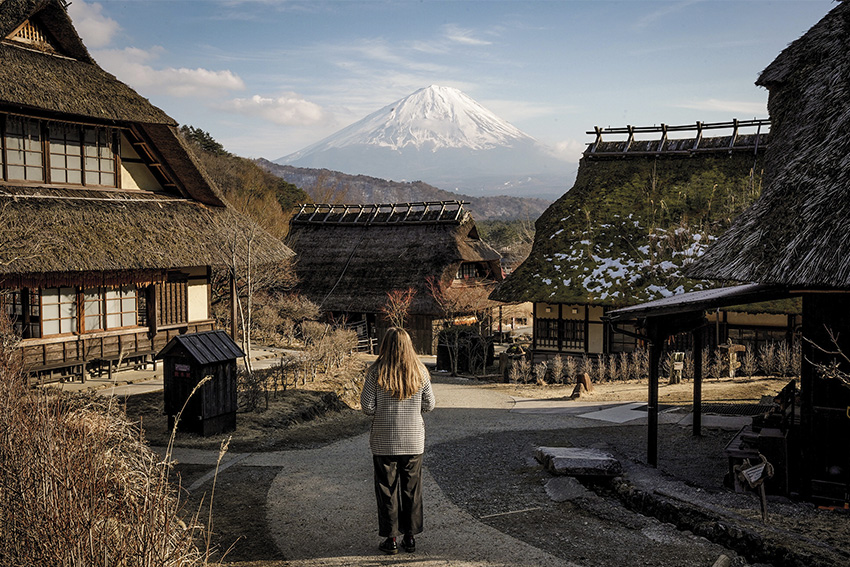
Visiting Saiko Iyashi-no-Sato Nenba
What about destinations like Karuizawa?
Karuizawa has excellent hotels and is lovely in summer, some call it the “Hamptons of Japan.” There’s shopping, good dining, serene nature. For certain guests it’s perfect as a restorative interlude. It’s not for everyone, though; for some, the activities feel limited. And as for rumors about specific billionaires owning homes there, I couldn’t say.
Stepping back, what core philosophy guides Untold Japan?
Luxury is a means, not an end. Our deeper mission is revitalization and respect, and channeling resources into communities, celebrating craftsmanship, and ensuring we’re not just extracting value but contributing to it. I tell our teashow up with humility, bring gifts, honor your hosts’ time, and help guests understand the culture they’re entering. The best trips are immersive exchanges that benefit everyone involved.
A practical final question: tipping. Many American travelers are used to it. How do you handle tipping in Japan?
Japan is not a tipping culture, and that isn’t changing. If guests wish to tip our guides privately, that’s their prerogative, and I don’t ask guides to report it. But broadly speaking, travelers should not feel obliged to tip in Japan. Respect, punctuality, and a sincere “thank you” go a long way here.
For more information, please visit their website: https://www.untold-japan.travel/
AloJapan.com