
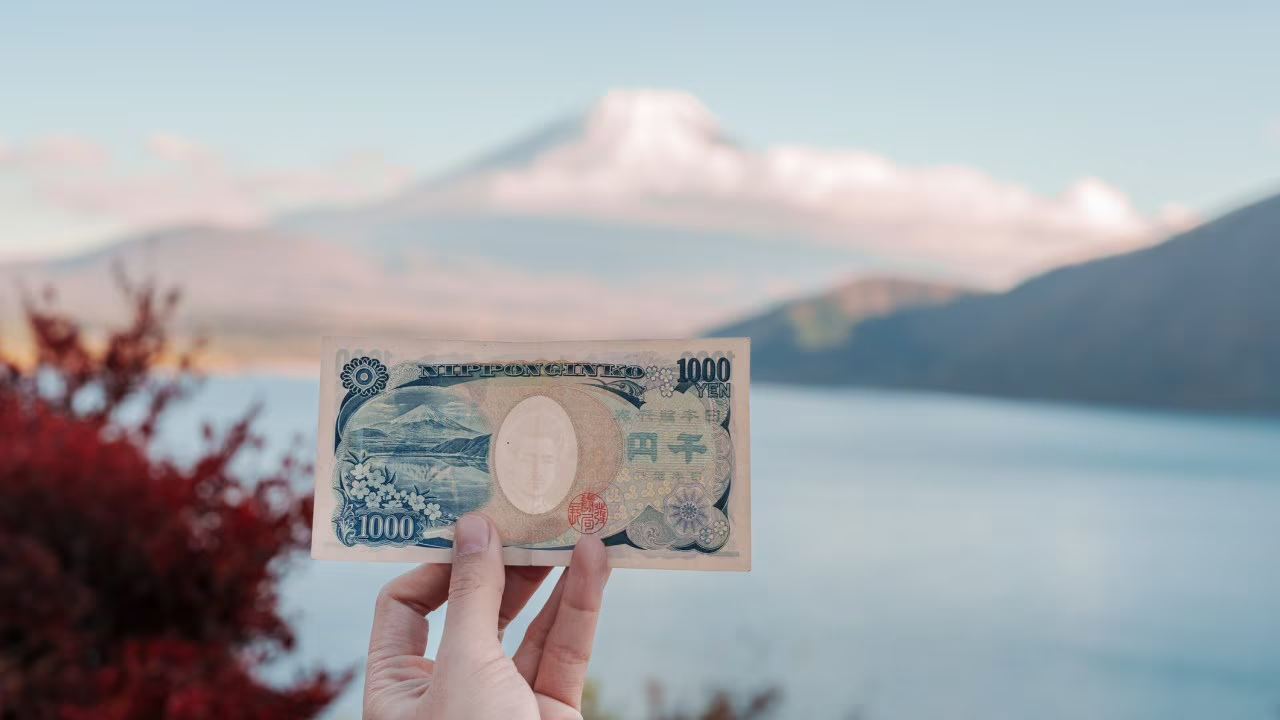
The weak yen might be making travel to Japan more affordable – and desirable given that over a million Australians visited last year – but when you tally up the hotels, meals, admission fees, and late-night raids on convenience stores, Tokyo can still be a pricey proposition
Yet with a little foresight, it doesn’t have to break the bank. Here are some pointers on navigating the bustling capital that are free, notably cheap or offer incredible value.
All systems Tokyo
The greatest news is that some of the city’s leading attractions are free – Meiji Jingu shrine, Senso-ji temple and Imperial Palace grounds included – and it costs nothing to stroll around trendsetting districts such as Shibuya, Harajuku, and Ginza. Neon-lit Shibuya offers bars, boutiques and record stores. Harajuku is a locus of kawaii (“cute”) culture, while Ginza offers eye-opening retail diversions. Window shopping really reaches its apex in Tokyo.
Alternatively, make a note of the city’s free galleries. With dozens of exhibition rooms, the contemporary art line-up at Design Festa in Harajuku is worth a visit. In Yanaka, Scai the Bathhouse gallery is especially noteworthy for taking shape in a former sento (bathhouse) and exhibiting the work of both local and international artists. Or fancy a view of the city? Instead of paying to ascend Tokyo Skytree, try the no-cost observation deck on the 45th floor of Tokyo Metropolitan Government Building in Shinjuku.
When the skies are clear, you’ll be able to see Mount Fuji way off to the west. Away from the city centre, frugal visitors can enjoy even more fascinating diversions. Other than the train fare, which is around $4, a hike up Mount Takao in western Tokyo costs nothing and offers a serene green immersion, particularly if you go on an uncrowded weekday. A network of hiking trails lead up the slopes of this accessible oasis.
Affordable feasting
With every culinary price bracket covered – and almost every type of cuisine you can imagine – Tokyo offers a conveyor belt of dining experiences. For classic Japanese flavours, kaitenzushi chains like Sushiro serve low-cost but good quality sushi in family-friendly spaces. If you seek to splurge on higher-grade sushi, the omakase course at Manten in Nihonbashi is excellent value for ¥8800 ($80).
Something that should never be expensive is flavourful ramen – independent restaurants like Tanaka Shoten for tonkotsu ramen, San Tora for miso ramen, and Aun for spicy tantanmen are all proof of that. That applies to street snacks, too. A sweet option can be found in the colourful crepe shops of Harajuku, on teen-centric Takeshita-dori. Try the calorie-laden combo of fresh strawberries, rainbow sprinkles, cheesecake, strawberry ice cream and whipped cream in Marion Crepes’ Strawberry Cake Melba. It should sustain you for a while.
Take it away
Convenience stores also offer a wide-ranging lineup of cheap snacks and drinks, whether that’s nine per cent ABV cans of alcopop (try Strong Zero) for ¥140 (just over a $1) or mini chocolate bars for under ¥50 (45c) we like cocoa-flavoured Black Thunder. Which of the major chains reigns supreme? That’s the kind of question that can start arguments in Japan.
7-Eleven is the most common konbini in Tokyo – there are four within a five-minute walk of my flat – and it’s always reliable for onigiri, ready-made meals, and booze. It also sells decent coffee for pocket change. Lots of people rave about Family Mart for its fried chicken, though Famima (as it’s affectionately known) is also handy if you need an emergency T-shirt or pair of socks. Lawson arguably edges it when it comes to desserts – and their hard-to-find Natural Lawson stores offer higher quality food than other konbini – but you also have to give a nod to Ministop for their soft-serve ice creams.
Bring to pass
If you are likely to be museum- and gallery-hopping, the Grutto Pass can be a real blessing. For ¥2500 ($22), it offers discounted or free admission to 102 facilities in the city, including compelling attractions like Tokyo National Museum, the kid-friendly National Museum of Emerging Science and Innovation, and the traditionally landscaped Koishikawa Korakuen garden. Elsewhere, you can nab passes with savings on transportation.
Starting from ¥3900 ($35), the Tokyo City Pass provides unlimited rides on the Tokyo Metro and Toei subway for a set number of days, plus discounts on a handful of popular sights. For a side trip to Hakone – for Mount Fuji views, hot spring baths and a night in a ryokan – the ¥7100 ($65) two-day Hakone Free Pass (¥7500 for three days) is a stellar offer. It covers the limited express trains between Hakone and Shinjuku, provides reductions at some spots in Hakone, and includes rides on all the cable cars, buses, ropeways, and other transportation needed to zip around while there.
Low-budget lodgings
Tokyo’s hotels are becoming more expensive, with rates having risen by 140 per cent since 2019 to an average of ¥26,000 ($235) per night in 2025. One way to fork out less is to opt for a tatami mat room at a no-frills ryokan, like the foreigner-friendly Andon Ryokan in the less fashionable surrounds of Taito-ku – rates from ¥7700 ($70). Yes you ryokan.
If you want to shave costs and don’t suffer from claustrophobia, another budget option is a capsule hotel. Once the refuge of late-night revellers who’d missed the last train home, capsules today tend to be a far more comfortable experience. For around ¥4000¥5000 ($36-$45), modern chains like Nine Hours allow multi-night stays, have comfy sleeping pods and lounge spaces, and offer some women-only branches.
Wallet-friendly mementos
Need a gift to take home but only have a handful of coins left? Stop by a 100-yen store like the Daiso and CanDo chains, where most items are, as advertised, around the $1 mark and upwards. From kitchen goods and snacks to beauty products, life-changing egg timers (to transform your boiling game) to skin-boosting facial masks, the shelves are groaning with cut-price keepsakes.
For something rarer, head to the city’s flea markets. Held two Saturdays or Sundays a month at Tokyo International Forum, the Oedo Antique Market hosts 250 vendors selling Japanese ceramics, kimonos, and other antique collectibles. Every weekend, you’ll also find Tokyo City Flea Market at Oi Racecourse, selling an eclectic mix of vintage fashion and accessories, bric-a-brac and crafts.
Sporting interests
Tokyo has a host of sporting options that are good value. With advanced planning, you can snag tickets for one of the three major sumo tournaments held there every year (in January, May and September) for as little as ¥2500 ($23). Even in the cheap seats you can hear the thuds as wrestlers collide. Between late March and late September, Tokyo’s two baseball teams – the Yomiuri Giants and Yakult Swallows – are in regular season action.
Tickets for prime views can be extravagant but other seats can cost less than ¥3000 ($28). Tickets for League One rugby (December to May) can be even cheaper. Or if soccer is your thing, Tokyo and its neighbouring prefectures have teams playing in the J-League between August and May.
AloJapan.com