
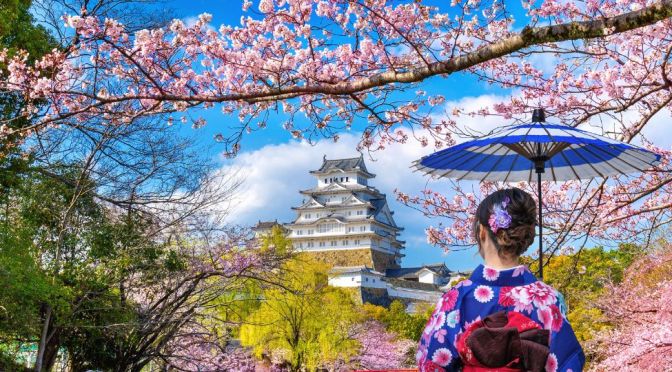
Japan National Tourism Organization (JNTO) has released its Cherry Blossom Forecast 2026, outlining bloom timelines across regions and spotlighting key festivals in the Mt. Fuji area. For the travel trade, the update enables precise itinerary planning for one of Japan’s most commercially significant seasonal draws.
Issued by the Japan National Tourism Organization, Delhi Office, in February 2026, the forecast details the expected progression of sakura from Okinawa in the south to Hokkaido in the north. Based on data from the Japan Weather Association, the advisory provides operators with region-wise bloom estimates to support group departures, FIT bookings, and seasonal packaging.
While March to April marks peak cherry blossom season across most of Japan, sakura begins blooming in Okinawa as early as February before gradually moving northwards. Hokkaido’s bloom can extend into May, offering a longer selling window for late-spring itineraries. The release also highlights Shiba Sakura, or moss pink, which peaks in May, creating a distinct visual attraction beyond traditional cherry blossoms.
For operators seeking alternatives to high-density viewing points, JNTO notes that sakura can be experienced across much of the country, often with fewer crowds outside marquee destinations.
A key focus this year is the Mt. Fuji area, where several festivals and floral events have been highlighted in partnership with Fuji Kyuko Co., Ltd. Sagamiko Sakura, scheduled approximately from 27 February to 12 April, will feature around 2,000 cherry blossom trees within Sagamiko Mori Mori Amusement Park.
Fuji Shibasakura, expected from around 11 April to 24 May near Lake Motosu, will showcase over 800,000 pink moss plants set against views of Mt. Fuji, creating a differentiated product for late-spring travel.
Minobu Sakura, typically from early to late April, offers a cultural dimension through Kuonji Temple, where visitors can access mountain viewpoints via ropeway.
Affiliated with the Japan Tourism Agency under the Ministry of Land, Infrastructure, Transport, and Tourism, JNTO operates 26 tourism-promotion offices globally, supporting destination marketing and trade engagement.
For the Indian outbound market, the 2026 forecast provides critical clarity on timing, regional dispersion, and product diversification — enabling the trade to structure departures around bloom windows and festival calendars with greater accuracy.

Rahul Bhadana is a digital editor at TravTalk with experience spanning multiple content niches, with a strong focus on travel trade journalism and digital publishing. A graduate of Delhi University, his work covers editorial writing, content strategy and platform-led storytelling, supporting TravTalk’s digital growth and industry engagement. A technology enthusiast, he enjoys films, poetry and exploring new ideas across media and culture.
AloJapan.com