

May I begin by asking about the current labor situation in Japan? Japan is known as the most rapidly aging country in the world, and every year the working-age population continues to decline. It is estimated that by 2040 there will be a shortage of more than 11 million workers. In the face of these dual challenges, what are the main issues that your company is currently facing? And how do you view the opportunities for Fujiarte to provide solutions to companies in need of support in this environment?
The challenges you mention are indeed significant—not only for Japanese society as a whole, but also for our industry, and for our company in particular. The Japanese government, along with our sector, is actively working to address these issues through what I consider four key strategies.
The first is promoting greater participation of women in the workforce, particularly in manufacturing, which has historically been male-dominated. Encouraging women’s active engagement in this field is essential.
The second area is creating more opportunities for seniors. While manufacturing has traditionally sought younger workers, we must now build environments where older workers can continue to contribute their experience and skills.
The third point is the employment of foreign workers. Japan remains a relatively insular society, and the number of foreign workers is still low. Moreover, the systems that support their daily lives and working environments are not yet fully developed. Expanding and improving these will be crucial.
Finally, the fourth area is productivity improvement. Much of Japan’s work is still labor-intensive. This means we must accelerate the use of digital transformation, IoT, and robotics to enhance efficiency. In summary, our focus is on the empowerment of women and senior workers, the inclusion of foreign talent, and significant productivity enhancement through technology.
Japan is confronting these demographic challenges earlier than many other countries. How do you see Fujiarte’s experience and initiatives contributing to other regions or markets facing similar issues?
Indeed, Japan’s situation offers a glimpse into what many other nations will soon face. We believe there is great potential to share our expertise globally—particularly in human resource development, manufacturing process optimization, and workforce structuring.
Many companies, both in Japan and abroad, are now focusing on restructuring their operations—introducing automation, reorganizing supply chains, and pursuing “reshoring” initiatives to bring production back domestically. We support such companies not only through staffing solutions but also by providing operational restructuring services that enhance efficiency and sustainability.

As companies in Japan pursue restructuring, reshoring, and supply chain reorganization, how does Fujiarte position its business model to support them? Beyond staffing, how do you contribute to the restructuring of operations and productivity improvement?
Our business is built on three core pillars: staffing services, personnel placement, and outsourcing. Among these, our outsourcing operations have seen the strongest growth and client demand.
Through outsourcing, we manage entire manufacturing processes for our clients—from production management and quality control to productivity improvement. This integrated model allows us to deliver measurable outcomes. Over years of experience, we have accumulated a wealth of success stories and improvement case studies, which we then share across client operations to drive further performance gains.
For example, in a smartphone production line requiring 100 workers, we may streamline operations to achieve the same output with 90 workers—without compromising quality. We also design training and motivation programs to reduce defects, aiming to bring quality issues as close to zero as possible. This continuous cycle of improvement is what makes our outsourcing service so highly valued by our clients.
As Japanese manufacturing advances toward automation and digital transformation under the Industry 4.0 movement, how is Fujiarte supporting clients in adapting to these technological shifts?
Even as automation progresses, there are still many processes that depend on human skill and craftsmanship—especially in industries that deal with materials or components requiring high levels of precision and quality. These areas remain difficult to automate, and therefore demand skilled manual expertise.
In Japan, there is also a large market for small-lot or custom production—so-called “made-to-order” manufacturing—which involves frequent model changes and unique requirements. Such operations are not easily automated, making human adaptability essential.
Moreover, even in automated facilities, human expertise is critical for production technology and maintenance. To meet this need, we have established training centers where we provide technical education and support for professional certification. We aim to nurture a new generation of technicians capable of working with advanced manufacturing systems.
In essence, while automation is inevitable, human skills will continue to play a central role—especially in areas from upstream material processing to final product assembly, where Japanese craftsmanship remains a competitive advantage.

You mentioned that some manufacturing stages remain human-intensive while others will gradually move toward automation. How do you see this balance evolving in Japan and globally?
In manufacturing, there’s always a flow—from upstream (raw materials) to downstream (finished goods). The upstream and final assembly stages will continue to rely heavily on skilled people, while the middle stages will increasingly become automated.
Japan’s “mother factories,” as we call them—where advanced technologies and quality standards are developed—will remain essential domestically. Once production processes are standardized and stabilized, mass production can then be automated or transferred overseas for cost efficiency. That cycle of innovation and scaling will continue to define Japan’s manufacturing strength.
There has been increasing consolidation within Japan’s manufacturing sector. As smaller and mid-sized firms merge to strengthen competitiveness, how is this trend affecting Fujiarte’s business?
Consolidation is a natural and necessary progression, particularly from a global perspective. Japan historically has too many companies competing within the same sector—automotive, electronics, and so on—which has diluted overall competitiveness.
By streamlining and integrating operations, companies can achieve better profitability and global alignment. This also simplifies procurement and business relationships, making it easier for service providers like us to support them.
Furthermore, consolidation often improves profit margins, which in turn enables companies to offer better working conditions to employees—a positive cycle we fully support.
In such a transforming environment, what would you say are Fujiarte’s key strengths compared to competitors?
We have several strong advantages. First is our nationwide recruitment capability. With over 30 branches across Japan, we can supply qualified personnel to clients anywhere in the country—not just in major urban areas.
Second, we have long-standing expertise in recruiting and supporting international talent. For more than 30 years, we have worked with Japanese-Brazilian communities, and in recent years have expanded to recruit workers from Vietnam, the Philippines, and Myanmar.
This gives us access to a younger labor force—typically in their 20s and 30s—while the domestic workforce continues to age, with average ages in the 40s and 50s. These young, motivated international employees bring both vitality and skill to Japanese manufacturing sites.
Finally, our deep experience in outsourcing allows us not only to dispatch workers but to deliver measurable results in productivity and quality improvement. This comprehensive capability distinguishes us from traditional staffing companies.
You have mentioned your international recruitment efforts in Brazil and Southeast Asia. How do you attract and retain high-quality foreign talent? Do you work with universities or other institutions to build these pipelines?
In Brazil, we established a local subsidiary in São Paulo, which gives us direct access to talent networks and local partnerships. We take a similar approach in Vietnam, where our team visits the country regularly to build trusted recruitment networks.
While we do not have formal partnerships with universities, we often recruit graduates through local networks and alumni associations. Our emphasis is always on direct, face-to-face engagement to minimize mismatches and ensure mutual understanding.
In recent years, we’ve also made strong use of social media to share information and convey the attractiveness of working in Japan. Many of our current employees refer friends or relatives, creating a sustainable, community-based recruitment cycle.
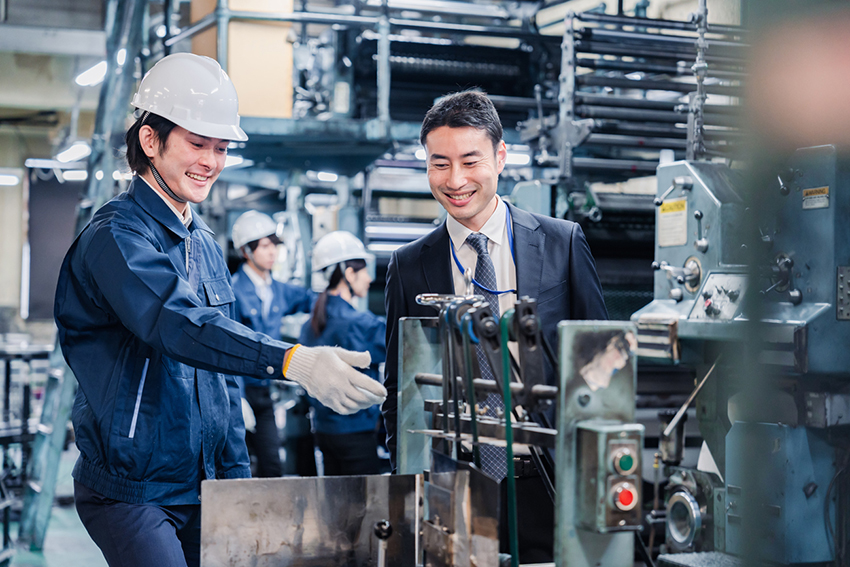
In Japan, manufacturing is sometimes perceived as a “3K” industry—dirty, dangerous, and demanding—which discourages young people from entering the field. How does Fujiarte address and overcome this outdated image?
It’s true that some companies still operate under those poor conditions—low wages, unsafe environments, and non-compliance with labor laws. However, we do not work with such companies. Compliance and worker safety are absolute prerequisites for us.
We partner only with companies that provide clean, safe, and stable working environments. This is the foundation for attracting and retaining capable workers. We believe that improving the perception of manufacturing starts with ensuring a workplace where people feel secure, respected, and valued.
Training and education seem central to your philosophy. Could you explain more about Fujiarte’s training programs and facilities?
We operate a comprehensive education and training framework called the Fuji Academy. It provides two main types of training.
The first focuses on basic workplace conduct—safety, discipline, quality awareness, and communication—especially for newcomers without prior manufacturing experience.
The second offers industry-specific technical instruction in sectors such as automotive, semiconductors, and electronics. Advanced training programs are developed in collaboration with our clients to reflect their specific production needs.
We also provide tiered leadership programs—from operator to team leader to manager—ensuring continuous development. In our training centers, experienced trainers, including former semiconductor engineers, conduct practical sessions using real equipment.
These programs not only improve individual skills but also directly enhance productivity and quality at client sites. For example, through improvement initiatives, one client increased PC assembly output from 54 units per hour to 64—an 18% improvement. When our teams are recognized and awarded by clients for such achievements, it motivates them further, creating a virtuous cycle of growth.
Is this training mandatory for all employees? For instance, are there specific certifications that must be completed before they are assigned to semiconductor or automotive production lines?
Yes, all employees undergo basic training before starting work. For highly technical areas such as semiconductors, specialized modules are required to ensure they have the necessary skills and safety awareness. Beyond that, ongoing education continues at client sites in coordination with each company’s requirements.
Which industries currently represent your strongest markets, and where do you see future growth potential?
Two key sectors stand out. The first is mobility, especially the automotive industry. It remains a massive market in Japan, led by global leaders such as Toyota, and we believe there is still considerable room for growth.
The second is the electronics and device sector. As AI and IoT technologies expand, demand for electronic components continues to rise. Within this space, we are increasingly focusing on the semiconductor industry, where we see substantial long-term potential. Although our current scale in this field is modest, we view it as a strategic growth area.

As Fujiarte continues to expand in these industries, are you also pursuing partnerships or acquisitions to strengthen your capabilities?
Yes, we have recently acquired a company specializing in semiconductor design and AI engineering. This acquisition allows us to combine manufacturing know-how with cutting-edge design capabilities, creating new synergies that can further advance Japanese manufacturing.
In addition, just last month we brought into our group a company specializing in retail promotion outsourcing, called FIKS Communications. Their expertise lies in optimizing in-store layouts, managing inventory, and devising effective sales campaigns.
For example, after one major retailer switched from handling these tasks internally to outsourcing them to FIKS Communications, their sales tripled within six months. We believe the synergy between Fujiarte’s manufacturing outsourcing and FIKS Communication’s retail promotion outsourcing will create exciting new growth opportunities for both companies and contribute to revitalizing Japanese industry as a whole.
Beyond business strategy, corporate culture plays a vital role in integration and long-term success. What cultural or philosophical principles guide Fujiarte’s management approach?
At the heart of our philosophy is the belief that “the happiness of all stakeholders—employees, clients, and society—is the foundation of sustainable growth.” A company cannot prosper unless its people are happy.
We emphasize a participatory management style inspired by the Amoeba Management System, where every employee thinks and acts like a manager. Instead of decisions flowing only from the top, each team considers how their actions can improve company performance and customer satisfaction.
By fostering shared purpose and entrepreneurial spirit, we aim to develop leaders who contribute positively to society through their work. This human-centered philosophy is what defines our culture.

Fujiarte will soon celebrate its 65th anniversary. Looking ahead, what are your main goals for the coming years?
We are pursuing our “Vision 2030”, a 10-year plan with two major goals: achieving annual sales of 100 billion yen and employing 20,000 people. We have already reached around 60 billion yen in sales and employ about 10,000 staff, so we are halfway there. Together with our employees, we continue to challenge ourselves to reach these ambitious targets.
Finally, if you were to describe Fujiarte in one sentence for our 75 million readers around the world, how would you express what your company represents?
I would say: A company where people from diverse backgrounds can thrive and contribute to society—a truly global human resources enterprise rooted in Japan.
We aim to create a company where individuals from many countries work together, achieve happiness, and help build a better future.
That is a wonderful vision—essentially, to become the world’s leading HR company. Thank you very much, Mr. Hirao, for sharing your insights today.
Thank you. It has been a pleasure speaking with you.
For more information, please visit their website at: https://fujiarte.com/en/
AloJapan.com