
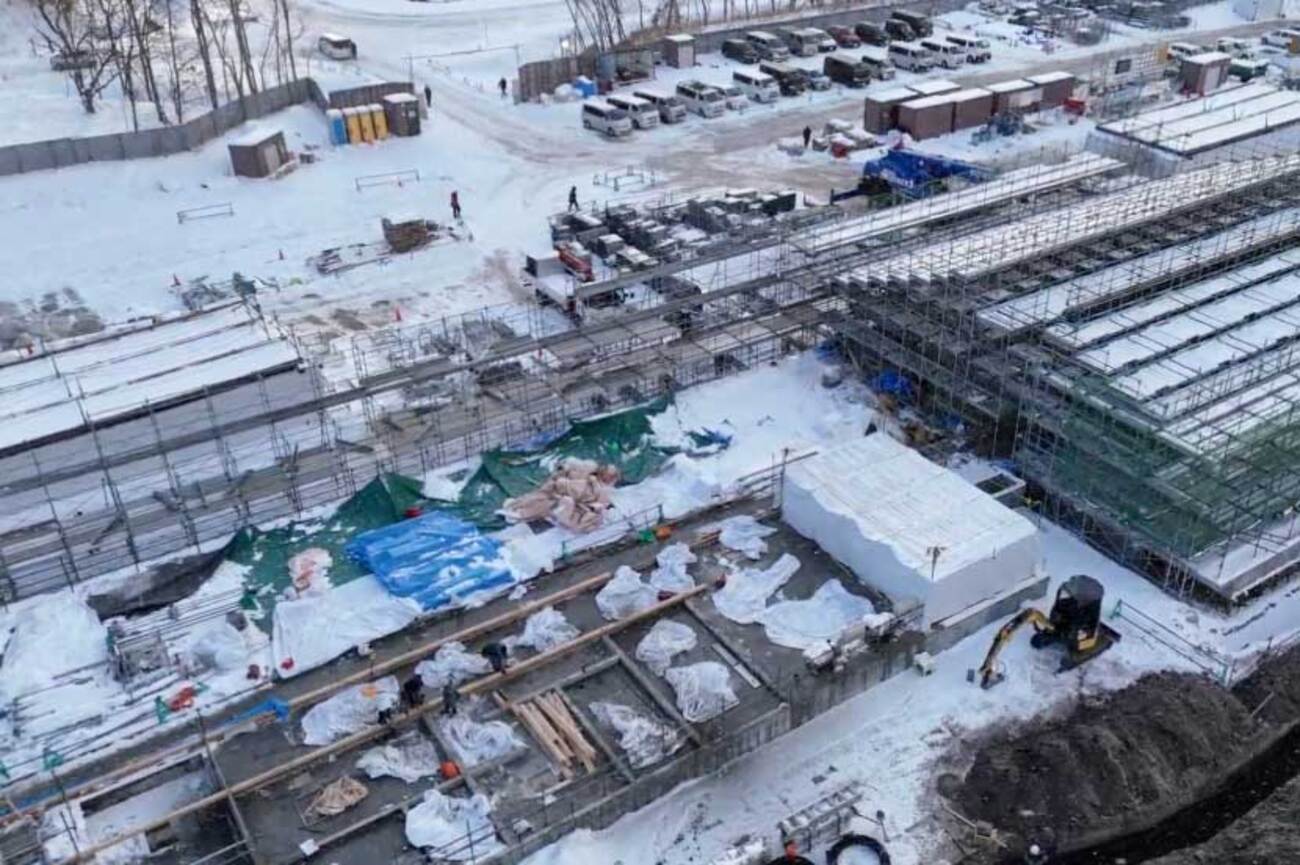
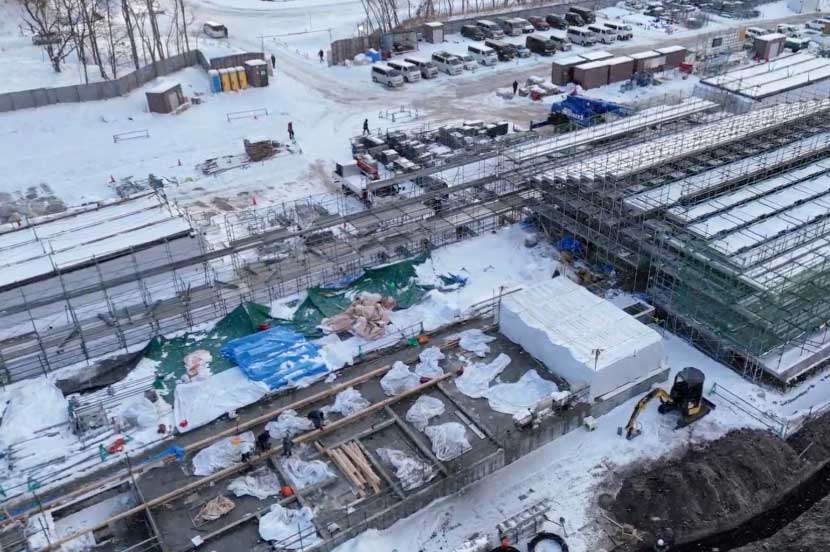
With AI rapidly becoming a part of everyday life and embedded in industry, the infrastructure required to support it is becoming more critical than ever. In response to accelerating demands for data processing, SoftBank Corp. (TOKYO: 9434) is building the “Hokkaido Tomakomai AI Data Center” in Tomakomai City, Hokkaido (Tomakomai AI Data Center). What led to the choice of location, and how is the project progressing? SoftBank News asked people driving the initiative to get a firsthand look.
The interviewees
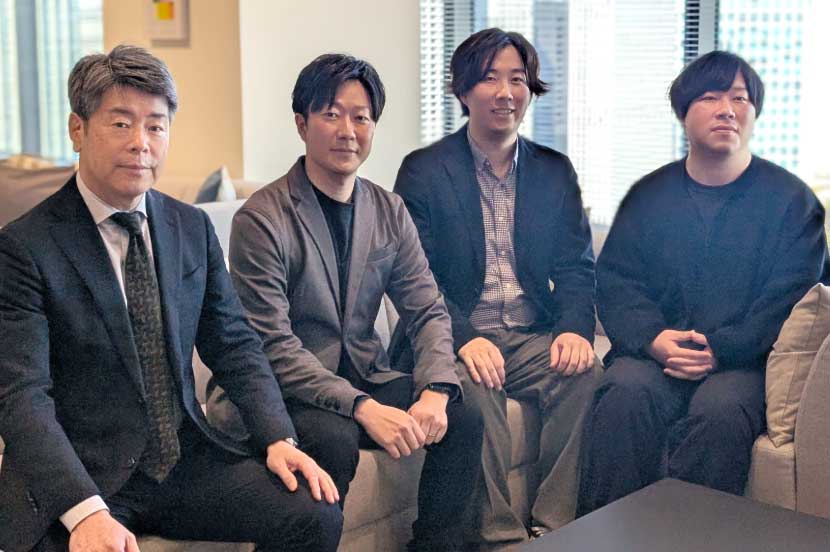
Hiroyuki Ishimaru
East Japan Local Government DX Promotion Office,
Public Sector Business Promotion Division
Involved in collaboration with local governments. Promotes AI and DX initiatives through dialogue with communities, including Hokkaido Prefecture and Tomakomai City.
Seiya Kagawa
Planning Department,
Next Gen Social Infrastructure Promotion Office
Involved in the launch of the AI data center concept. Coordinates with local communities and municipalities while advancing the initiative.
Ryuichi Sugimoto
Planning Department,
Next Gen Social Infrastructure Promotion Office
Oversees overall coordination of AI data center construction, including cross-departmental and regulatory alignment.
Yuki Nishizaki
DC Engineering Promotion Department,
Digital Infrastructure Development Division
Responsible for construction of the AI data center. Manages on-site progress from design stages to execution.
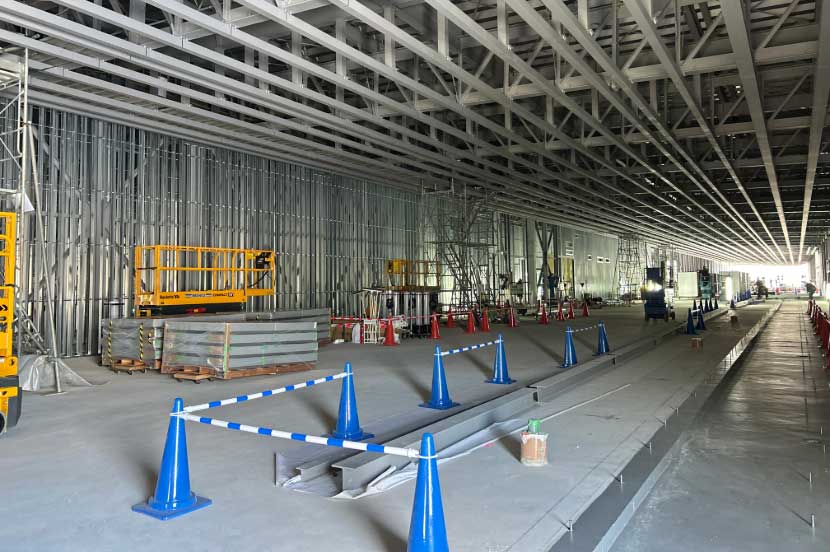
The Tomakomai AI Data Center has drawn attention as a next-generation facility capable of processing massive volumes of data. What’s the current status of construction?
Nishizaki: We’ve been moving forward with plans for the Tomakomai AI Data Center since around 2023. When including design studies, contractor selection and administrative consultations, I’d say we’re about 60 to 70% complete.
For a data center of this scale, it typically takes about five years to go from concept to completion. We’re working under a very tight schedule, targeting an opening in fiscal 2026, which ends in March 2027.
Given the short construction timeline, you must have faced a lot of decisions about contractors and project coordination. What challenges did you encounter?
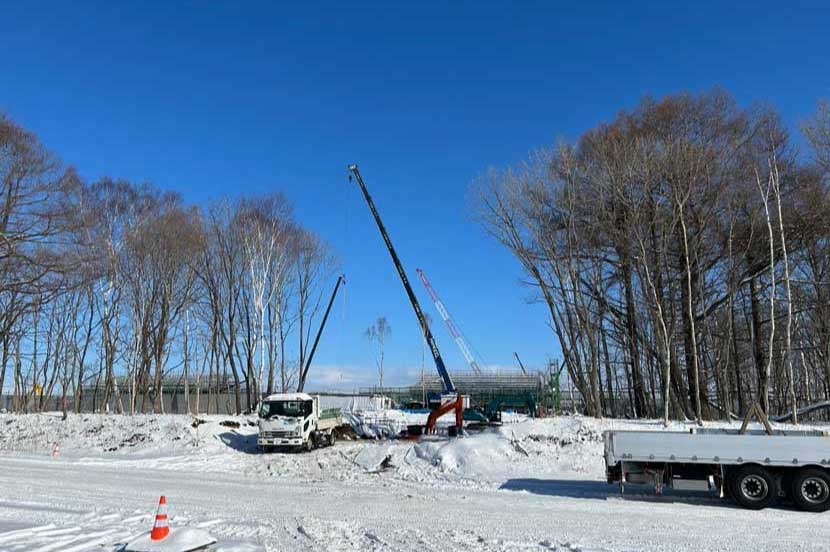
Nishizaki: Hokkaido is experiencing a construction boom, as seen by redevelopment projects around Sapporo Station and the Hokkaido Shinkansen extension, which has led to a severe labor shortage. Securing contractors willing to take on the project was extremely difficult.
We visited construction firms one by one, directly explaining our determination to make this project a success. As a result, we were able to establish a construction framework, including the selection of local Hokkaido contractors.
To secure the necessary construction capacity, we selected and informally appointed contractors earlier than usual. We also adopted new technologies, such as container-type uninterruptible power supply (UPS) systems and emergency generators, to shorten on-site construction time. Through every possible measure, we’re working to meet the required timelines.
Besides the construction itself, what other considerations are important?
Sugimoto: This project is supported by a subsidy from Japan’s Ministry of Economy, Trade and Industry (METI). Alongside construction, we’re conducting site inspections, reviewing documentation, and establishing asset management rules. Ensuring that subsidy funds are properly used involves more work than one might expect. However, we see this as a crucial process for steadily advancing the project.
We’re also conducting ecological surveys on local flora and fauna as construction progresses, carefully confirming safety considerations at each step.
Kagawa: When you visit the site, you truly appreciate the riches of nature. We’ve encountered shima-enaga birds, foxes and deer and other wildlife so far. Even as construction moves forward, we’re committed to understanding and preserving the surrounding environment.
For example, rather than discarding trees cleared during land preparation, we chip and reuse the wood to minimize waste. Although this is a large-scale project, we constantly consider how to coexist with the local community and natural environment.
Why Tomakomai was chosen to meet rising demands for data
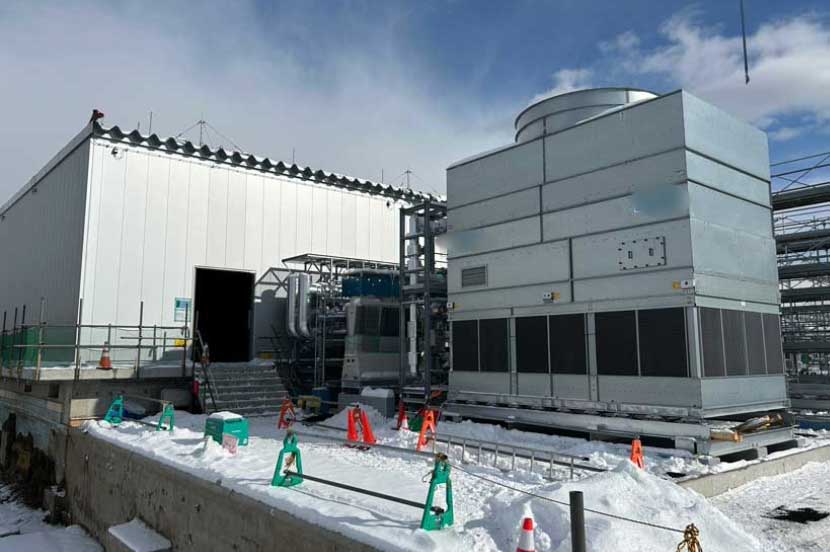
With growing demand for data processing concentrated in certain regions, why was Tomakomai chosen as an AI data center site?
Kagawa: As AI becomes more widespread, demand for computational data processing will increase significantly. Yet, in Japan, much of the digital infrastructure, including data centers, is concentrated in the Tokyo and Osaka metropolitan areas. AI data centers require enormous amounts of electricity. Continued concentration in the same metropolitan regions poses power supply challenges. Additionally, a large-scale disaster in Tokyo or Osaka could impact AI-related systems nationwide.
For AI to be fully implemented into society, we believe it’s essential to decentralize both data centers and power supply to regional areas, enabling local production and consumption of data and electricity.
Hokkaido emerged as a strong candidate due to its cool climate, ideal for efficient cooling, its renewable energy potential, and its sufficient distance from Tokyo and Osaka to reduce disaster risks.
Among locations in Hokkaido, Tomakomai City offered consolidated industrial land suitable for large-scale development, with room for future expansion. It also experiences a relatively low snowfall compared to other areas in Hokkaido, reducing construction risks. Our ongoing dialogue with the local government, which responded positively, further reinforced our decision.
Ishimaru: Tomakomai City is a key transportation hub, home to Tomakomai Port, an international logistics hub, and New Chitose Airport, Hokkaido’s main air gateway. It’s an industrial city driving the region’s economy.
Given its accessibility, diverse industries have flourished there, and advanced industry clusters are developing nearby. With societal challenges such as population decline and labor shortages, leveraging AI and digital technologies is a crucial theme not only for Tomakomai City but for municipalities nationwide.
Against this backdrop, we got the sense that the construction of our AI data center has been positively received.
How did discussions with Tomakomai City begin?
Ishimaru: SoftBank has long engaged in discussions with the Hokkaido Prefectural Government and local municipalities about solving challenges through digital transformation (DX) and introducing AI technologies.
As plans for the data center advanced, we began discussions with Tomakomai City about how the facility could be utilized and linked to the regional economy.
We emphasized not only building the facility, but also the potential ripple effects like job creation, economic revitalization and the clustering of advanced industries. Gradually, we felt their understanding deepen.
The Broader Value of an AI Data Center
What moments in your dialogue with the city stand out?
Ishimaru: In the early stages, although people had heard about the project in the news, many asked, “What exactly will this facility do?”
Through continued dialogue, we’ve increasingly heard comments like, “We want to be actively involved,” and “We have high hopes for this initiative to revitalize Hokkaido.”
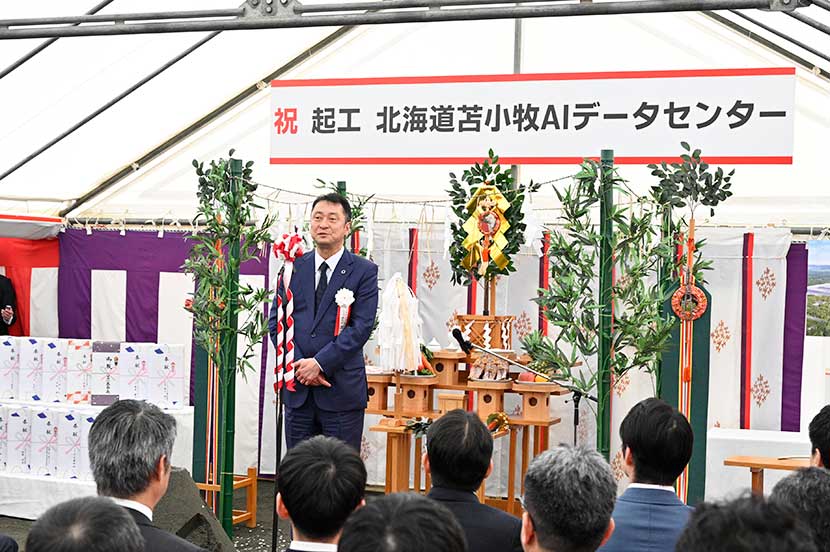
Kagawa: AI data centers can be difficult to understand. That’s why we’ve made an effort, through the groundbreaking ceremony and media coverage, to carefully explain why such facilities are necessary and how they contribute to the community. We’ve gradually gained more opportunities to speak directly with municipal officials and local residents.
What value do you hope the Tomakomai AI Data Center will provide going forward?
Nishizaki: Given the tight schedule, our top priority is safety and building a high-quality data center through careful verification at every stage of the process. Completing construction is not the only goal. The facility will serve as infrastructure for the long-term. We aim to create a future-ready foundation capable of supporting a wide range of services in the AI era.
Sugimoto: Our goal is not simply to build equipment. The facility is part of our answer to a larger question: how do we meet ever-growing data processing demand and support an AI-driven society? Through continued dialogue with the local community, we hope this initiative will become a foundation that’s utilized in many ways for years to come.
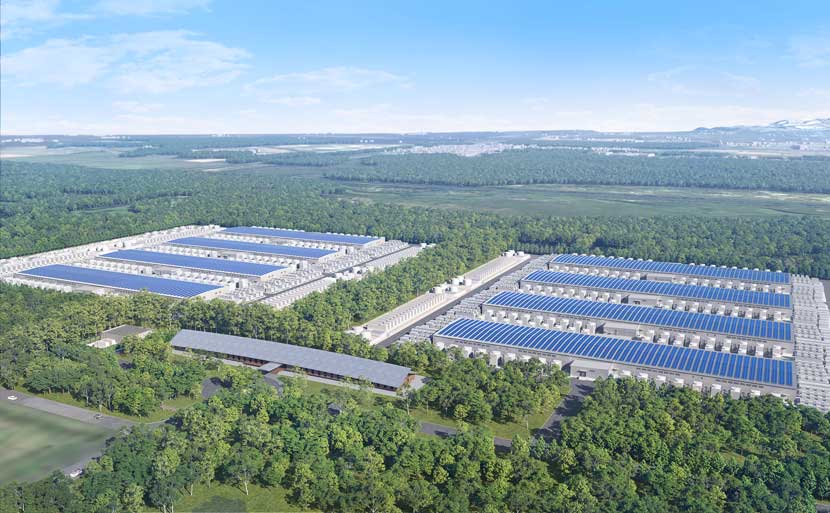
The Tomakomai AI Data Center is currently under construction and is scheduled to begin operations in fiscal year 2026 (the year ending March 31, 2027).
Related Article
(Posted on February 25, 2026)
by SoftBank News Editors
AloJapan.com