
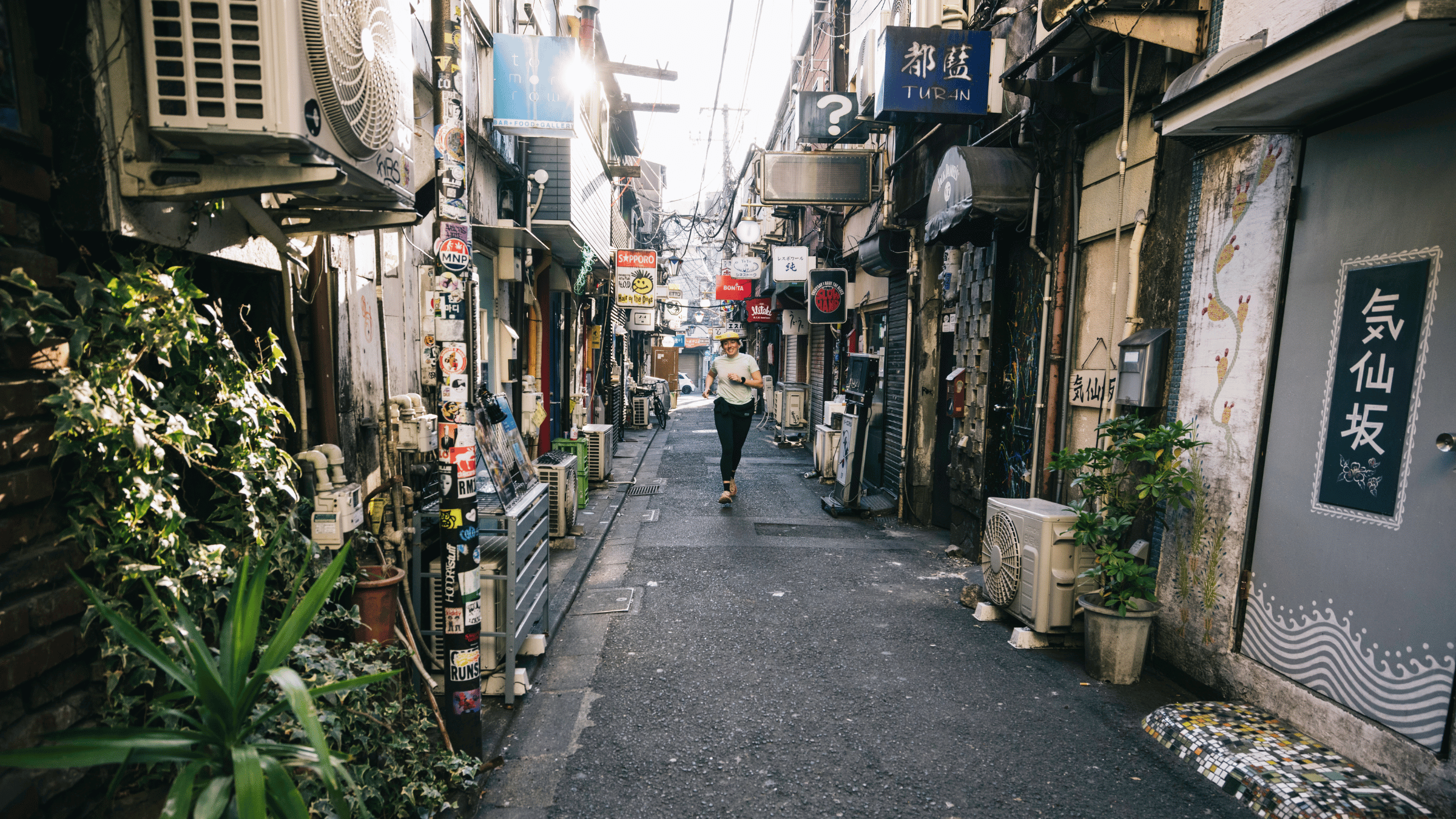
Updated February 24, 2026 10:09AM
As the cliche goes, great things often come in small packages. This is certainly true for frequent-flying runners like me. Give us a long layover and all we need are the basics—somewhere to store luggage, run, and take a hot shower—to make the most of it. Unfortunately, these three things coalesce in few cities around the world. Tokyo is one exception.
The world’s largest metro area is home to over 40 million people, but thanks to the solid infrastructure and a supremely orderly culture, it’s surprisingly runner-friendly. Earlier this month, my friends and I had a 24-hour stopover in the Japanese capital, allowing us to experience this runner’s gem in person. During my brief stay, I took a bullet train into the city, visited the immersive art exhibits in TeamLab, ate at a couple ramen shops and one shockingly tasty conveyor sushi place, and of course, went on a few runs around the city.
 The world’s largest metro area is home to over 40 million people, but thanks to the solid infrastructure and supremely orderly culture, it’s surprisingly runner-friendly. Photo: Andy Cochrane
My hit list included the gravel paths of Yoyogi Park, the smooth lanes of Komazawa Olympic Park, the shaded trail along the Merugo River, and the famed sidewalks of the Imperial Palace loop. Although I had a hotel room to store my bags, I also checked out a few Ransute, or run stations, to see if they lived up to the hype. These gyms are specifically designed for runners, offering lockers and showers for a small fee.
Run stations are helping transform the city into a playground for visitors, making it easy to stash bags, crush a workout (sometimes with thousands of local runners), and clean up before heading to the next stop. This is something I’ve dreamed about during many long layovers, yet have found it difficult without a friend’s house near the airport. Here’s a quick guide to getting out for a run in Tokyo.
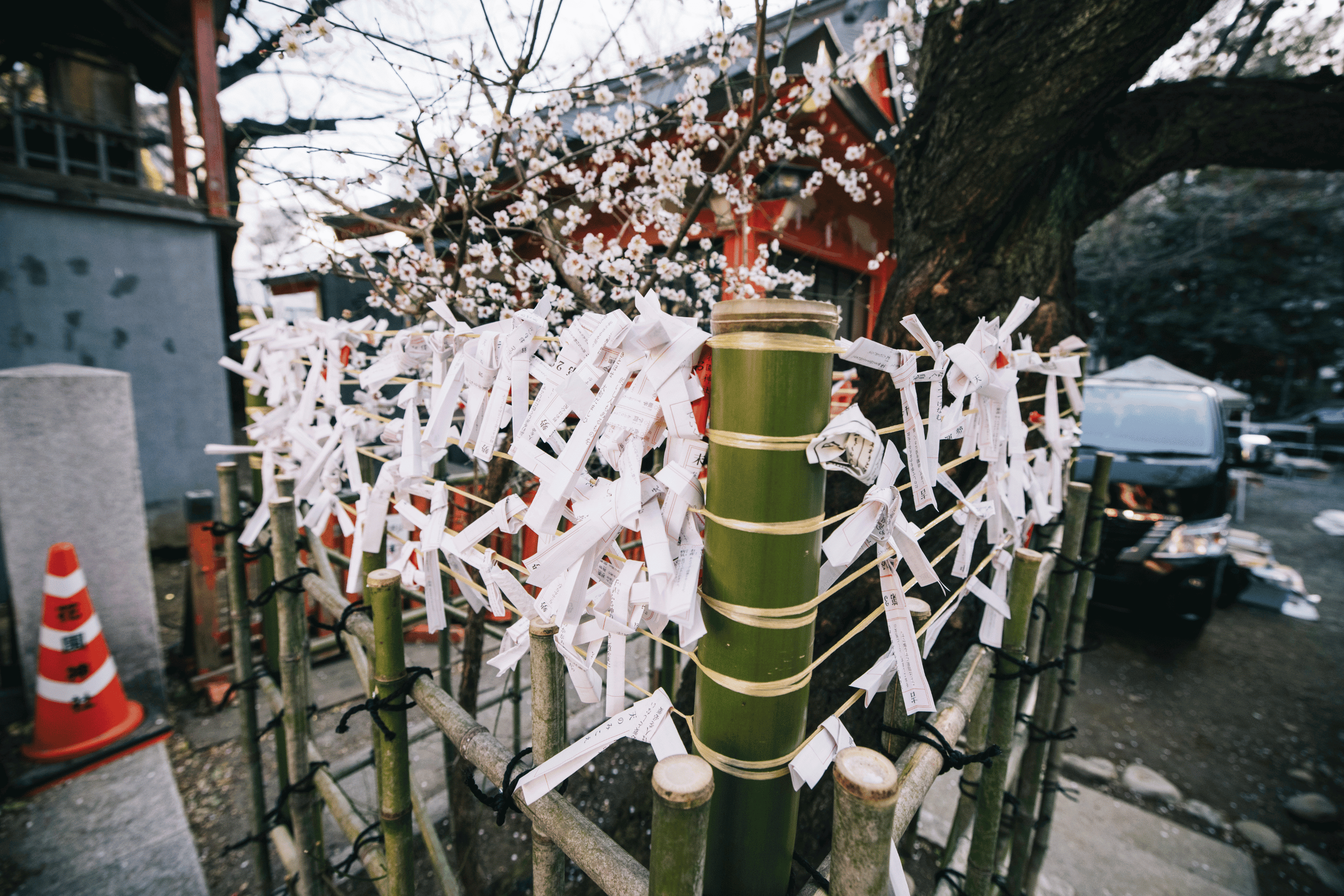 High speed trains from both major airports make it easy to venture into the city. Photo: Andy CochraneTaking the Train
Neither of the two Tokyo airports have great running trails outside the front door, so you’ll first want to take a train into the city center. While the city is famous for its Shinkansen bullet trains, you’ll actually want to hop on a limited express, which offers a similar experience—reserved seating, luggage racks, and high speeds—but is designed for airport transfers. An express ticket cost me around $20 each way.
From Narita International Airport about 40 miles outside Tokyo, I rode the JR Narita Express. It’s the best way to get to central Tokyo, Shibuya, or Shinjuku and takes about an hour, including buying a ticket and waiting for the train. From Haneda Airport it’s even faster. Both the Monorail or Keikyu Line will get you to Shinagawa in under 15 minutes, before a short transfer to wherever you are planning to run.
Timing
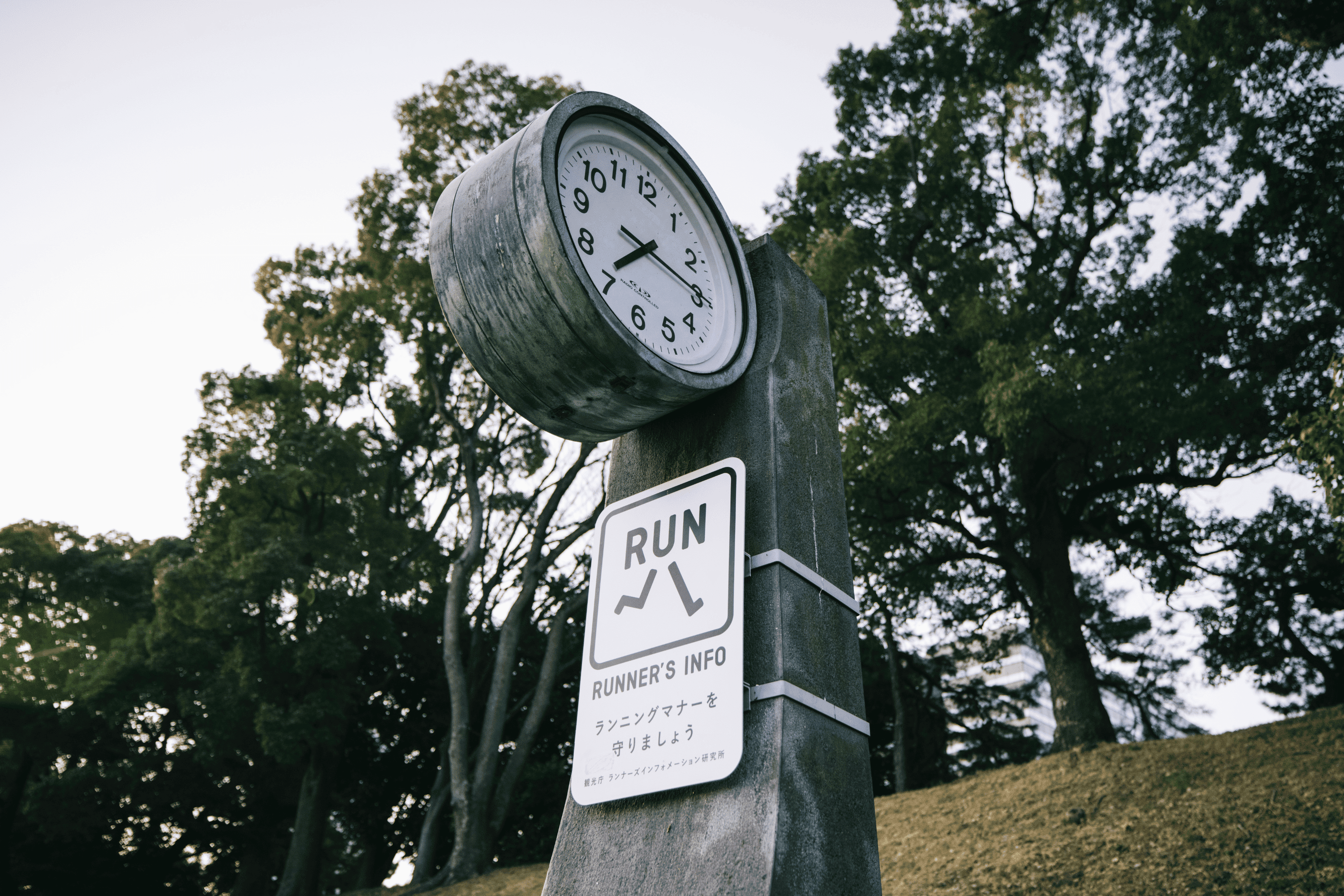 From June through August it’s best to run around sunrise or sunset, to avoid elevated temps from the heat island effect: the sheer amount of concrete and asphalt in Tokyo can raise the temp by up to 7 degrees. (Photo: Andy Cochrane)
When I visited it was an unseasonably warm February weekend with temps in the 60s. This made for easy packing—just shoes, shirt, and a watch—but that’s not always the case. Running in Tokyo typically requires careful timing to avoid the heat and humidity, or to just mitigate the chaos of high pedestrian traffic. Here are the main things to consider when planning your Tokyo run:
From June through August it’s best to run around sunrise or sunset, to avoid elevated temps from the heat island effect. (The sheer amount of concrete and asphalt in Tokyo can raise the temp by up to 7 degrees.) You’ll have the most iconic backdrops with cherry blossoms in March and April and fall colors in October and November, but these months also coincide with peak tourist season. If you want to run at a decent pace on popular routes like Meguro River or Yoyogi Park, plan to start early, before the crowds.
Etiquette
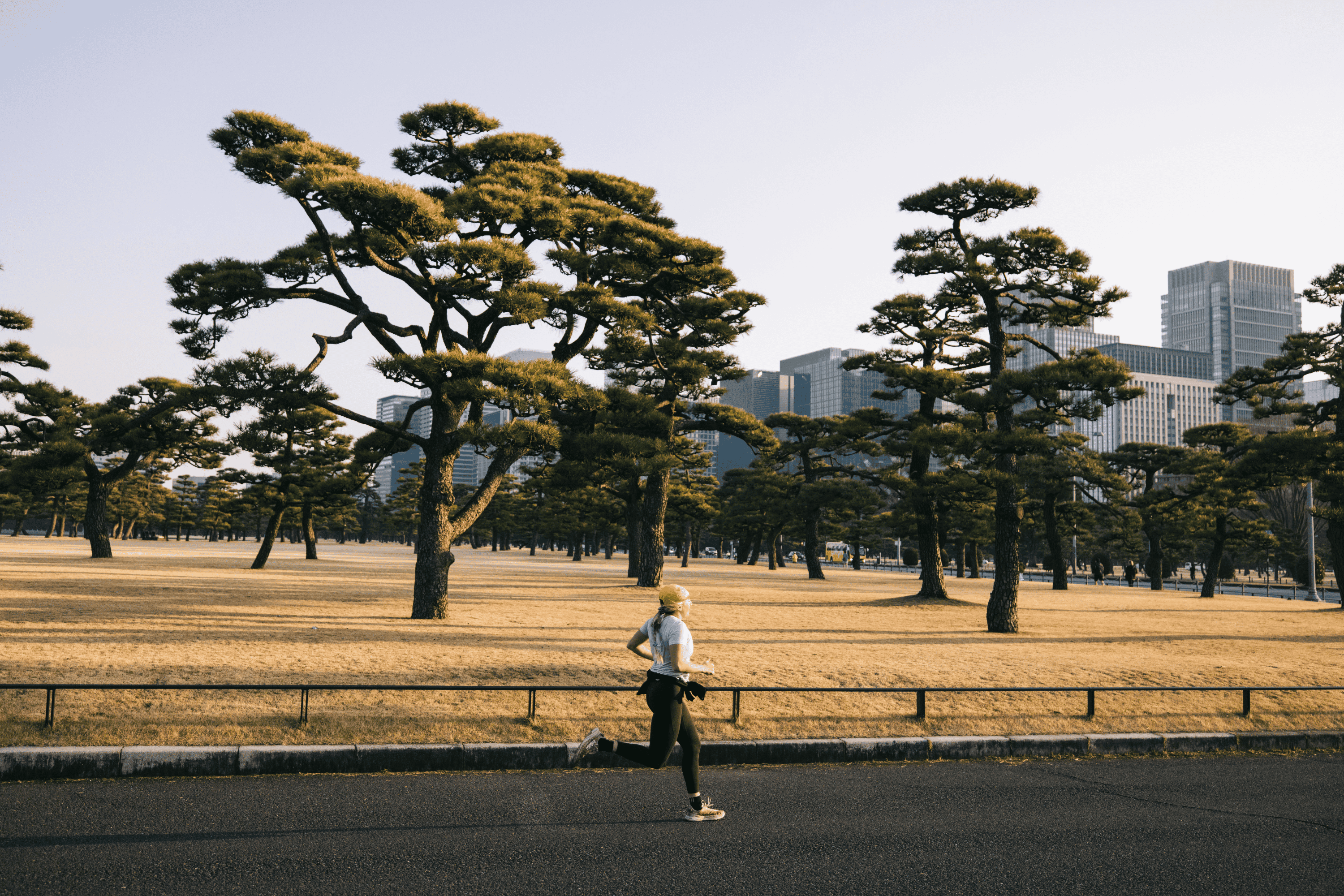
The heart of running in Tokyo is the Imperial Palace loop, but it comes with a set of unwritten rules. The most critical is to follow the counter-clockwise flow, which helps prevent collisions on the narrow path. Silence is also a point of etiquette. While headphones are fine, loud conversations or yelling is frowned upon, because it breaks the harmony of the environment. It’s also encouraged to run single file during busy hours so other runners can pass easily.
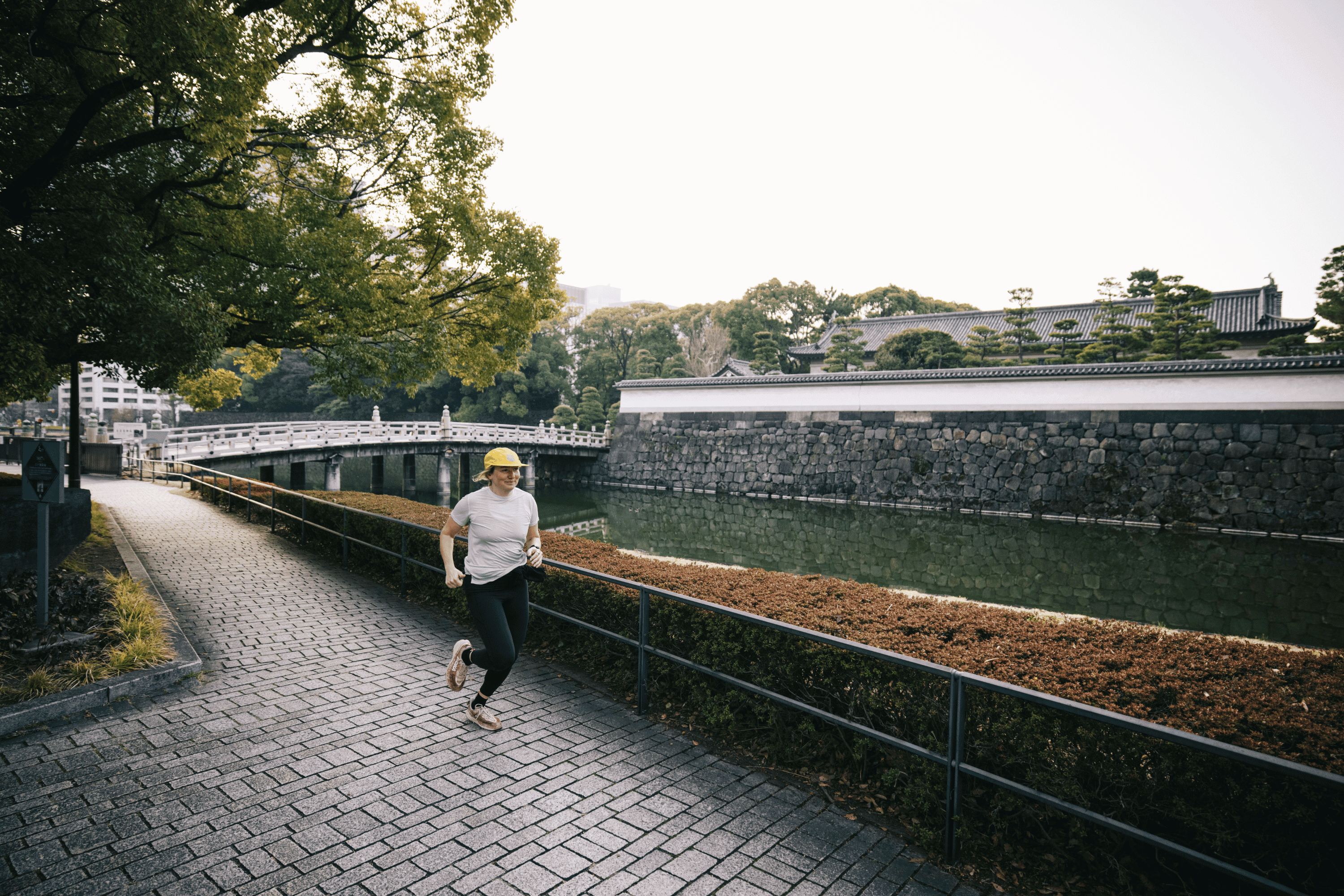 The heart of running in Tokyo is the Imperial Palace loop, but it comes with a set of unwritten rules. (Photo: Andy Cochrane)
Run Stations
The run station culture in Tokyo is a unique perk you won’t find in many other cities. Most of them are located near major hubs and train stations. And for a small fee, you can store your luggage, change into running clothes, and shower after your run. Because maintaining a clean public appearance is a way to show respect in Japan, it’s best to avoid wandering through train stations in sweaty running gear.
Perhaps the most popular is Ascics Run Tokyo, a short walk from Tokyo station and just a few blocks from the Imperial Palace. It’s a full running store that also offers running shoe rentals, and has full locker rooms with showers. If this is your first time running in Tokyo, it’s a great place to get started. Nearby there are multiple Raffine branches, a Bike & Run location, and Joglis, with affordable lockers and showers.
Where To Run in Tokyo
The Imperial Palace is a flat 5K loop around the primary residence of Japan’s Imperial Family. Circling the moat of the iconic castle built in 1888, the path has no traffic lights and only one slight hill near the British Embassy on the northwest side. For runners looking for a longer run, the Arakawa River Trail in north Tokyo spans more than 20 miles, with distance markers and water fountains along the way. Thanks to good train access, you can do a point-to-point run here without too much hassle.
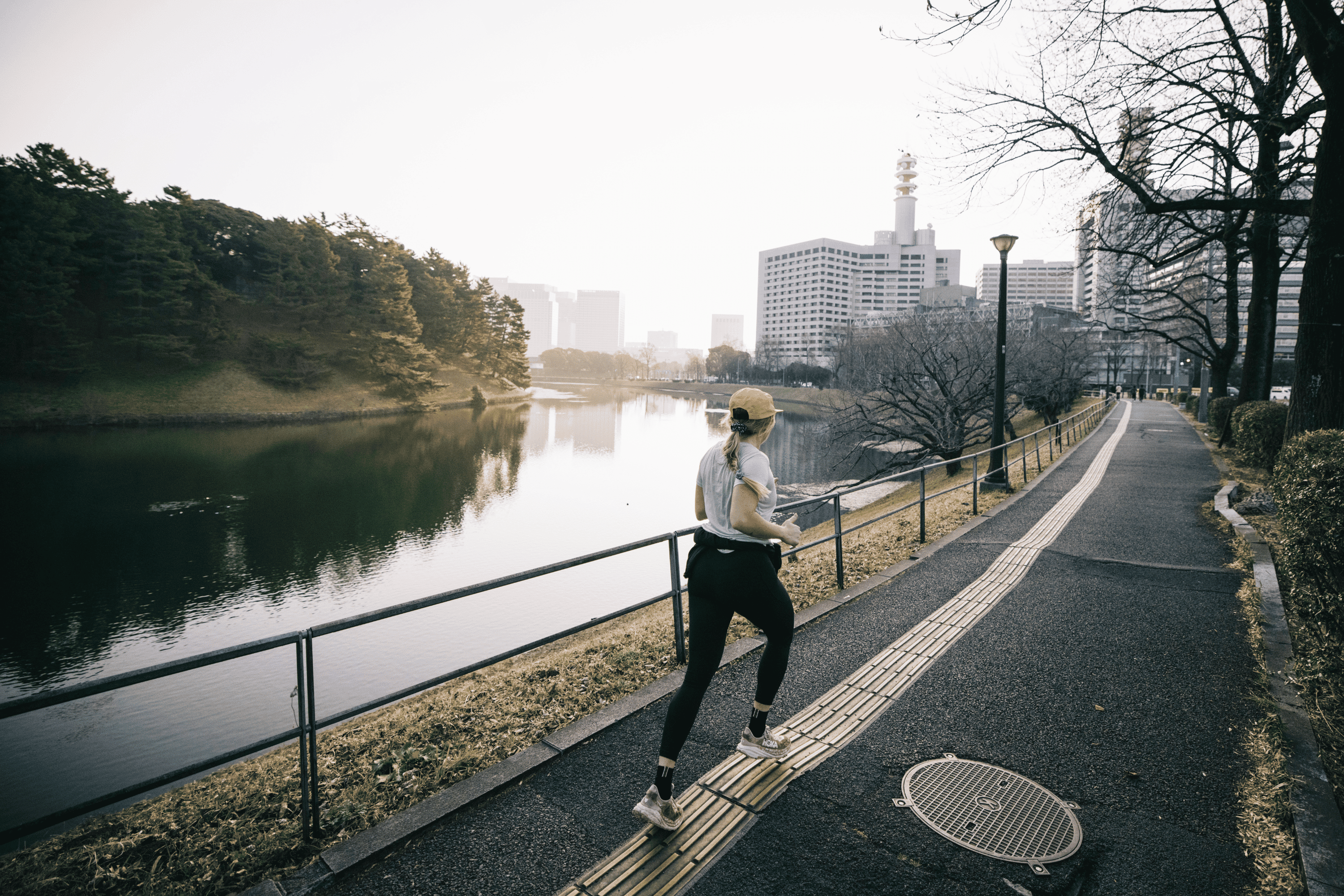 Tokyo’s three major river trails make it easy to get in big miles. (Photo: Andy Cochrane)
Yoyogi Park is the greenest space in the city center, filled with serene paths, gardens, and ponds. The Meiji Shrine is also part of the park, but not open to runners. The dirt path around the perimeter is about 2 miles and commonly used by run groups. Further to the south in Tokyo is Komazawa Olympic Park and a 2.1-K loop that is paved, well lit, and completely flat. Unlike the Palace, Komazawa features color-coded lanes that separate runners and cyclists, making it great for interval training and focused workouts. It also has an indoor training center, weight room, public showers, and lockers.
The Sumida River Trail is Tokyo’s equivalent of a coastal trail. Stretching across the Asakusa and Tsukiji districts, it has wide paths on both sides of the river where you can run 10-plus miles. The Meguro River Trail is narrower, shorter, and shaded by trees. During cherry blossom season it becomes a floral tunnel, but dense crowds make running challenging unless you go quite early or late.
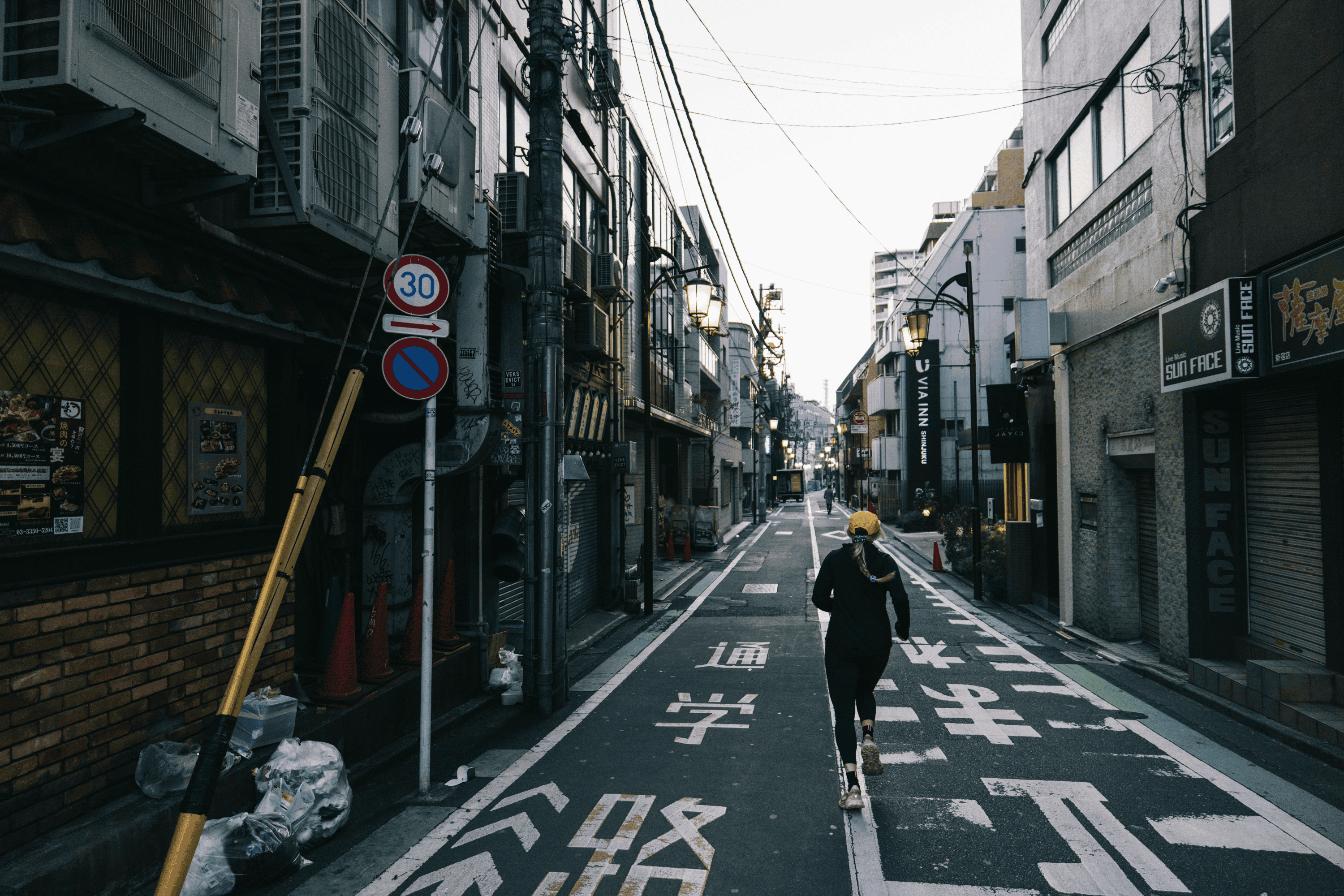 During his brief brief stay, author Andy Cochrane and his friends took a bullet train into the city, visited the immersive art exhibits in TeamLab, ate at a couple ramen shops, and of course, went on a few runs around the city. (Photo: Andy Cochrane)
The Gear I Used and Loved
Salomon AERO Glide 4 Shoes
I’ve used the Ultra Glide for many of my long trail runs over the last year and the GRVL for a lot of my flat cinder trail workouts, so it was no surprise that when I first tested the AERO Glide this winter, I fell for it right away. A snug upper, spring-like foam, and durable design make it perfect for travel, helping you sneak out on easy jogs or evening workouts in a moment’s notice.
Coros Apex 4 GPS Watch
For long trips when charging might be challenging, I bring my Coros Apex 4 because it has a longer battery life than any other running watch I’ve tested. I typically also bring my heart rate band, but if I forget, the Apex also has a reliable heart rate sensor. It connects to satellites quickly even in large cities and works in any weather, making it super versatile for year-round travel.
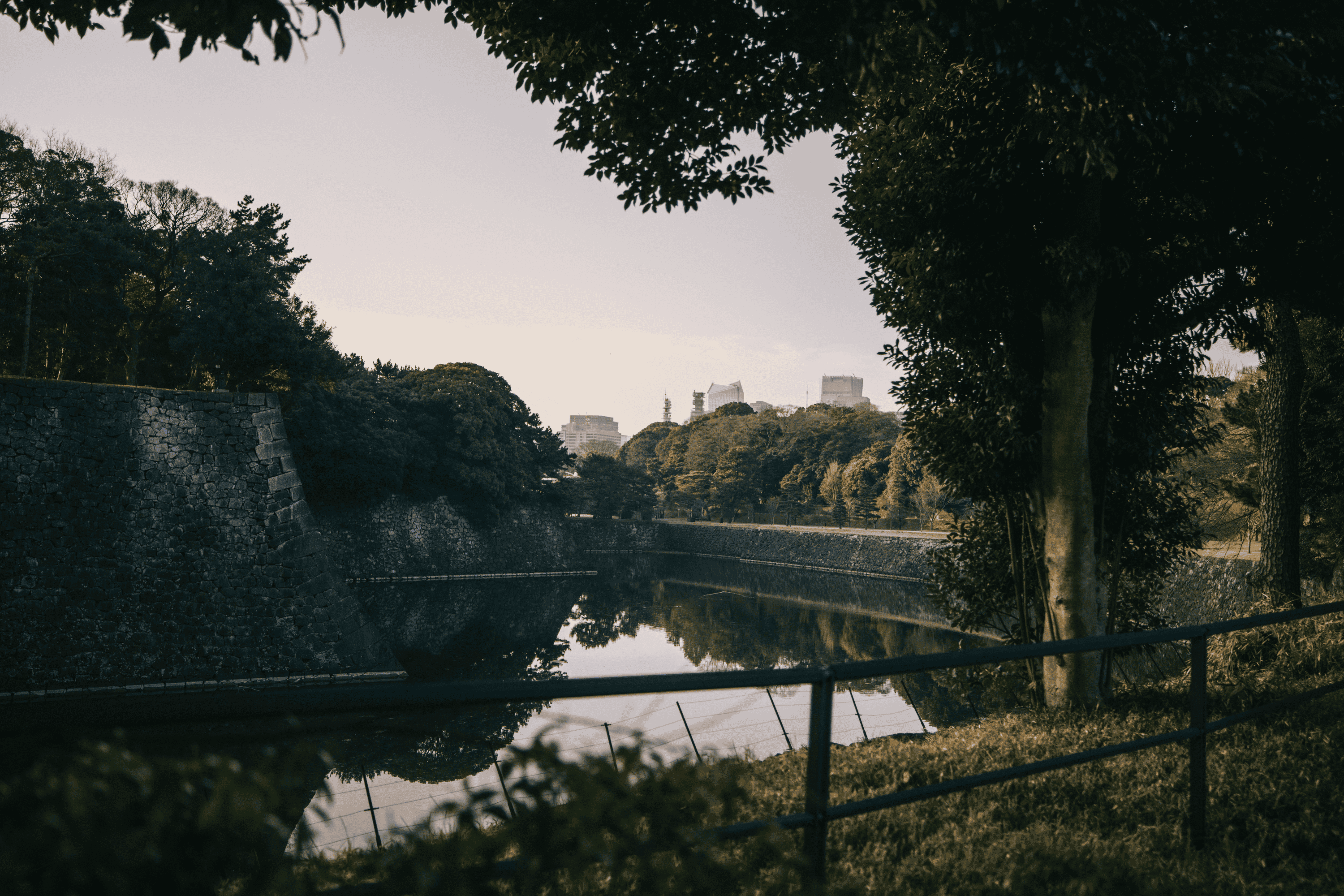 During his 24-hour stay, author Andy Cochrane’s run hit list included the gravel paths of Yoyogi Park, the smooth lanes of Komazawa Olympic Park, the shaded trail along the Merugo River, and the famed sidewalks of the Imperial Palace loop. (Photo: Andy Cochrane)
GU Energy Recovery Protein Pouches
It’s hard to control your diet and eat well when traveling, which makes having supplemental protein even more important. My favorite for taste and performance is GU’s all-in-one post workout shake mix, which has carbs to replenish glycogen, electrolytes for rehydration, and ample protein to help me bounce back faster, even while on the go.
Patagonia Airshed Pro Pullover
I’ve lost track of how many times this lightweight jacket has got me out of a pickle. This weather resistant windbreaker is lightweight and breathable, but most importantly it fits into a medium-sized shorts pocket, so you can easily take it with you. With a storm hood and long sleeves, I’ve used it to hold off light rain, snow, and high winds to safely get where I was going.
AloJapan.com