
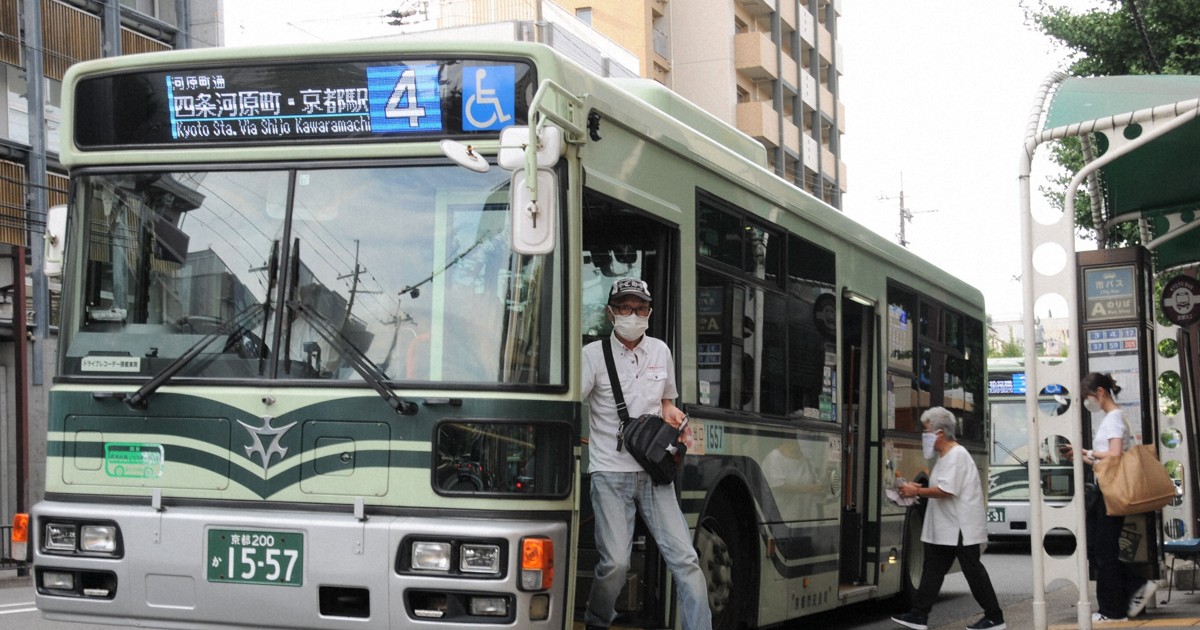
This Aug. 10, 2022, file photo shows a Kyoto city bus in Kamigyo Ward, with a passenger exiting through the front door and another boarding through the rear door. (Mainichi/Ryo Chatani)
KYOTO — To ease overcrowding on city buses caused by heavy tourist use, the Kyoto Municipal Government will change how passengers board and exit buses on flat-fare routes starting at the end of fiscal 2028.
While the standard practice in west Japan’s Kansai region, including Kyoto city buses, is to board through the rear door and exit through the front, the change to flip the boarding and exit doors aims to streamline passenger disembarkation and fare collection.
This change, announced by the Kyoto Municipal Transportation Bureau on Jan. 29, will apply to 60 out of the 84 routes currently operating within the flat fare zone. To facilitate boarding from the front doors, approximately 550 of the 1,642 bus stops will require modifications, including the removal of fences and curbs and the relocation of tactile paving. The cost of the project is estimated at around 2 billion yen (about $13,100), including vehicle modifications such as installing additional announcement speakers. The expense was a concern, but with the planned increase in the accommodation tax rate in March, the city will have ways to pay for the change. Kyoto Mayor Koji Matsui indicated that the city “should do what it can using the accommodation tax revenue.”
Surveying and design work for bus stop modifications will begin in fiscal 2026, with construction starting in fiscal 2028. One advantage of the change is that drivers can directly communicate with passengers about limiting large luggage, a measure already in place to reduce congestion. Wheelchair users will continue to receive support for boarding and exiting through the rear doors as before.
(Japanese original by Yoko Minami, Kyoto Bureau)
AloJapan.com