
Beginning in 2004, the Japan Foundation Touring Film Programme has brought the best of Japanese cinema – both new and classic – to audiences across the United Kingdom. This year’s lineup, which includes a handful of UK premieres, goes by the title of Knowing Me, Knowing You: The True Self in Japanese Cinema; each of the films programmed explore some aspect of identity and the personal, with a whole variety of approaches and genres on offer – whether it be sci-fi, comedy, horror, or hard-hitting drama, there’s something for everybody on offer, which I would easily argue is the mark of a well-programmed film festival, genre-centric festivals included.
The Japan Foundation was kind enough to invite me, as a writer for The Geek Show, to a day of new Japanese cinema at Altrincham Little Theatre on Saturday 7th February, as part of their Manchester Film Weekender. Little did I know, I was about to experience one of the most delightful movie-going experiences that I have had in recent memory, discovering not only a wonderful touring festival, but also a gem of a venue that I hope to find the opportunity to return to and support in future.
Running since (at least) 1896 in a historic building which was once a chapel, Altrincham Little Theatre is a venue as cozy and charming as its name would lead you to believe. Boasting some gorgeous vintage interior design, friendly staff, and offering complimentary refreshments between screenings, it’s hard for me to think of a recent movie-going experience where I have felt more comfortable; I couldn’t be happier that the Japan Foundation decided to partner with small, community-run venues such as Altrincham Little Theatre, as well as bringing their programme to larger and more well-known picture-houses like HOME in the centre of Manchester. The number (and variety) of cinemas that the 2026 edition Japan Foundation Touring Film Programme plays to is not only impressive, but also admirable; far too many screenings of international film in the UK are restricted only to audiences in major cities, so it brings a smile to my face to see that the Japan Foundation are bringing their latest slate of film to 34 cinemas across the country – from Cornwall to Orkney.
Little did I know, I was about to experience one of the most delightful movie-going experiences that I have had in recent memory, discovering not only a wonderful touring festival, but also a gem of a venue that I hope to find the opportunity to return to and support in future.

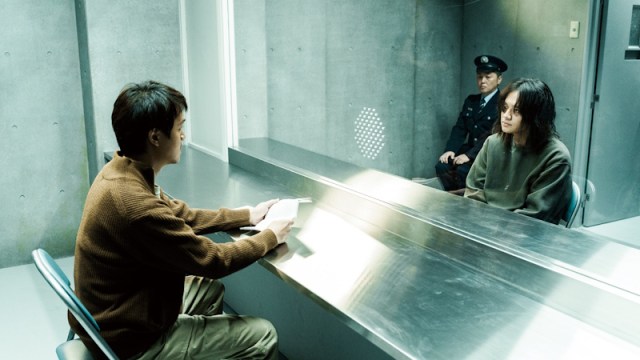
The first film of the day, and the main reason I was there, was a genre picture – Adabana (2024) (meaning ‘Barren Flower’), the sophomore feature film from director Sayaka Kai (Red Snow). Set in the near-future, where the rich and powerful pay to have clones, or “units”, made of themselves in order to provide replacement organs when theirs fail, Adabana follows Shinji (Arata Iura), a terminally ill businessman who must make the decision whether or not to receive a head transplant, or sacrifice himself to the disease in order to save the life of his unit.
It’s a conceptually intriguing piece of cold, clinical sci-fi, at times reminiscent of both early and recent Cronenberg, and whilst not strictly a horror film, it does feature some memorable glimpses of uncanny and unsettling imagery. In keeping with this year’s theme of Knowing Me, Knowing You, Kai’s film is an exploration of a whole handful of ideas surrounding the understanding of self, the fragility of the human body, and the (sometimes unreliable) connections between memory and identity; a lot of speculative fiction surrounding both cloning and transplants is focused around the central concept of the Ship of Theseus paradox – if you replace most or all the parts of something or someone, is it still that thing or person? – but in the case of Adabana, it first asks the viewer how well they truly know themselves in the first place. It isn’t perfect, admittedly – I personally found it to be a little too slowly-paced and vague in its presentation for my liking – but it does make you consider the themes it discusses, and how they might apply to our modern age of consumerism, class divides, and the exploitation of minimum-wage workers by mega-corporations.
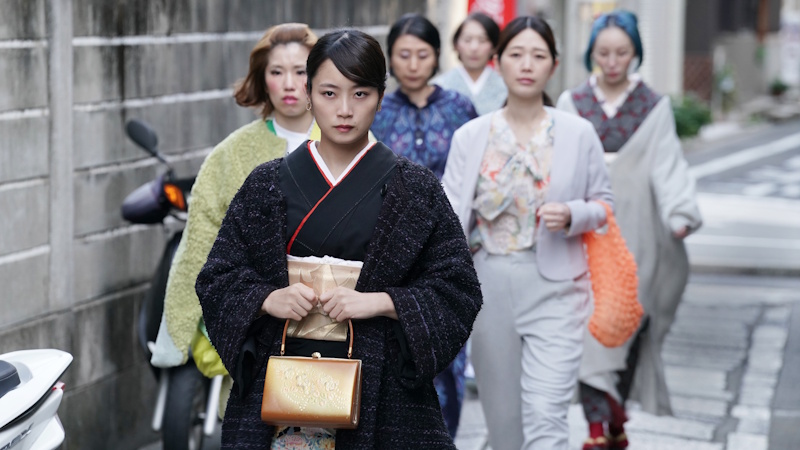
Better still, and my personal film highlight of the day, is the film which played after – Strangers in Kyoto (2025), a comedy of secrets, lies, and social interactions, directed by Masanori Tominaga (Pumpkin and Mayonnaise). The film follows Madoka (Mai Fukagawa), a young webcomic writer who makes it her personal mission to save her mother-in-law’s (Shigeru Muroi) centuries-old Kyoto fan-making business from being bought by real-estate developer Ueda (Kôsuke Toyohara), who has been buying out historical properties in the local area and bulldozing them to make way for apartments; however, nothing is as it seems, and as Madoka quickly learns, nobody in Kyoto ever says what they truly mean. It’s a quirky, offbeat, and thoroughly entertaining affair, one which is a little slow to start, but once it finds its footing, it reveals itself to be a deeply enjoyable romp. Some of the humour is clearly very region-specific and targeted towards those who know Kyoto intimately, yet Strangers in Kyoto is also unexpectedly universal in its themes of confusing social interactions, the threat of losing important parts of local history and culture in the midst of new urban development, and the ways in which small misunderstandings and miscommunications can eventually lead to abject chaos.
The final film of the day, Kaneko’s Commissary (2024), was one which seemed to go down very well with the rest of the audience, but I can’t say that it landed for me personally. The feature directorial debut of filmmaker Go Furukawa (Sailor Zombie), Kaneko’s Commissary is a gritty, slow-burn crime / prison drama that follows Shinji Kaneko (Ryûhei Maruyama), a man whose job is to deliver parcels and messages to incarcerated criminals from their families; when a horrible tragedy leads to Shinji’s work and home lives becoming connected, he begins to doubt whether or not his services to those behind bars are worth the stress and pain anymore – his feelings being complicated even further by the fact that he also has a criminal past, one which resulted in him receiving a four-year prison sentence. Kaneko’s Commissary sheds light on an overlooked and underappreciated profession, all whilst critiquing the failures and injustices of the prison system, both in Japan and worldwide – its aim is admirable, and the struggling titular protagonist is depicted with both nuance and empathy. Unfortunately, I felt that the film runs far too long at a runtime of 125 minutes, and tries to do too many things at once, which ends up weakening the piece as a whole due to its muddled focus and non-committal structure; this lack of focus ends up muddying some of the themes of the piece, most notably when it comes to the conclusion of an important sub-plot involving a victim of child sexual abuse. It’s one of those films where the viewer’s mileage may vary – some may be won over by how it addresses challenging themes and topics, whereas some may be put off by its uneven structure and slow pace.
Overall, my experience of the Japan Foundation Touring Film Programme 2026 at Altrincham Little Theatre was nothing short of wonderful; the lineup was interesting and diverse, and the Japan Foundation’s aim of sharing and educating UK audiences on Japanese culture through cinema was successfully realised – I feel like I learned a lot about Japanese society, culture, and filmmaking, even after only experiencing one day of film programming. By the end of the day, I was left feeling entertained, enlightened, and thoroughly satisfied. Had I been able to return for the next day’s slate of films, I would have come running back to Altrincham Little Theatre in an instant – especially as the Sunday lineup featured the delightful-sounding heist comedy Angry Squad: The Civil Servant and the Seven Swindlers (2024), and the highly-anticipated transgender courtroom drama Blue Boy Trial (2025). I’ll be certain to keep my eye out for any Japan Foundation screenings in future, as well as for upcoming film and theatre events at Altrincham Little Theatre – which hosts regular screenings of classic and critically-acclaimed French and Spanish cinema on weekends in association with Manchester’s Alliance Française and Instituto Cervantes.
FOR MORE DETAILS ON THE JAPAN TOURING FOUNDATION 2026 FILM PROGRAMME – CLICK HERE
The Japan Foundation Touring Film Programme 2026 takes place in cinemas around the UK from 6 February to 31 March 2026
ROBYN’S ARCHIVE – Adabana, Strangers in Kyoto, and Kaneko’s Commissary
Like this:
Like Loading…
Discover more from The Geek Show
Subscribe to get the latest posts sent to your email.
AloJapan.com